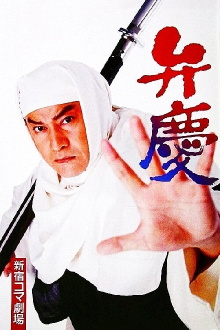
At the end of the Heian period, Musashibo Benkei, a warrior monk who hated the Heike clan, was humiliated by his fellow monks and left the mountain monastery. Soon, Benkei competes with the Heike warriors on the Gojo Bridge in Kyoto and takes away their swords. One night he tried to stop a young man who had a beautiful sword on his belt and fought him, but he could not win. Knowing that this young man Ushiwakamaru (Minamoto no Yoshitsune) is looking for an opportunity to overthrow the Heike clan, Benkei asks him to let him join him.
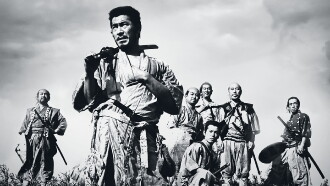
A samurai answers a village's request for protection after he falls on hard times. The town needs protection from bandits, so the samurai gathers six others to help him teach the people how to defend themselves, and the villagers provide the soldiers with food.
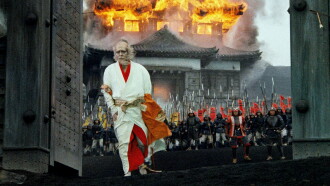
Shakespeare's King Lear is reimagined as a singular historical epic set in sixteenth-century Japan where an aging warlord divides his kingdom between his three sons.
A nameless ronin, or samurai with no master, enters a small village in feudal Japan where two rival businessmen are struggling for control of the local gambling trade.
Seibei Iguchi leads a difficult life as a low ranking samurai at the turn of the nineteenth century. A widower with a meager income, Seibei struggles to take care of his two daughters and senile mother.
In this companion piece and sequel to "Yojimbo," jaded samurai Sanjuro helps an idealistic group of young warriors weed out their clan's evil influences, and in the process turns their image of a proper samurai on its ear.
Saotome Mondonosuke is Hatamoto (a high-class warrior who is allowed to see the Shogun in person) who has a crescent-moon-shaped scar on his forehead with flashy clothes and a handsome face, and is proficient in all the military arts and called Bored Hatamoto.
In this film, Hibari plays a dual role as brother and sister. The story involves a journey to Hanagasa for an incognito Lord (Kotaro Satomi) to overthrow an attempted usurpation of his domain, while being harassed by vassals of the usurper (Kensaku Hara).
Kotani Zenzaemon, a ronin who has a side job making brushes in a tenement house in the back alley, is watching Omine, who lives with him, from Kichizo, a resident of the same tenement house and a boatman.
During the latter part of the 16th Century, Japan's Warring States era was coming to a close. After crushing almost all of his enemies, Date Masamune aka the "Hawk of the North" sets his eyes on Hatakeyama's lands.
Takahashi Hideki stars as Muyonosuke, the one-eyed ronin who makes his living as a bounty hunter who is on a never-ending quest to find the man who murdered his father.
When she receives word that her longtime platonic pal Michael O'Neal is getting married to debutante Kimberly Wallace, food critic Julianne Potter realizes her true feelings for Michael -- and sets out to sabotage the wedding.
In 2047, a group of astronauts are sent to investigate and salvage the starship Event Horizon which disappeared mysteriously seven years before on its maiden voyage.
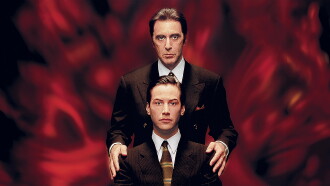
Aspiring Florida defense lawyer Kevin Lomax accepts a job at a New York law firm. With the stakes getting higher every case, Kevin quickly learns that his boss has something far more evil planned.
Will Hunting is a headstrong, working-class genius who is failing the lessons of life. After one too many run-ins with the law, Will's last chance is a psychology professor, who might be the only man who can reach him.
Marjetka is living ten years with Maks, who is a painter, and an uncompromising conceptual artist. At first, it seemed different: Max was witty, charming, talented and promising, so he hired Marjetka to reach fame and success.
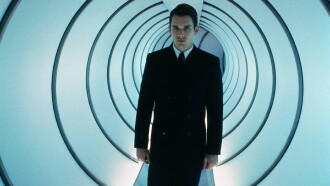
Vincent is an all-too-human man who dares to defy a system obsessed with genetic perfection. He is an "In-Valid" who assumes the identity of a member of the genetic elite to pursue his goal of traveling into space with the Gattaca Aerospace Corporation.
HBO (in association with the American Film Institute) presents this 1997 anthology, narrated by Liev Schreiber, which looks at sports in cinema from the earliest silent films until the nineties.