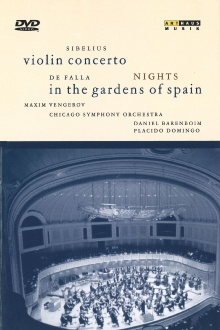
Sibelius's solitary concerto is one of the most passionate tests for the violin virtuoso, one to which Maxim Vengerov is more than equal. He captures the work's passion and its occasional quirky patches of the spookily sublime. His performances of the "Sarabande" from the Bach Second Partita and the "Ballade" from Ysaye's Third Sonata are admirable encores demonstrating his range and his elegant control. Daniel Barenboim's piano performance of the de Falla Nights in the Gardens of Spain is equally virtuosic, bringing out the work's structure as well as its local color. Placido Domingo's conducting is solid and serviceable. Barenboim ends the concert with three de Falla orchestral showstoppers--the "Farruca" from The Three-Cornered Hat and the "Magic Circle" and "Ritual Fire Dance" from Love the Magician. The Chicago Symphony perform throughout with their usual vigor and fine orchestral color, but are particularly remarkable in these three encores
"Regina Coeli" is the nickname with which inmates call Regina, voluntary assistant in Rome's Rebibbia jail, very involved in solidarity but lonely in his private life.
Rhode Island State Trooper Charlie Baileygates has a multiple personality disorder. One personality is crazy and aggressive, while the other is more friendly and laid back.
Unscrupulous boxing promoters, violent bookies, a Russian gangster, incompetent amateur robbers, and supposedly Jewish jewellers fight to track down a priceless stolen diamond.
After a mobster agrees to cooperate with an FBI investigation in order to stay out of prison, he's relocated by the authorities to a life of suburban anonymity as part of a witness protection program.
12-year-old Renato experiences three significant events on the same day: the beginning of the Second World War, getting a bike, and witnessing the arrival of the gorgeous Malèna.
Comments
Have you watched Sibelius - Violin Concerto / De Falla - Nights in the Gardens of Spain yet? What did you think about it?