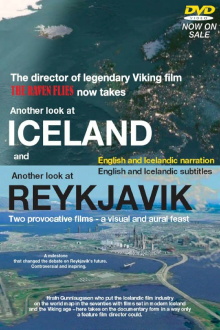
What did the old parliament look like when Vikings settled Iceland in 874 A.D.? How has the Icelandic environment changed since man first arrived? Is the human species a blight on the face of the Earth? What will the future look like here? Will the glaciers melt whether we like it or not? Will there be a volcanic eruption in the Reykjavik area? Will soil erosion blow Iceland back into the ocean? Can natural waterfalls replace energy with pollutants - and at what cost to the landscape?
A small town is overrun by ankle-biting-blood-sucking DWARF Vampires. Things get complicated when the vertically-challenged coffin-creepers get their itty-bitty hands on a sword with the blood of the last slain Tall Vampire.
200 km follows the marches carried out by Sintel workers to reach Madrid on May 1, 2002. Sintel was a subsidiary of Telefónica that, when it was privatized, was closed, leaving its 1,800 workers on the streets.
Exiled Lord Yukinaga is betrayed by a ninja clan he and his family mercilessly killed in cold blood. But when the Lord’s subordinate, a beautiful ninja Firefly, discovers the slain bodies, she uses the Sword of Deus to review Yukinaga – only to find the former Lord has become a demonic emissary of evil to avenge his death and betrayal! his evil minions pillage Firefly’s gorgeous ninja friends and kill her allies.
Bruce Nolan toils as a "human interest" television reporter in Buffalo, NY, but despite his high ratings and the love of his beautiful girlfriend, Bruce remains unfulfilled.
Nathan Algren is an American hired to instruct the Japanese army in the ways of modern warfare, which finds him learning to respect the samurai and the honorable principles that rule them.
A satire about the dictatorship period in Brazil, in which communist militants try to steal the soccer World Cup Trophy from the players Pelé and Carlos Alberto Torres.
When wily pirate Captain Barbossa seizes Jack Sparrow’s beloved ship, the Black Pearl, and kidnaps the governor’s daughter, Elizabeth Swann, blacksmith Will Turner reluctantly teams up with the unpredictable pirate Jack to rescue her—only to uncover a terrifying curse that turns Barbossa’s crew into the undead.
Comments
Have you watched Another Look At Iceland yet? What did you think about it?