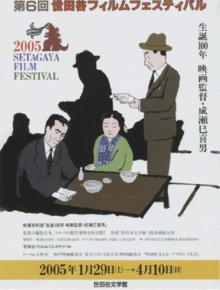
Because his style was similar to that of Yasujiro Ozu, who was already active at Shochiku, he moved to PCL (currently Toho) in 1933, where he appeared in the talkie works "My Wife, Like a Rose" and "Tsuruhachi Tsurujiro." It got attention. There were times when he was unable to make as many films as he wanted due to wartime film regulations and post-war Toho disputes, but in 1951 he revived his career with Meshi. Since then, he has released masterpieces one after another, including "Okaasan," "Lightning," "The Couple," "Wife," "Anii Mouto," "Sounds of the Mountain," and "Bangiku." The pinnacle of his work, "Floating Clouds," is Kenji Mizoguchi's "Wife." Even director Ozu was impressed, calling it a masterpiece of Japanese cinema, on par with "The Sisters of Gion." He depicted ordinary people in everyday life with an everyday realism that was not influenced by lyricism, and he consistently sought out women as his subjects.
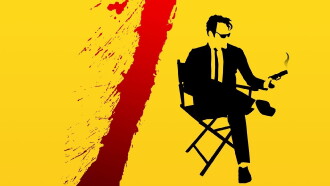
A detailed account of the life and artistic career of legendary filmmaker Quentin Tarantino, from his early days as a video club manager to the scandalous fall in disgrace of producer Harvey Weinstein.
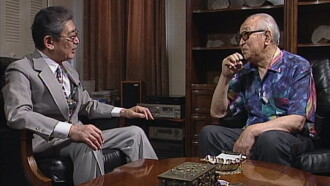
Nagisa Oshima interviews Akira Kurosawa, leading him to share his thoughts about filmmaking, his life and works, and numerous anecdotes relating to his films and his various film activities.
A television documentary on the life and career of British film director David Lean. Scenes of Lean directing are intercut with personal interviews in which the director explains his methods, the beginnings of his career, and his relationships with actors and actresses.
A film that describes the love-hate relationship between Werner Herzog and Klaus Kinski, the deep trust between the director and the actor, and their independently and simultaneously hatched plans to murder one another.
For decades, Freddy Krueger has slashed his way through the dreams of countless youngsters, scaring up over half a billion dollars at the box office across eight terrifying, spectacular films.
A feature-length documentary focusing on the acclaimed work and eclectic career of maverick filmmaker Larry Cohen, writer-director of "Black Caesar," "It's Alive," "God Told Me To," "Q," "The Stuff," and many more.
When World War II broke out, John Ford, in his forties, commissioned in the Naval Reserve, was put in charge of the Field Photographic Unit by Bill Donavan, director of the soon-to-be-OSS.
The story of the cult horror empire through interviews with cast, crew, and horror icons such as Don Mancini, Brad Dourif, Jennifer Tilly, Catherine Hicks, Chris Sarandon, John Waters, Fiona Dourif, Perrey Reeves, Gerrit Graham, David Kirschner, and dozens more.
Popular movie trailers from 2005
These some of the most viewed trailers for movies released in 2005:
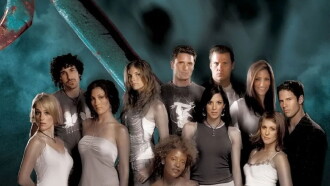
After terribly gory happenings occur one day in a hidden beach house on the Malibu Shore, it leaves one person crying, one person soaked in blood, and another one dead.
Ray Ferrier is a divorced dockworker and less-than-perfect father. Soon after his ex-wife and her new husband drop off his teenage son and young daughter for a rare weekend visit, a strange and powerful lightning storm touches down.
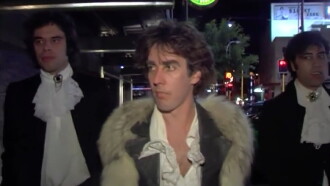
Who says being an undead creature of the night is easy? With that in mind, three ancient friends—centuries-old vampires Vulvus, the romantic and temperamental Lord Byron wannabe; Viago, the flamboyant 19th-century dandy; and Deacon, the rebellious 107-year-old youngster—invite a documentary crew to shed light on a vampire’s daily life.
Shut out, left alone… which way will Emily turn? This drama gets to the heart of difficulties that many post-modern teens are dealing with today: Peer pressure, cutting, suicide, divorced parents.
Told through documentary, drama and first-hand accounts, this revealing film is a unique account of the most ruthless IRA bombing campaign ever to hit mainland Britain.
Comments
Have you watched Mikio Naruse 100th Birth Anniversary yet? What did you think about it?