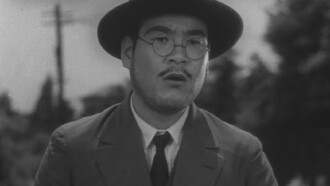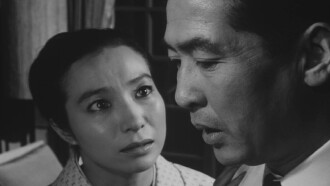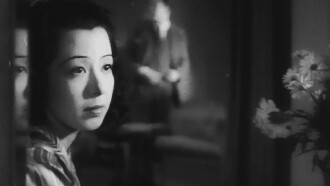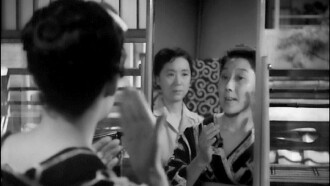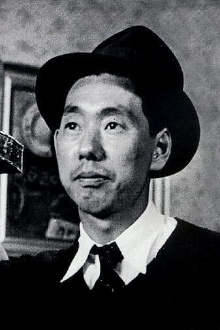
Mikio Naruse Trailers
Mikio Naruse 100th Birth Anniversary TrailerHana Yori Dango: Studio F's Cherry Blossom Viewing Trailer
Mikio Naruse (August 20, 1905 – July 2, 1969) was a Japanese filmmaker, screenwriter, and producer who directed some 89 films spanning the period 1930 (towards the end of the silent period in Japan) to 1967.
Naruse is known for imbuing his films with a bleak and pessimistic outlook. He made primarily shomin-geki (working-class drama) films with female protagonists, portrayed by actresses such as Hideko Takamine, Kinuyo Tanaka, and Setsuko Hara. Because of his focus on family drama and the intersection of traditional and modern Japanese culture, his films are frequently compared with the works of Yasujirō Ozu. His reputation is just behind Akira Kurosawa, Kenji Mizoguchi, and Ozu in Japan and internationally; his work remains less well known outside Japan than theirs.
Akira Kurosawa called Naruse's style of melodrama, "like a great river with a calm surface and a raging current in its depths".

Most Popular Mikio Naruse Trailers
Total trailers found: 86
24 April 1940
9th directorial work by Yamamoto Satsuo.
24 September 1942
The premature death of a young mother serves as inspiration for her husband and son.
18 January 1941
A Fond Face from the Past is also set in a rural community, specifically a village outside Kameoka, near Kyoto.
17 August 1951
The troubled relationship between a writer and his ballet teacher wife, who has for years loved another man, finally leads to the breakup of the family.
10 April 1952
A high-born woman named Okuni travels around the country with Gohei, a samurai retainer who is in service to her.
22 January 1950
Three humorous love stories set in rural Japan.
22 December 1935
A story of two sisters, the older being more traditional, the younger a "moga" ("modern girl"). Their widowed father runs the family sake shop, but is running into financial trouble, causing him to tamper with his stock; Meanwhile, his long-time mistress yearns for something more serious.
11 February 1943
A self-absorbed young actor humiliates an elderly Noh performer, who then commits suicide. His act of cruelty compels his father to disown him, leading the once promising actor to a life on the streets.
02 May 1930
Directed by Mikio Naruse. It is presumed to be lost.
29 April 1953
Ten years into a marriage, the wife is disappointed by the husband's lack of financial success, meaning she has to work and can't treat herself and the husband finds the wife slovenly and mean-spirited: she neither cooks not cleans particularly well and is generally disagreeable.
21 May 1960
Sanae is left a widow after her prestigious husband dies, but holds the proceeds of a million yen insurance policy.
01 April 1947
Omnibus of love stories from 1947 directed by famous directors, featuring big stars.
15 January 1960
Keiko, whom everyone calls Mama, narrates her story: she's a hostess on the Ginza, 30, a widow. She describes life's vicious cycle: acting cheerful around drunks, dressing and living well to convey confidence, needing money for these expenses and for her demanding mother and brother, and knowing she's growing older.
14 April 1951
A few days in the life of a quiet geisha, single mother of a smart young boy, in the lively Tokyo quarter of Ginza.
01 April 1933
An aging geisha, whose angry teenage son is ashamed of her profession, works alongside a young geisha, resentful of her family for forcing her into a life of shame.
11 March 1939
A large family scrapes by on the meager salaries of the father and three eldest sons, who left school in order to work and support the family.
15 January 1964
War widow Reiko rebuilds and runs the grocery shop in the house of her husband's family. Many years later, their business is threatened by a newly built supermarket and Reiko's in-laws plan to convert their small shop into a supermarket, to her detriment.
19 August 1953
The eldest daughter of a rural family Mon returns home from Tokyo pregnant after an affair with a college student Kobata, which causes a scandal that will threaten the marriage prospects of the younger sister San, in her cash-strapped family.
01 March 1935
Three sisters earn money for their bossy mother by being samisen street musicians. This means mainly playing a banjo type instrument for tips in bars.
18 November 1967
A man is involved in a fatal car accident, and though he is blameless, his company transfers him to a remote branch in a small town.
14 January 1956
Fumiko and Ryōtarō Namiki's marriage has gone stale, with both constantly arguing over what to do on a day off, or about her cutting out recipes from the newspaper before he finishes reading it.
13 June 1946
A comedy about two salarymen who routinely degrade themselves for their boss.
30 May 1961
The real mother of the two children of a respectable university professor is not his wife, but his mistress, the hostess of a Ginza bar the family frequents.
15 June 1954
What is the life of a Geisha like once her beauty has faded and she has retired? Kin has saved, and become a wealthy money-lender, spending her days coldly collecting debts.
03 June 1950
Keiko Yukawa is a former prostitute and the newest inmate at White Lily, a female rehabilitation facility.
23 November 1951
In post-WWII Osaka, a middle-aged woman is forced to examine her dreary life and marriage when her husband's young and flirtatious cousin arrives for a brief stay to escape an arranged marriage.
25 January 1945
An Invention laboratory is working on the creation of a performance 'bomb' in the shape of a rocket that could be delivered to the front in order to entertain and amuse the national troops.
16 November 1963
A woman remembers her own marriage when dealing with the love life of her son.
15 January 1955
A married Japanese forester during WWII is sent to Indochina to manage forests. He meets a young Japanese typist and promises to leave his wife.
03 May 1956
A young woman tries to raise money to open her own coffee shop. She arranges a loan when her rigid family won't help and then her husband becomes jealous of the loan officer.
28 May 1957
A woman marries, gives birth to a stillborn child, and divorces, falls in love with a hotel-keeper, only to find herself subordinated to his drive for success, takes up with a tailor who cannot console himself with her strong personality.
01 July 1941
In 1937 fighting erupted between Japanese and Chinese troops at the Marco Polo Bridge. A team of Japanese spies broadcasting radio programs to promote pro-Japanese sentiment were searching for a Chinese speaking announcer.
26 April 1934
Mikio Naruse’s final silent film is a gloriously rich portrait of a waitress, Sugiko, whose life, despite a host of male admirers and even some intrigued movie talent scouts, ends up taking a suffocatingly domestic turn after a wealthy businessman accidentally hits her with his car.
29 September 1962
Based on the life and career of novelist Fumiko Hayashi, she bitterly struggles for literary recognition in the first half of the 20th-century – her affairs with feckless men, the jobs she took to survive (peddler, waitress, bar maid), and her arduous, often humiliating attempts to get published in a male-dominated culture.
14 January 1962
Drama about the lives of the five daughters and daughter-in-law of a store owner.
21 January 1930
Silent comedic short by Mikio Naruse
13 May 1958
Anzukko (Little Peach) is the daughter of a successful writer. She turns down each one of her suitors, until she marries a beginning writer named Ryokichi.
11 May 1944
The Way of Drama unfolds in the world of kabuki in Osaka, but also addresses the politics of popular culture and the rivalry between theatrical styles like those used by amateur actors to dramatise contemporary events.
27 January 1944
A small community in wartime Japan learn how to make do with less.
18 December 1940
This film depicts a troupe of wandering kabuki players traveling through rural Japan.
08 August 1931
A short concerning an impoverished insurance salesman and his scrappy son, whose fisticuffs with the other boys of their village put his father’s livelihood in jeopardy.
29 August 1930
It is considered to be a lost film.
12 February 1966
Tashiro coincidentally meets his best friend Sugimoto in a bar very close to the apartment in which Sugimoto’s wayward wife is found dead.
07 December 1933
It is considered to be a lost film.
15 January 1954
An ingratiating bride develops warm ties to her father-in-law while her cold husband blithely slights her for another woman.
16 December 1932
An actress returns to Tokyo after a successful stint in Hollywood to reclaim—with the help of her gangster brother—the daughter she abandoned years before.
02 September 1958
A war widow with a young boy manages a farm with her bossy mother-in-law. When a reporter comes to interview her, the two begin an affair.
09 October 1952
The story of Kiyoko, a young woman who has successfully managed to make a break with her dysfunctional family who have been trying to arrange a marriage for her with a disagreeable man whom she has rejected.
28 March 1946
Reputedly based on Frank Capra’s 1939 film Mr. Smith Goes to Washington, A Descendant of Tarô Urashima is about a repatriated soldier who becomes populist politician in the Japanese Happiness Party.
22 March 1949
A melodramatic love story, a would-be apprenticeship between the titular bad girl and the optimistic scholar returning from the big city.
29 September 1938
Mr. Tsurujiro is a Japanese folk singer assisted by Ms. Tsuruhachi on the shamisen. The pair is popular, but he often nitpicks her music and so they split.
28 June 1945
Young, timid bowmaster Kazuma seeks to beat the archery record set by Hoshino Kanzaemon, a mysterious figure who, it is rumoured, drove the previous champion—Kazuma’s father—to suicide.
21 September 1933
It is considered to be a lost film.
01 October 1937
Wealthy young Toyomi and Shintaro are in love. However, Shintaro’s father is arranging for him to marry Yurie, the scion of an even wealthier family.
20 November 1956
Otsuta is running the geisha house Tsuta in Tokyo. Her business is heavily in debt. Her daughter Katsuyo doesn't see any future in her mother's trade in the late days of geisha.
15 August 1935
Kimiko, a Tokyo white-collar working girl, lives with her serious, intellectual, haiku-writing mother.
14 May 1950
University students Sudo and Mori make money by picking up rich girls in dance clubs and conning them into giving them cash.
12 July 1960
A woman and her daughter are in love with the same man, a chef at the restaurant that the mother manages.
27 May 1932
It is considered to be a lost film.