Director Jean-Luc Godard reflects in this movie about his place in film history, the interaction of film industry and film as art, as well as the act of creating art.
In the Realms of the Unreal is a documentary about the reclusive Chicago-based artist Henry Darger. Henry Darger was so reclusive that when he died his neighbors were surprised to find a 15,145-page manuscript along with hundreds of paintings depicting The Story of the Vivian Girls, in What is Known as the Realms of the Unreal, of the Glodeco-Angelinnian War Storm, Cased by the Child Slave Rebellion.
Documentary portrait of Carl Boenish, the father of the BASE jumping movement, whose early passion for skydiving led him to ever more spectacular -and dangerous- feats of foot-launched human flight.
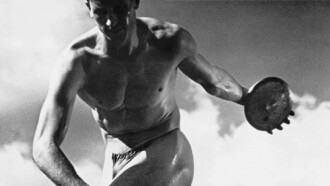
Part two of Leni Riefenstahl's monumental examination of the 1938 Olympic Games, the cameras leave the main stadium and venture into the many halls and fields deployed for such sports as fencing, polo, cycling, and the modern pentathlon, which was won by American Glenn Morris.
Starting with a long and lyrical overture, evoking the origins of the Olympic Games in ancient Greece, Riefenstahl covers twenty-one athletic events in the first half of this two-part love letter to the human body and spirit, culminating with the marathon, where Jesse Owens became the first track and field athlete to win four gold medals in a single Olympics.
In 1984-85, people at Lake Tahoe fell ill with flu symptoms, but they didn't get better. Medical literature documents similar outbreaks: in 1934 at LA county hospital, in 1948-49 in Iceland, in 1956 in Punta Gorda, Florida.
Underwater Dreams, narrated by Michael Peña, is an epic story of how the sons of undocumented Mexican immigrants learned how to build underwater robots.
When twenty-six-year-olds Shainee Gabel and Kristin Hahn quit their Hollywood jobs, packed up a borrowed car and hit the road, it was with the deeply felt conviction that somewhere, shrouded in the din of talk shows and tabloid headlines, they'd discover the real America, alive and well in all of its regions and demographics.
Nine fictitious documentaries and films reflect the mood of late 1970s Germany, particularly the two-month period in 1977 when a businessman was kidnapped by the RAF (Red Army Faction).
Popular movie trailers from 2006
These some of the most viewed trailers for movies released in 2006:
"Critically Acclaimed" is a movie featuring the world's greatest surfers. Two years in the making and a trip around the world Critically Acclaimed brings the most exotic surf locations and exciting surfers into your living room.
High school senior Wendy's premonition of a deadly rollercoaster ride saves her life and a lucky few, but not from death itself — which seeks out those who escaped their fate.
A mysterious story of two magicians whose intense rivalry leads them on a life-long battle for supremacy -- full of obsession, deceit and jealousy with dangerous and deadly consequences.
To take down South Boston's Irish Mafia, the police send in one of their own to infiltrate the underworld, not realizing the syndicate has done likewise.
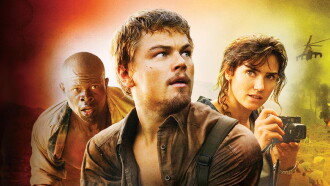
An ex-mercenary turned smuggler. A Mende fisherman. Amid the explosive civil war overtaking 1999 Sierra Leone, these men join for two desperate missions: recovering a rare pink diamond of immense value and rescuing the fisherman's son, conscripted as a child soldier into the brutal rebel forces ripping a swath of torture and bloodshed countrywide.
To test its top-secret Human Hibernation Project, the Pentagon picks the most average European-Americans it can find - an Army private and a prostitute - and sends them to the year 2505 after a series of freak events.
Ronnie lives in a small sleepy village and is the owner of a small company for deep-frozen goods. Daydreams, contact ads, the firemen's brassband, the weekly visits at his shrink and his buddy Lars' cynical remarks about air guitar and vinyl-records are the highlights of Ronnie's life.