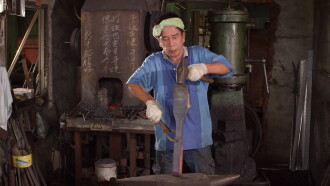
The essence of progress in civilization has always been handiwork. In traditional Chinese civilization, the emperor was supreme. Vested with the authority to enjoy the best of handiwork, all crafts used for residence, clothing, food, and travel were the most refined and splendid.
As part of a high-tech forensic probe into the demise of Egyptian Pharaoh Tutankhamun, scientists use X-rays and CT scans as they attempt to reach a conclusion about just how this famed king died.
In the Renaissance castle of the Polish count - Jan Potocki - in Lancut, the modern traces of a past glory persevere and become visible again at the tones of Krzysztof Penderecki's music and Brothers Quay's imaginary animation.
One Country, Two Systems? No Way! say the youth of Taiwan. But China under President Xi Jinping wants more than ever to bring the island of Taiwan back into the fold, just like Hong Kong.
The rural Taiwanese outer islands of Kinmen sit merely 2 miles off the coast of China. Kinmen attracts tourists for its remains from the 1949 Chinese Civil War.
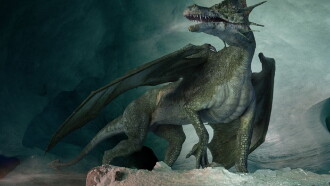
"The Last Dragon" is a nature mockumentary about a British scientific team that attempts to understand the unique incredible beasts that have fascinated people for ages.
The Kabul National Museum, once known as the "face of Afghanistan," was destroyed in 1993. We filmed the most important cultural treasures of the still-intact museum in 1988: ancient Greco-Roman art and antiquitied of Hellenistic civilization, as well as Buddhist sculpture that was said to have mythology--the art of Gandhara, Bamiyan, and Shotorak among them.
With Taiwan remaining in the grip of martial law in 1982, a group of filmmakers from that country set out to establish a cultural identity through cinema and to share it with the world.
Popular movie trailers from 2008
These some of the most viewed trailers for movies released in 2008:
A woman takes a man she just met at a nightclub to a hotel, so they can have a one-night stand, but things start to get complicated when he asks her to spend the night with him so they can have a chance to know about each other between the sheets.
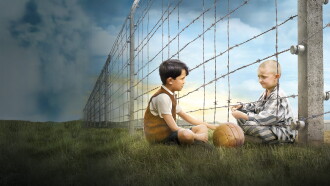
When his family moves from their home in Berlin to a strange new house in Poland, young Bruno befriends Shmuel, a boy who lives on the other side of the fence where everyone seems to be wearing striped pajamas.
In this soulful surf documentary, filmmaker Cyrus Sutton shadows five different surfers, capturing the ups and downs of their daily routines -- much like the ebb and flow of the waves they ride with such passion.
A mysterious story set in a run-down house where an eccentric elderly lady lives alone. One day, a little girl steps inside the house and never comes back.
Director and actor Ray O'Neill presents the movie Greater Threat in the year (2008). the movieis an action-crime film starring Ray Goodwin as Ray Kieffer, Ray O'Neill as Mike Johnson, Tamas Menyhart as Nicolai, Leeann Johnson as Carol Green, Chuck French as Steve Mancini, Caitlin Noah as Marie Kieffer, Jason McAleer as Sachon, Cheryl Goodlin as Eileen Conway, Ray Dippolito as Judge Overton, David Schramm as Ivan, Mikel Mahoney as Santos DeJesus.
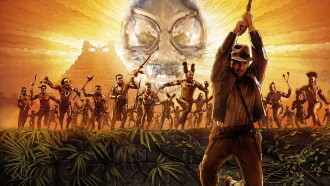
Set during the Cold War, the Soviets—led by sword-wielding Irina Spalko—are in search of a crystal skull which has supernatural powers related to a mystical Lost City of Gold.
Comments
Have you watched In the Golden Age of Chinese Craftsmanship yet? What did you think about it?