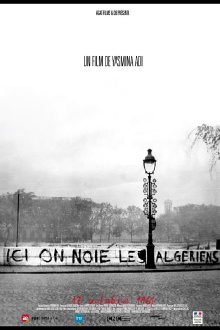
In response to the call of the Front de libération nationale (F.L.N., the National Liberation Front), thousands of Algerians from Paris and its surroundings march on October 17, 1961, to protest against the curfew imposed on them. This peaceful demonstration will be violently put down by the police. 50 years on, the filmmaker sheds light on this still taboo subject. Blending testimony and unseen archive footage, history and memory, past and present, the film relates the different stages in these events and reveals the strategy and methods applied at the highest level of the French state: manipulation of public opinion, the systematic challenge of every accusation, the censoring of information in order to prevent investigation.
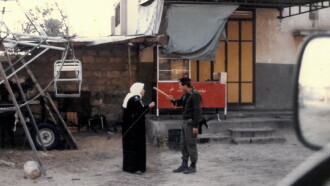
An exhaustive explanation of how the military occupation of an invaded territory occurs and its consequences, using as a paradigmatic example the recent history of Israel and the Palestinian territories, the West Bank and the Gaza Strip, from 1967, when the Six-Day War took place, to the present day; an account by filmmaker Avi Mograbi enriched by the testimonies of Israeli army veterans.
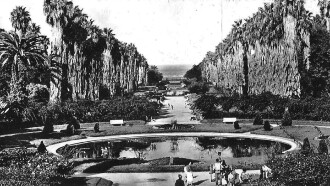
The film, shot in 1938, is part of a series entitled “The true face of Algeria”. The film highlights the proximity of Algiers to Paris and promotes air travel.
Structured as a labyrinth-like game and inspired by Jorge Luis Borges, Aleph is a travelogue of experience, a dreamer's journey through the lives, experiences, stories and musings of protagonists spanning ten countries and five continents.
Parisian authorities clash with the Front de Libération Nationale (FLN) in director Alain Tasma’s recounting of one of the darkest moments of the Algerian War of Independence.
Their names are Abdallah, Ahmou, Mohamed, Ramdane, Salah, Sebti, and Tahar. They came from Algeria alone between 1951 and 1971 to work in France, intending to return home one day.
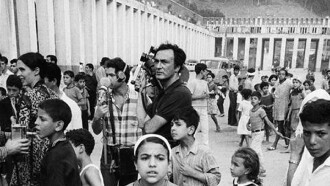
Festival panafricain d'Alger is a documentary by William Klein of the music and dance festival held 40 years ago in the streets and in venues all across Algiers.
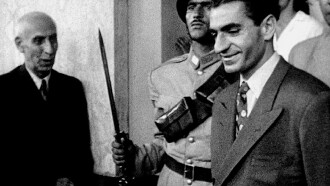
Tehran, Iran, August 19, 1953. A group of Iranian conspirators who, with the approval of the deposed tyrant Mohammad Reza Pahlavi, have conspired with agents of the British MI6 and the US CIA, manage to put an end to the democratic government led by Mohammad Mosaddegh, a dramatic event that will begin the tragic era of coups d'état that, orchestrated by the CIA, will take place, over the following decades, in dozens of countries around the world.
Documentary on the beginnings of Algerian independence filmed during the summer of 1962 in Algiers. The film was banned in France and Algeria but won the Grand Prize at the Leipzig International Film Festival in 1965.
“La Zerda and the songs of oblivion” (1982) is one of only two films made by the Algerian novelist Assia Djebar, with “La Nouba des femmes du mont Chenoua” (1977).
Djamila, a young Algerian woman living with her brother Hadi and her uncle Mustafa in the Casbah district of Algiers under the French occupation of Algeria, sees the full extent of injustice, tyranny and cruelty on his compatriots by French soldiers.
In 1946, Isaac Woodard, a Black army sergeant on his way home to South Carolina after serving in WWII, was pulled from a bus for arguing with the driver.
Alternative movies trailers for Here We Drown Algerians
More movie trailers, teasers, and clips from Here We Drown Algerians:
1ere partie Here we drown Algerians وثائقي: نموت و تحيا الجزائر
Here We Drown Algerians full hd movie trailer.
Popular movie trailers from 2011
These some of the most viewed trailers for movies released in 2011:
The film is a short story about a guy called Steve who has struggled with the Christian faith, having seen his parents, who are both Christians, break up because of his dad's unfaithfulness.
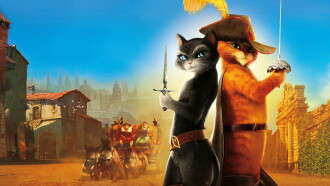
Long before he even met Shrek, the notorious fighter, lover and outlaw Puss in Boots becomes a hero when he sets off on an adventure with the tough and street smart Kitty Softpaws and the mastermind Humpty Dumpty to save his town.
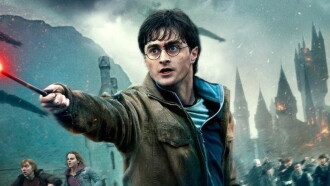
Harry, Ron and Hermione continue their quest to vanquish the evil Voldemort once and for all. Just as things begin to look hopeless for the young wizards, Harry discovers a trio of magical objects that endow him with powers to rival Voldemort's formidable skills.
There's a new teacher in town—Spelunker! This unusual man is anything but a typical instructor, giving speeches about traffic safety to the students, reacting strangely to a humidifier, and enjoying lunch— albeit with ample condiment mishaps.
Comments
Have you watched Here We Drown Algerians yet? What did you think about it?