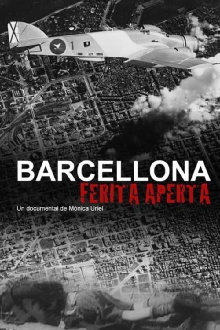
Ordered personally by Mussolini, with the expression "martellamento diluito nel tempo", the bombings were a studied way of sowing terror, massacring citizens little by little and ending their sources of livelihood. The film provides little-known data from that episode, such as official documents that show that democratic Italy continued to receive money from Spain for its participation in the war. In 2013, the Barcelona Court accepted a complaint against the Italian pilots who participated in the bombings. The victims, for their part, are still waiting for Italy to apologize for these events.
Obsessively referring to the traumas and wounds that the Spanish civil war (1936-39) and Franco's dictatorship (1939-75) caused in their day no longer serves to explain the impassable abyss of incomprehension and hatred that the abject policies and radical positions adopted by both the right and the left in recent decades have opened up before the citizens of a country that is barely known beyond hackneyed cultural clichés.
The Spanish journalist Manuel Chaves Nogales (1897-1944) was always there where the news broke out: in the fratricidal Spain of 1936, in Bolshevik Russia, in Fascist Italy, in Nazi Germany, in occupied Paris or in the bombed London of World War II; because his job was to walk, see and tell stories, and thus fight against tyrants, at a time when it was necessary to take sides in order not to be left alone; but he, a man of integrity to the bitter end, never did so.
A particular reading of the hard years of famine, repression and censorship after the massacre of the Spanish Civil War (1936-39), through popular culture: songs, newspapers and magazines, movies and newsreels.
Eight foreign characters recall their exploits and fears in Malaga, a paradise city that starts a revolution on July 18th 1936, as the military coup is stopped by popular rebellion, until February 9th 1937, when Mussolini troops take Malaga and put it under the rule of Franco.
In 1948 Pablo Picasso met the hairdresser Eugenio Arias. Both were linked by the fate of emigration. If Picasso initially only had his hair cut by Arias, a deep friendship soon developed.
In july 1936, the civil war began in Spain, and it would last three years. Since then, it has constantly been a subject for fascination and controversy.
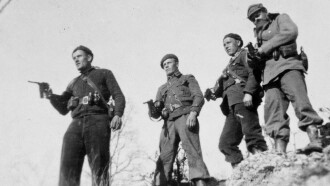
In July 1936, the Spanish people resist the offensive by Franco’s army, backed by Italian and German fascists, aimed at conquering the country's major cities.
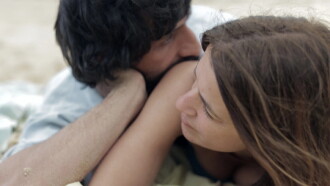
While cleaning the apartment of Lucía, her deceased grandmother, Anna finds a notebook where she discovers the story of a secretly kept love, lived during the turbulent years of the Second Republic and the Spanish Civil War.
This documentary features the story of Jules Paivio, the last living Canadian volunteer of the infamous Mackenzie-Papineau Battallion of the “International Brigades”.
Popular movie trailers from 2016
These some of the most viewed trailers for movies released in 2016:
A hardworking young man bent on saving his sick son must convince a stranger to kill an innocent student or an unknown group will detonate the bomb strapped under his coat.
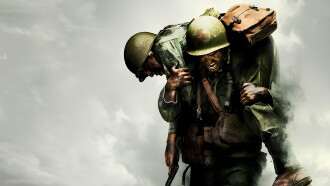
WWII American Army Medic Desmond T. Doss, who served during the Battle of Okinawa, refuses to kill people and becomes the first Conscientious Objector in American history to receive the Congressional Medal of Honor.
Eade is a fourteen year old girl who has spent her entire life on the spaceship Cradle. Eade and her dad are on the return journey to Earth when an explosion cripples the craft and seriously injures her father.
A man wakes up to find himself alone in a train carriage. During his train journey, unexpected events will lead him through to finally discover his lost memories.