Carmen Castillo Trailers
Santiago, Italia TrailerCalle Santa Fe TrailerThe Skinny Alejandra Trailer
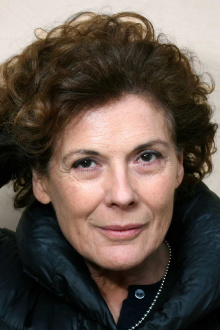
Born in Santiago de Chile, she worked at La Moneda Palace with Salvador Allende. After the death of her partner, Miguel Enriquez, at the hands of the military, Carmen Castillo, who was pregnant and injured, was expelled from Chile and came to France as a political refugee.
She has directed numerous documentaries for television, especially for the French channels TF1 and FR3 and for the Franco-German Arte. The first was Los muros de Santiago (1983), which was followed by Estado de guerra: Nicaragua (1984). La Flaca Alejandra (1993) won the Golden FIPA at Cannes, in addition to other awards in Geneva, Monte Carlo, San Francisco and New York.
She then directed La verdadera leyenda del Subcomandante Marcos (1995), Inca de oro (1996), El bolero, una educación amorosa (1999), First Prize at the Annecy Festival, Viaje con la cumbia por Colombia (2000), María Félix, la inalcanzable (2000), El Camino del Inca (2001), El astronomo y el indio (2002), First Prize at the Paris Scientific Film Festival, José Saramago, el tiempo de una memoria (2003), Mísia, la voz del fado (2003) and El país de mi padre (2004), Second Prize Fidocs in Santiago de Chile.
He also directed the fiction feature film series for Arte Tierras extranjeras, between 1994 and 1999.
Carmen Castillo's most recent work is Calle Santa Fé (2007), which was presented in Cannes' Un Certain Regard and will be shown at this year's San Sebastian Film Festival in the Zabaltegi section. She has also written the scripts for Inca de oro and Color Habana, which have already been completed, and those for Hasta luego and La montaña azul, which are in pre-production.
Carmen Castillo has also published several books, including Un día de octubre en Santiago (1980), Ligne de fuite (1987) and Santiago/Paris, el vuelo de la memoria (2000), with Mónica Echeverría.

Most Popular Carmen Castillo Trailers
Total trailers found: 19
18 August 2019
A woman yearns to find her identity through her character:a supervillain, dancer and mother, in the Mena sector, or what they call "the largest ghetto in Chile", in Puente Alto, Santiago.
06 December 2018
After the coup d'État of the Democratic government of Allende, the embassy of Italy in Santiago played a major role in helping the opposers of the regime, and extradited many of them to Italy.
08 September 2004
A leftist revolutionary or a reformist democrat? A committed Marxist or a constitutionalist politician? An ethical and moral man or, as Richard Nixon called him, a "son of a bitch"? In SALVADOR ALLENDE, acclaimed Chilean filmmaker Patricio Guzmán (The Battle of Chile and Chile, Obstinate Memory) returns to his native country thirty years after the 1973 military coup that overthrew Chile's Popular Unity government to examine the life of its leader, Salvador Allende, both as a politician and a man.
13 October 2018
During Chilean dictatorship an exceptional group of women emerges and they will leave a unique legacy in history.
23 May 2001
Untouchable, inaccessible, ungraspable... Maria Felix is one of the great myths of Latin American cinema.
14 October 2007
October 5, 1974: In the suburbs of Santiago, pregnant Carmen is badly injured and her partner Miguel, head of the resistance against Pinochet's dictatorship, is killed in combat.
29 April 2015
What does mean to be politically active in 2015? Documentarian Carmen Castillo hops the globe and engages with her recently passed friend, the philosopher and agitator Daniel Bensaid, to answer such questions.
09 May 2017
Today, as in the spring of 2016, when this film was shot, the debate about the future of the island encourages Cuba and its inhabitants.
11 February 2002
4 of the world biggest astronomical observatories have been built in the Atacama desert (Chile). A new observatory, the ALMA, is going to be constructed close to an Indian village established in the same Cordillera for centuries.
27 September 2019
Carmen Castillo reconstructs what life was like at the French Embassy in Chile from September 1973 to July 1974, through the writings of Françoise de Menthon, wife of the ambassador, and the testimonies of both embassy officials from that time andr some of its hundreds of refugees.
13 August 2004
In 2002, Carmen Castillo returned to Chile and did a memory exercise centred on the life of her father Fernando Castillo Velasco, former rector of Universidad Católica de Chile and Premio Nacional de Arquitectura (1983).
11 May 2010
From the plains of the Huasco Valley to the Atacama Desert and the mines of northern Chile, the narrator gathers the testimonies of farmers, neighbors, small landowners and political leaders.
16 September 1985
1980s. The Counter-Revolution from three media points of view: that of the United States, that of foreign countries and that of Nicaragua .
01 January 1995
Documentary that tells the deepest story of Mexico today. The story of the Zapatista Army of National Liberation, that army of Mayan Indians that burst into our lives with the sound of the voices of women and men who emerged, on January 1, 1994, from the Lacandon jungle to tell the powerful enough is enough!
15 April 1996
Alba lives in Paris. She is the daughter of a Chilean who was murdered under Pinochet. On TV, she discovers the face and name of the executioner of her mother.
15 September 1994
A conversation between the director of this film, Carmen Castillo and Marcia Merino, AKA La Flaca Alejandra who was one of the collaborators of Pinochet's secret police (the DINA) after being tortured by them.
27 July 2002
The 23,000km long route of the Incas laces its way through the Cordillera range of the Andes. This road network served as the major means of transport, of communication and of government administration in the history of pre-colonialist America.
01 January 2003
A portrait of José Saramago built from the Nobel prize winner's reflections on memory, literary creation, the passage of time and the finitude of life.