Choi Woon-bong Trailers
My University Is a Factory TrailerI can see the Big Dipper TrailerPioneer Honor Trailer

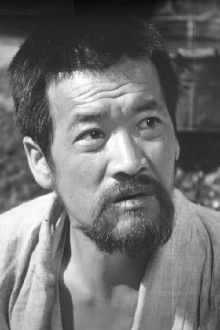
My University Is a Factory TrailerI can see the Big Dipper TrailerPioneer Honor Trailer

Total trailers found: 39

14 January 1942
In the previous year, the harvest had been very poor and many farmers starved durng the winter. With the new growing season, it looks as if the harvest will again be bad because of a lack of rain.
01 July 1958
How schoolboy Yoon Ho and his friend Seung Mo are looking for the grave of his brother who died during the struggle of the Korean people for their independence.
20 September 1938
Seong-jae, a maid of Yeong-dal's house, lives with her daughter Soon-i. Her neighboring village, Seok-ju, loves Soon-i.

29 April 1940
A film based on the memoir of a 4th grade student who received the grand prize in a writing contest sponsored by Gyeongseong Daily.
23 August 1957
Story of two brothers, stayed in different parts of Korea. Elder one works on recovery of electric plant.
28 June 1947
Three men who have been taken to the compulsory labour under the Japanese colonialism turn back to their hometown, a fishing village.
04 November 1944
A pro-Japanese film in which a teacher at a school in an island village gives her students a comprehensive education, encouraging them to also volunteer to enlist in the Imperial Japanese Army.
01 January 1956
The story of a Korean who, since childhood, lived under the rule of Japanese invaders. During the Korean War, the hero devotes all his strength to the fight against the aggressors, worthily serving the homeland he loves.
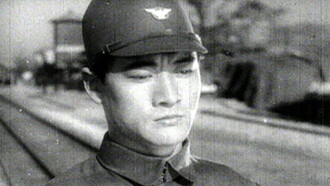
08 February 1941
A young man is anguished that Koreans cannot volunteer to join to Japanese Imperial Army.
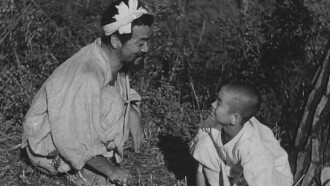
09 February 1949
An orphan left in the care of a Buddhist temple becomes attached to a young widow who arrives there to mourn her recently deceased son.
04 October 1935
Chun-hyang, the daughter of a geisha in the Namwon region, and Lee Mong-ryong are engaged. When Lee Mong-ryong goes up to Seoul with his father, Byeon Hak-do, the newly appointed magistrate, attempts to take Chun-hyang.
20 May 1939
The border smuggler leader Lee Geum-ryong had a sweetheart Kim So-young, who was only looking for a chance to escape.
06 May 1938
The film depicts the reality of Joseon at the time through the conflict between the old and the new generation and the ethics between father and son.
08 November 1940
An educational film about how a backward impoverished village was able to prosper thanks to the initiative of the village youth who began to grow tobacco.
01 June 1961
After graduating from school, the young man came to work at the factory, although he wanted to become a writer.
09 September 1939
Pro-Japanese propaganda film to educate the people in Korea. The old man, convinced that "the expansion of production is the duty of the entire population," faints while alone carrying water to the family's rice field.
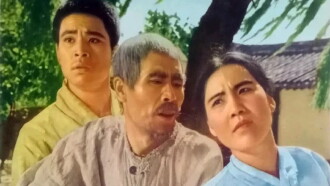
01 January 1963
The landlord kidnaps the child because of the family's debt. When a new life begins after being released, the kidnapped Sunhi regains her real name and mother after 30 years thanks to the assistance of the new government.
01 January 1939
Simple school teachers Koh Young-woo and Choi Il-yeop love each other and do their best to teach the illiterate.
06 June 1943
A Japanese-speaking family in occupied Korea deal with the war.
01 January 1945
A pro-Japanese film showing documentary footage of a dance troupe made up of Koreans comforting Koreans and their families during conscription on the Japanese mainland.
01 February 1959
The story of how the pioneers helped to hide the equipment of the mine where gold was mined from the enemy, and thereby disrupted the restoration of the work.
16 June 1944
Two Korean conscripts undergo Imperial Japanese Army training, much to the pleasure of their families.
27 December 1956
A screen adaptation of the novel by North Korean writer Yong Song. On the anti-Japanese partisan struggle of the Korean partisans in the 1930s.
15 November 1940
A propaganda film used by the Japanese military to recruit young Korean men as soldiers to defend thI
25 September 1939
A couple lived in the mountains of Dume who were grilling charcoal. Although it was a poor life, Hyun-bo (Choi Woon-bong) was happy whenever he saw his wife (Hyun Soon-young).
01 January 1953
The film tells the story of a small group of the Korean People's Army, led by Hakcheol Lee, deputy chief of the reconnaissance division, which went behind enemy lines.
30 April 1958
The film tells a funny story about how two old men, wanting to meet their son-in-law and daughter-in-law, travel from the village to Pyongyang and find themselves in a funny and confusing situation.
01 January 1952
The plot revolves around a pair of hunters, Moonil Lee and Sun-deok Kim, who wage an armed struggle to defend their homeland during the war on the Korean Peninsula (1950-1953).
17 November 1954
Against the backdrop of the time when North Korea was fighting the war for the liberation of the Korean peninsula (1950-1953), the main character, Ok-khi Cho, participates in a guerrilla war in a village occupied by the American military.
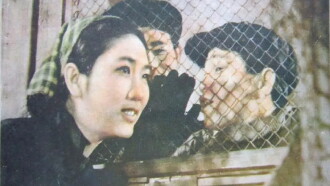
01 January 1958
About how spies made their way to the plant where Geum Sam works and how they, using some facts from his biography, want to force this person to help them in their criminal activities.
01 May 1959
About the plight of poor man Dek Sam and his daughter Bok Sir, expelled from the north of Korea by supporters of the South Korean regime of Singman Ri, who, like thousands of other unemployed, are doomed to terrible hardships and poverty.
31 December 1956
The film tells about the life and struggle of the Korean peasants living on the Phundekber plain, near the 38th parallel, against the Americans and the Lisinman people.
02 August 1955
The film tells the story of a newlywed couple working on the railroad (the husband is a train driver and his young wife works at a lathe) in a lyrical and poignant tone.
30 June 1958
Based on the story of the same name by Han Sorya, which tells one of the pages of the life of South Korean youth - her struggle against external interference and for the unification of the peoples of South and North Korea.
