Chris Welsby Trailers
Running Film Trailer
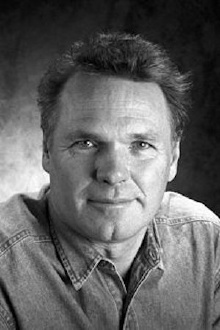
Chris Welsby is a British/Canadian experimental filmmaker, digital media and installation artist. In the 1970s he was a member of the London Film-Makers' Co-op (now LUX film distributors), and co-founder of the Digital Media Studio (now Slade Centre for Electronic Media in Fine Art) at the Slade School of Fine Arts, UCL, London. He is considered one of the pioneers of expanded cinema and moving image installation and was one of the first artists to exhibit film installations at the Tate and Hayward galleries London. His expanded cinema works and installations have since continued to break new conceptual ground and attract critical attention. A. L. Reece, in British Film Institute's A History of Experimental Film and Video, wrote: "Twenty-five years ago, when he made his first projections for large spaces, film and art rarely met in the gallery; now it is common and installation art is a distinct practice."
Most Popular Chris Welsby Trailers
Total trailers found: 27
31 December 2021
WHITE OUT was recorded and edited one cold morning in February 2021. It’s about how light looks when it’s falling on snow and how snow can make white light visible even in the darkness of winter.
15 July 1972
A camera recorded one frame every minute (day and night) for two separate three-week periods in autumn and spring.
31 December 1974
The location for this film is a small London park which is situated close to the busy centre of the city.
02 January 1974
The film was shot in one continuous 400 foot take. The camera looks through the blades of the windmill, recording either what is behind or in front of the windmill blades.
01 January 1976
This film is based on the colour separation process. High contrast film stock was run three times through a stationary camera; once for each of the light primaries.
01 January 1972
Two cameras mounted on tripods with wind vane attachments were positioned about 50 feet apart along an axis of 45 degrees to the direction of the wind.
10 September 1973
From LUX: "Welsby adopts a system of camera movements to chart the movement of tides, waves and sky".
01 January 2019
In the early afternoon a cool breeze raises white caps on the ocean before rushing busily inland. The palm trees respond with broad circular gestures and their lower branches echo this wave-like rhythm, by turns revealing and concealing the cool shade and patches of sunlight below the forest canopy.
01 January 1972
A London park and artist Chris Welsby runs repeatedly into frame and off into the distance; his actions contrast with the more leisurely activities of others passing by.
01 January 1975
Gusts of wind on Hampstead Heath give shape to an exploratory film that seeks to present landscape in a different way.
01 January 1980
Estuary was made during the three weeks between December 17th 1979 and January 6th 1980. The film was shot from a small cabin boat moored near the mouth of the Keyhaven river.
01 January 2019
Strapped high on a moving branch of a palm tree, the camera sways gracefully in the ocean breeze. In the frame we see other waving branches, their delicate leaves like so many tiny green sails, vibrating in response to the force of the wind as it carries water vapour from the ocean to the land.
02 January 1994
The overall feel of Drift is sombre and mysterious; a study of winter light falling on the surface of water, metal and cloud.
01 January 1979
The notion of a line which divides the land from the sea is a notion of convenience which is only valid in certain circumstances.
01 January 2017
Shot in the Sonora desert, Mexico in March 2017 "Desert Spring" is a joyful little dance between camera (autofocus), the wind and some flowering foliage I found high on the shady side of a mountain.
10 September 1973
This is not so much a film about a park, or a record of the people passing through the park. Here the camera is not a passive observer, nor is it used as a surveillance device.
01 January 2020
As the harsh reality of Climate Change takes hold in the public imagination, the idea of nature as landscape becomes increasingly inappropriate.
01 January 1973
Two time-lapse sequences of boats in an estuary, the tide rising and falling.
02 January 1976
The film is a continuous, "real time" tracking shot of a stream bed. The length of the track was ten yards.
01 January 1974
Seven Days invites the viewer to contemplate the complex relationship between the structures we invent in order to observe the natural world and the structure we perceive as a result of those observations.
02 January 1988
An idyllic river flows through a forest, flashes of light and colour threaten to erase the image, bursts of short wave radio and static invade the tranquillity of the natural sound.
01 January 1974
The camera was placed on the flexible branch of a tree in a strong wind. The composition included both stationary and moving trees (a wooded landscape).
01 January 2015
In Momentum the fallibility of human aspiration and the comparatively certainty of concrete, are both seen to be parts of a constantly changing river of colour and light.
10 September 1973
Windmill II is one of a series of films (Wind Vane, Anemometer, Tree, Park, Estuary etc.) which uses an element present within the frame as a feedback device to control an aspect of the recording process.
01 January 2016
My intention was to make a video in ironic celebration of the increasingly inexplicable human obsession with the automobile, while simultaneously paying tribute to the transformative power of nature.
01 January 2015
At this time of year, the ocean is still very cold from the long northern winter but the land is heating rapidly.
01 January 1973
The location is a small bay in Wales, this bay faces due north over the Irish sea. It has high ground to the east and west and low ground to the south.