Daniil Demutsky

Daniil Demutsky Trailers

Viburnum Grove TrailerTaras Shevchenko TrailerIn Peaceful Time Trailer

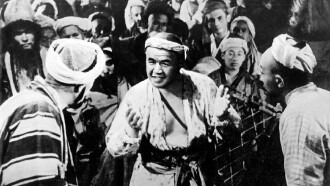
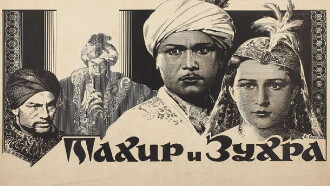
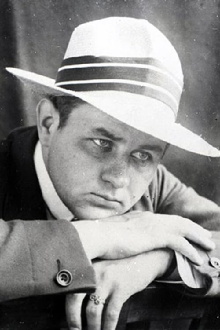
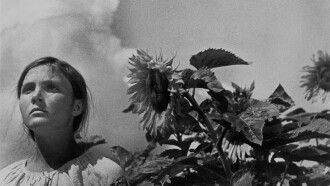
Daniil Demutsky was a legendary Ukrainian photographer and an experimental cameraman who filmed Two Days (1927), Arsenal (1929) and Earth (1930). He was born in Cherkasy region in a family of a doctor, Nikolay Lysenko’s student and collector of the Ukrainian folk music. From his childhood, he was fond of music and dreamt of a conductor career. Fascinated by photography, he joined Kyiv society of amateur photographers Dagger. He entered the Faculty of Medicine of Saint Vladimir University (now Taras Shevchenko National University), but after visiting a mortuary for the first time he decided to become a lawyer. In 1913, Daniil Demutsky participated in the All-Ukrainian exhibition of photo artists with four landscapes shot by a meniscus lens. After graduation, he was engaged not in legal, but in photography practice. He presented his works at Kyiv, Kharkiv, Odessa, Moscow and Saint-Petersburg exhibitions. He worked as a photographer for journals Vestnik Fotografii and Solntse Rossii and at his own photo studio at Les Kurbas’s Berezil theatre. In 1921, the young Ukrainian Academy of Science asked Demutskyi to organise an academic photo laboratory. Starting 1926, he began working in filmmaking, first as the head of the photo laboratory at Odessa Film Studio (made actors’ film tests), and later, supported by Aleksey Kalyuzhnyi, as a cameraman. Together with the German cameraman Joseph Rona, he made his first films Vasia the Reformer (1926) and Love’s Berries (1926). He was friends with Oleksandr Dovzhenko; they went on business trip to Berlin-London-Paris together, and their collaboration was one of the most famous and successful in the history of Ukrainian cinema. They filmed Arsenal (1929), Earth (1930), and Ivan (1932). Moreover, at Odessa Film Studio Daniil Demutsky filmed Heorhii Stabovyi’s Fresh Wind (1927) and Two Days (1927), while also Caprice of Catherine ІІ (1928), Forest Man (1928), and I Present It to You (1929). After the war, at Kiev Film Studio he filmed one of the most popular detectives about war, the famous Secret Agent (1947), and then In Peaceful Time (1950, an Award for the Best Camera Work in Karlovy Vary), Taras Shevchenko (1951), and The Viburnum Grove (1953). However, before the war, on 19 October 1934, the cameraman of Kyiv Film Studio Daniil Demutsky was arrested and repressed. He was exiled to Tashkent. Just before the war, he returned to Kyiv for a short time. His next three films, Nasreddin in Bukhara (1943), Tahir and Zukhra (1945), and The Adventures of Nasreddin (1947), were made during the war at Tashkent Film Studio. “If Daniil Demutsky had filmed only Earth in his entire life and had not been the author of other great works of art, humanity would still have considered him one of the most outstanding artists of his time,” Henri Barbusse wrote about him.

Most Popular Daniil Demutsky Trailers

Total trailers found: 17

In Peaceful Time Trailer (1950)

06 June 1950

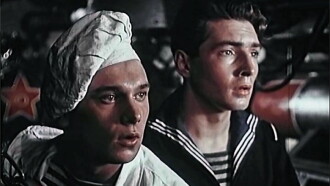
A few days from the life of Soviet submariners - during a regular peaceful time...

Earth Trailer (1930)

08 April 1930

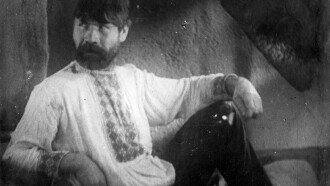
The film tells about the creation of the first collective farm communes and class enmity. Vasyl, a member of the Komsomol, with the help of a local party organization, gets a tractor and plows private boundaries "on kulak fields.

Arsenal Trailer (1929)

25 February 1929

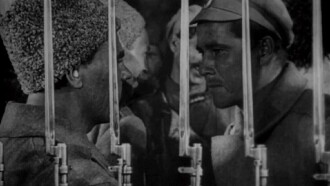
A soldier returns to Kyiv after surviving a train crash and encounters clashes between nationalists and collectivists.

Nasreddin in Bukhara Trailer (1943)

06 June 1943

Smart Man Nassredin easily penetrates into Bukhara Emir inner circle posing as Wise Man from Damascus.

Secret Agent Trailer (1947)

26 June 1947

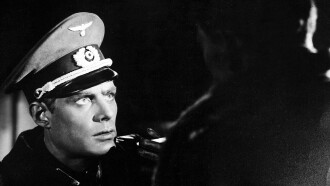
Soviet agent Fedotov is air-dropped into Nazi occupied land. He changes over into Mr. Ekhert, a German entrepreneur wishing to take advantage of eastern worker slave labor in occupied Ukraine.

Viburnum Grove Trailer (1953)

26 November 1953

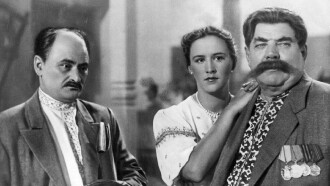
After working for twenty years in the village of Kalinovaya Roscha, the once energetic chairman of the collective farm, Ivan Romanyuk, "broke down" and became a bureaucrat.

Taras Shevchenko Trailer (1951)

17 December 1951

Growing up in a Ukrainian peasant family, knowing all hardships of serf life, young artist and poet Taras Shevchenko in the years of study clearly identifies the meaning of true art, which is to serve the interests of the people.

Vasya, the Reformer Trailer (1926)

02 January 1926

Lost film directed by Oleksandr Dovzhenko (his first film) and Favst Lopatynskyi. It is a satire of the NEP period.

Takhir and Zukhra Trailer (1945)

21 October 1945

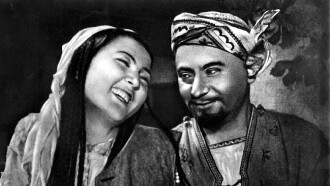
A Romeo & Juliet-esque tale set in Uzbekistan.

Love's Berries Trailer (1926)

28 April 1926

Jean, the hairdresser, is flabbergasted: what is that baby his girlfriend Lisa has put in his arms out of the blue? The fruit of love? Out of the question.

Ivan Trailer (1932)

06 November 1932

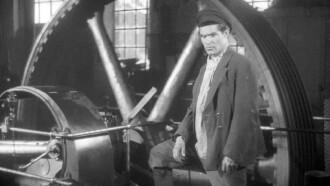
A young farmer Ivan and his lazy father Stepan try to help with the construction of the Dniprohes, but he learns that strength is not enough for a worker and joins the Communist party.

Forest Man Trailer (1928)

02 January 1928

The first years of industrialisation. Disguised as a hunter, an ex-White officer Poloz, who is connected to the international intelligence, is hiding in the forest where the construction of a new power station has begun.

The Adventures of Nasreddin Trailer (1946)

07 April 1946

A story about Nasreddin - a funny and adventurous hero of many Mid-Asian tales.

Caprice of Catherine ІІ Trailer (1928)

01 January 1928

The film is based on V. Yurezanskyi’s novel The Missing Village about the struggle of Ukrainian Cossacks for their freedom during the reign of Catherine II.

Fresh Wind Trailer (1927)

18 January 1927

Two Days Trailer (1932)

27 November 1932

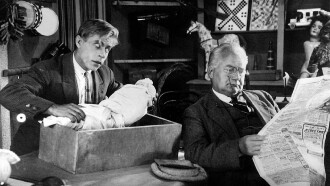
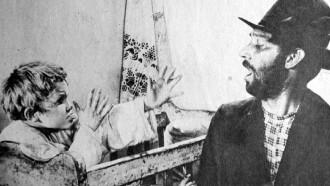
The Red Army enters the city, while the White Army leaves it. There are only two people in the landlord’s estate, an old doorkeeper and a grammar school student, the landlord’s son.

Fata Morgana Trailer (1931)

01 January 1931

Based on the Mykhailo Kotsiubynskyi’s novel. At the distillery farmers begin to strike. Local rich men without punitive detachment begin reprisals from rebels.