Fumio Kamei Trailers
All Living Things Are Friends—Lullabies of Birds, Insects and Fish TrailerAll Must Live: People, Insects and Birds TrailerMen Are All Brothers Trailer
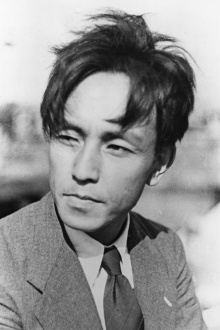
Fumio Kamei (1908–1987) was a Japanese documentary and fiction film director known for his politically charged works. Influenced by Soviet montage theory, he began his career at Photo Chemical Laboratories (PCL), making propaganda films about Japan’s war in China. His 1939 film Fighting Soldiers was banned for its unflinching portrayal of exhausted troops, and he later became the first director to lose his license under the 1939 Film Law and the only filmmaker arrested under the Peace Preservation Law. After World War II, Kamei helped reorganize Nippon Eiga-sha and directed The Japanese Tragedy (1946), a documentary critical of Japan’s imperialist past, which was ultimately censored. He continued making politically engaged documentaries and fiction films, tackling issues such as U.S. military bases in Japan, nuclear weapons, social discrimination, and environmental destruction.

Most Popular Fumio Kamei Trailers
Total trailers found: 21
01 January 1958
The inhabitants of Cape Muroto in Kochi Prefecture depend on fishing for their living, but have no fishing port in their village and so use the port of Uraga in Kanagawa Prefecture as their main port.
23 August 1938
A record of the people and culture of Beijing
10 July 1947
A woman remarries after receiving official notification that her husband has died, but he returns.
01 January 1939
Documentary of an Imperial Japanese Army regiment's advance from Shanghai to Wuhan in 1938. This film was shelved before submission to Home Ministry censors amid rumors that Fumio was a Communist.
20 February 1953
Onna Hitori Daichi wo Yuku (A Lonely Woman in a Lonely Land, Kinuta Production, 1953) was the second feature film directed by Kamei Fumio, who is known as a master of documentary films, and followed his “Haha Nareba Onna Nareba(Become a Mother, Become a Woman)” (1952).
02 January 1938
Documentary about the Japanese-occupied city that, as described by one contemporary source " boasts international settlements in which the nationals of a number of countries enjoy the privileges of extraterritoriality".
31 December 1955
Follow-up to 'The People of Sunagawa'
01 January 1953
“Japanese Entry Prohibited”military bases have proliferated to more than 700, occupying an area equivalent to the island of Shikoku and completely encircling Japan’s children.
01 April 1984
Documentary following a farmer who practices organic farming in the middle of a residential area in Setagaya, Tokyo.
01 January 1955
The citizens of Sunagawa oppose the expansion of Tachikawa Air Base
01 January 1935
Promotional film for the 50th anniversary of Tokyo Dento showing the power of electricity
14 January 1987
Documentary on the relationship between human beings and nature
12 November 1957
At a time when the USSR and the USA fervently vied to develop nuclear arms, the mass media buzzed with terms inspired by nuclear testing on Bikini Atoll such as the “Daigo Fukuryu Maru Incident,” the “ash of death,” “radioactive tuna,” and “radioactive rain,” and nuclear testing continued, Japan, the only nation to have suffered an atom-bomb attack, felt massive anxiety.
16 June 1960
Documentary against buraku discrimination
18 February 1941
The film uses the haiku of early 19th century poet Kobayashi Issa as its motif to portray the lives of farmers residing deep in the mountains of Nagano.
06 July 1956
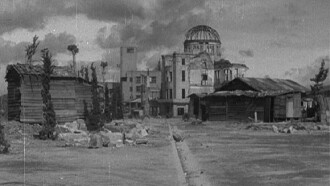
One of the first documentaries to focus on the aftermath of Hiroshima and Nagasaki, the film gives voice to survivors of the atomic bombings and documents the long-term effects of radiation on their lives.
02 January 1946
Using mostly footage from Nippon News newsreels, this film explains the history of Japanese aggression, from the Manchurian Incident to the Pacific War.
13 November 1949
During the Warring States period, immediately after Hideyoshi Hashiba defeated Mitsuhide Akechi at the Battle of Yamazaki, in the village of Ogurisu in Yamashiro Province, which was located near the battlefield, a group of children were scavenging for swords, and among them was the rogue Chōbei.
29 January 1957
On October 12, 1956, 53 surveyors and 1,300 armed police rushed the gathered union and Zen Gaku Ren (the All Japan Federation of Self-Governing Students Associations) members who then formed a scrum to protect themselves.