Germaine Dulac Trailers
Ce qu'il a dit, ce qu'il a fait TrailerLe retour à la vie TrailerLe cinéma au service de l'histoire Trailer
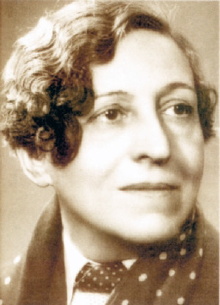
Germaine Dulac; born Charlotte Elisabeth Germaine Saisset-Schneider; was a French filmmaker, film theorist, journalist and critic. She was born in Amiens and moved to Paris in early childhood. A few years after her marriage she embarked on a journalistic career in a feminist magazine, and later became interested in film.
Germaine Dulac was born into an upper-middle-class family of a career military officer. Since her father's job required the family to frequently move between small garrison towns, Germaine was sent to live with her grandmother in Paris. She soon became interested in art and studied music, painting, and theater. Following the death of her parents, Dulac moved to Paris and combined her growing interests in socialism and feminism with a career in journalism. In 1905 she married Louis-Albert Dulac, an agricultural engineer who also came from an upper-class family. Four years later she began writing for La Française, a feminist magazine edited by Jane Misme where she eventually became the drama critic. Dulac also found time to work on the editorial staff of La Fronde, a radical feminist journal of the time. She also began to pursue her interest in still photography, which preceded her initial entry into filmmaking. With the help of her husband and friend she founded a film company and directed a few commercial works before slowly moving into Impressionist and Surrealist territory. She is best known today for her Impressionist film, La Souriante Madame Beudet ("The Smiling Madam Beudet", 1922/23), and her Surrealist experiment, La Coquille et le Clergyman ("The Seashell and the Clergyman", 1928). Her career as filmmaker suffered after the introduction of sound film and she spent the last decade of her life working on newsreels for Pathé and Gaumont. Dulac and her husband divorced in 1920.
Following her long and influential cinema career, Dulac became the president of the Fédération des ciné-clubs, a group which promoted and presented the work of new young filmmakers, such as Joris Ivens and Jean Vigo. Dulac also taught film courses at the École Technique de Photographie et de Cinématographie on the rue de Vaugirard. Following her death in 1942, Charles Ford called attention to the difficulty the French Press had with printing her obituary: "Bothered by Dulac’s non-conformist ideas, disturbed by her impure origins, the censors had refused the article which, only after vigorous protest by the editor-in-chief of the magazine, appeared three weeks late. Even dead, Germaine Dulac still seemed dangerous..."

Most Popular Germaine Dulac Trailers
Total trailers found: 36
19 September 1932
A picador, an already mature man, keeps secret his love for the young orphan he raised. But she falls in love with a young picador.
09 November 1923
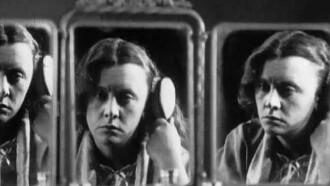
An unhappily married woman devises a scheme to get rid of her husband.
31 December 1930
Popular songs accompany two scenes of happiness: a jovial railway worker and a group of children dancing.
01 January 1917
An industrialist badly in need of money hopes to marry his daughter off to a rich suitor, but she only has eyes for her penniless childhood sweetheart.
21 December 1923
A young orphan is taken in by a couple whose son, falsely accused of murder, is on the run.
01 October 1928
Obsessed with a general's wife, a clergyman has strange visions of death and lust, struggling against his own eroticism.
07 October 1924
Desire brings out the worst in an actress' suitors-- One a well-to-do patron of London's theatre set, the other a lovestruck loner on the verge of penning a play dedicated to her.
31 March 1920
Coveted by two different men, a woman turns to a third man instead.
01 September 1935
Germaine Dulac shot a film in 1935 that she entitled “Le Cinéma au service de l’histoire” –e
31 December 1930
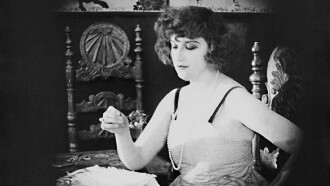
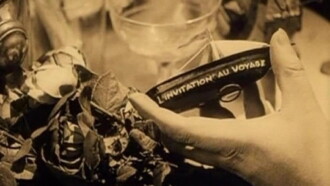
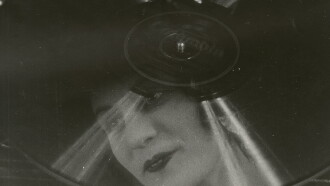
A phonograph record inspires lyrical thoughts in a young man and woman in love.
04 January 1935
A 1935 film supervised by Marceau Pivert and Germaine Dulac and produced by the French section of the Workers' International.
31 December 1930
Scenes from two dances: one in the 19th century, one in the 20th century.
01 January 1928
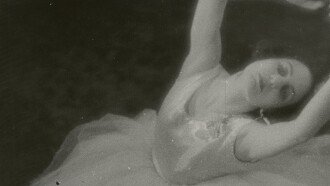
I evoke a dancing woman. A woman? No. A bouncing line with harmonious rhythm. I evoke a luminous projection on veils ! Precise matter! No.
10 October 1919
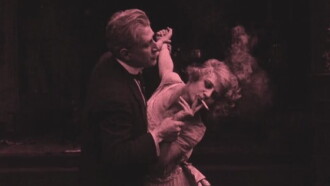
A Parisian museum director believes his wife is cheating on him and so places a poisoned cigarette in the box on his desk, thus allowing chance to decide the moment of his death.
26 November 1920
An orphan falls for the son of her benefactor, and decides to poison her rival for his affections.
14 September 1923
The Bread Peddler is a 1923 French silent drama film directed by René Le Somptier and starring Suzanne Desprès, Gabriel Signoret and Geneviève Félix.
01 July 1926
A symbolist portrait of two gypsies in love, this captivating film finds Dulac deconstructing onscreen gender roles and striving to achieve her idea of cinema as a “visual symphony,” emphasizing rhythmic editing over acting to achieve a “cinema of suggestion.
23 November 1928
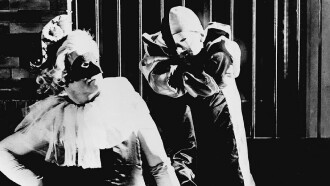
Brazen embrace of fashionable costume and glamour creates a witty celebration of Orientalism and cinema itself.
02 January 1922
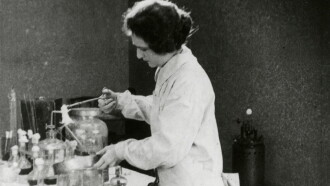
A young doctor is asked by her husband to choose between her profession and her family.
26 October 1918
A serial in six episodes: 1) La seconde Marquise de Sombreuse; 2) Le Chateau maudit; 3) Folle; 4) L'Exilee; 5) La Danseuse inconnue; 6) Hallucination et realite.
30 January 1925
The story is about a superstitious village, where the mayor has sold a tower to an unknown, who is soon suspected of being the devil.
22 April 1921
"Taking its title from John Keats’s early 19th-century poem, this highly personal melodrama finds Dulac interrogating the archetype of the femme fatale.
28 December 1927
A woman enters a nightclub and slowly begins to open herself up.
06 August 1936
Since 1930, unemployment grows in France. A family, living in the country, is facing economic hardship.
29 April 1928
Carmencita Garcia, a Spanish flamenco dancer, performs two dances.
31 December 1928
Dulac’s three 1929 "abstract" films, Record 957, Αrabesques, and Themes and Variations, were the results of a long period of reflection by the filmmaker, who sought to create a "pure" or "integral" cinema that would capture the essence of the new medium and owe nothing to the other arts.
01 January 1929
The film’s visual structure is principally composed of variations on the arabesque: arcs of light, water spouts, spider webs, burgeoning trees, flowers and foliage, a woman’s smile, arms stretching, an arm giving rhythm to a rocking chair.
01 January 1917
A wealthy theatre owner decides to leave his wife for a dancer.
29 July 1930
A destitute, drunk woman appears to yearn for the life of a streetwalker.
05 September 1927
Adapted from a play by Romain Coolus, whose work Dulac had covered as a theater critic at the turn of the century, this atmospheric and socially inquisitive film tells the tale of an independent, sexually liberated woman (Eve Francis) who is torn between her husband (Gabriel Gabrio) and her lover (Paul Guide).
31 January 1939
The device is simple and impactful: It opposes excerpts from Adolf Hitler's public speeches to images that show the reality contradicting his words.