Hiromichi Horikawa Trailers
Kurosawa Trailer
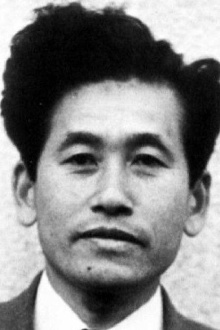
Hiromichi Horikawa was born on November 28, 1916 in Kyoto, Japan. He was a director and assistant director, known for Seven Samurai (1954), Ikiru (1952) and Throne of Blood (1957). He died on September 5, 2012 in Kyoto, Japan.
Horikawa Hiromichi was a Japanese director. He was assistant director to Kurosawa Akira for the production of Seven Samurai (1954) and Throne of Blood (1957).
Akira Kurosawa’s assistant on numerous films including Ikiru (1952) and Seven Samurai (Shichinin no samurai, 1954), Horikawa has never achieved his mentor’s fame. Kurosawa himself scripted his directorial debut, A Story of Fast-Growing Weeds (Asunaro monogatari, 1955), about an adolescent and the first three women in his life. A concern with youthful experience was also visible in Horikawa’s second and third films, Summer Eclipse (Nisshoku no natsu, 1956), a taiyōzoku (“sun tribe”) film based on a Shintarō Ishihara novel, and The Last Day of Oishi (“Genroku Chūshingura: Ōishi saigo no ichinichi” yori: Koto no tsume, 1957), a reworking of the Chūshingura story that focused particularly on the youngest of the participating ronin and his fiancée. Another retelling of a classical Japanese story was the Chikamatsu adaptation Oil Hell Murder (Onnagoroshi abura jigoku, 1957), but Horikawa returned to contemporary subject matter with The Naked General (Hadaka no taishō, 1958), a portrait of mentally handicapped collage artist Kiyoshi Yamashita. In this darkly humorous account of a stubborn non-conformist, Horikawa touched for the first time on the subject of World War II, ironically showing how the artist’s apparent madness enabled him to escape the draft. The melodrama Eternity of Love (Wakarete ikiru toki mo, 1961), tracing a woman’s unhappy marriages and affairs, also unfolded against a wartime backdrop.
During the sixties, Horikawa made several thrillers: the socially conscious aspects of these films suggest the continuing influence of Kurosawa while also evoking Masaki Kobayashi, whose regular actor Tatsuya Nakadai appeared in TheBlueBeast (Aoiyajū, 1960) and PressureofGuilt (Shirotokuro, 1963). The former charted the rise and fall of a low-ranking executive who exploits both labor and management, while the latter was a tangled psychological thriller about an attorney who, having strangled his lover, faces a moral dilemma when another man confesses. Later, GoodbyeMoscow (SarabaMosukuwagurentai, 1968) used the relationship between a Japanese jazz pianist, an American soldier on leave from Vietnam, and a group of young Russian dissidents as a metaphor for Japan’s situation in the Cold War era. TheMilitarist (GekidōnoShōwashi:Gunbatsu, 1970) was a critical biopic of General Tōjō, which dramatized the military coup of February 26, 1936, while SunAbove,DeathBelow (Sogeki, 1968) was a conventional if snappily edited thriller about a doomed hitman.

Most Popular Hiromichi Horikawa Trailers
Total trailers found: 34
09 October 1952
Kanji Watanabe is a middle-aged man who has worked in the same monotonous bureaucratic position for decades.
26 April 1954
A samurai answers a village's request for protection after he falls on hard times. The town needs protection from bandits, so the samurai gathers six others to help him teach the people how to defend themselves, and the villagers provide the soldiers with food.
14 August 1964
A greedy Japanese barmaid serves her aged escort too many noodles.
04 April 1961
A Hiromichi Horikawa movie
28 December 1951
Melodrama by Kon Ichikawa
13 March 1960
Suspense drama about a married salaryman whose affair with one of his co-workers is compromised when, returning from a clandestine meeting with his lover, he runs into a neighbor who is later accused of murder.
16 May 1965
Driven by greed and a desire for his cousin's wife, Jiro orchestrates a complex frame-up to have his cousin arrested for murder.
28 October 1958
A film about the life of Kiyoshi Yamashita, a Japanese painter with disabilities.
26 September 1956
Drama of a disillusioned youth, with writer-actor Ishihara starring as the young man at odds with his bickering parents and scheming brother, while finding little happiness when he begins a liaison with an older woman.
14 November 1970
A teenage drama film about Makiko Hayashi, a top student who is aiming to get into University of Tokyo, together with a group of other students.
24 December 2000
Documentary on film maker Akira Kurosawa
29 May 1964
A Jonan Station detective, Kikuchi, is framed for smuggling drugs and sent to prison. When he is paroled, he joins a private detective agency, where he is asked to investigate Mitsue Takazawa, the wife of a local trading firm president.
22 January 1977
A Japanese sailor finds a colony of Eskimos in the Arctic and decides to stay with them. He comes off at a certain moment to look for his luck in the gold rush in Alaska.
17 February 1963
A seasoned prosecutor uncovers the perfect crime committed by a young lawyer.
11 September 1970
The second film in Toho's series on the military history of the Showa era, Hiromichi Horikawa's war drama offers a look at the career of controversial politician Hideki Tojo and the strained relationships between Japan's government, military, and the media.
02 September 1995
Asian Blue focuses on Koreans brought to Japan to work in forced-labor brigades during World War II
23 November 1968
Suspense drama about an assassin charged with breaking up a gold smuggling ring, and the contract subsequently purchased against him and his employer.
19 May 1973
Sakata Sankichi, an amateur shogi player living in the slums of Osaka, is so obsessed with the board game that he spends all of his family's money to keep playing in the hope of defeating star player Sekine.
26 June 1960
The ruthless and ambitious Yasuhiko uses his charm to manipulate and exploit those around him to climb the corporate social ladder.
15 November 1957
A privileged son betrays his family for the favors of a geisha in 18th century Osaka.
11 May 1989
Japanese Drama film about the female experience during the war years.
14 August 1964
Five swindle stories, taking place in five international cities: Tokyo, Japan ("Fumiko's Five Benefactors" by Hiromichi Horikawa); Amsterdam, The Netherlands ("A River of Diamonds" by Roman Polanski); Naples, Italy ("The Road Map" by Ugo Gregoretti); Paris, France ("The Man Who Sold the Eiffel Tower" by Claude Chabrol); and Marrakesh, Morocco ("The Confidence Man" by Jean-Luc Godard).
01 February 1975
Based on the novel of the same name by Seichô Matsumoto.
27 March 1968
Ex-jazz pianist turned promoter finds he is successful, but empty. When an entrepreneur sends him to Moscow with a jazz combo, he falls in with the dissident youth of the city, and again finds life empty.
22 November 1961
Based on the story "Tokyo Station" by Tsunehiko Sagawa.
14 October 1978
Tragedy about a terminally ill girl.
13 July 1957
Seppuku Day 17 Ako ronins, including Kuranosuke Oishi, who were entrusted to the Hosokawa family, and the events of the two days before are depicted as a tragic romance between one of the ronins, Jurozaemon Isogai, and Omino.
31 January 1964
A Japanese adaption of the story of the Prodigal Son.
09 January 1959
Romantic drama about three beautiful sisters, based on the acclaimed play.