Jerome Hill Trailers
365 Day Project TrailerBirth of a Nation TrailerCarl G. Jung by Jerome Hill or Lapis Philosophorum Trailer
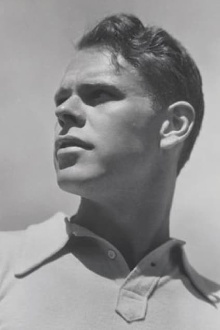
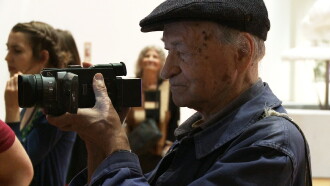
Jerome Hill (March 2, 1905 – November 21, 1972) was an American filmmaker and artist. He was educated at Yale, where he drew covers, caricatures and cartoons for campus humor magazine The Yale Record.
His 1950 documentary Grandma Moses, written and narrated by Archibald MacLeish, was nominated for an Academy Award for Best Short Subject, Two-reel. He won the 1957 Academy Award for Best Documentary Feature for his film Albert Schweitzer.
In addition to making films, he was a painter and composer.
His last film, the autobiographical Film Portrait (1973), was added to the National Film Registry in 2003.
Most Popular Jerome Hill Trailers
Total trailers found: 25
06 August 1997
Jonas Mekas assembles 160 portraits, appearances, and fleeting sketches of underground and independent filmmakers captured between 1955 and 1996.
01 January 1937
The film was produced by Jerome Hill as 'a document of skiing according to the principles of Hannes Schneider.
01 March 1968
Also known as Walden, Jonas Mekas’s first diary film is a six-reel chronicle of his life in 1960s New York, interweaving moments with family, friends, lovers, and artistic idols.
22 January 1938
Shortened version of the film 'Snow flight' distributed by Warner Bros. The film was produced by Jerome Hill as 'a document of skiing according to the principles of Hannes Schneider.
20 June 1972
The life of Jerome Hill corresponded with the first formative decades of cinema and a greater part of the 20th century.
03 July 1978
A tribute to Jonas Mekas' late friend and patron, Jerome Hill. Filmed on 16mm across three visits to Hill’s estate in Cassis, France, the film plays out as a tender visual diary of memory, passing time, and artistic exile.
01 January 1965
A magic umbrella saves a girl from a mysterious attacker. Filmed in 1927, tinted and hand-colored in the early 60s.
01 January 1965
Albert Schweitzer plays phrases and explains to a friend how he thinks Bach should be played.
03 September 1966
In March and April of 1966, Markopoulos created this filmic portrait of writers and artists from his New York circle, including Parker Tyler, W.
06 August 1991
In 1950 Jerome Hill went to Zurich with the intention of making a film about Dr. Carl G. Jung. The project was abandoned when Hill decided that Jung was not a good subject.
17 April 1932
In a European seaside village, a maiden takes clean sheets down from the clothesline. Carrying her basket of linens home, she stops to consult a fortune teller.
01 January 1961
A little boy and his sister forced to spend a day at the beach build a sand castle, to the delight and interest of others.
12 June 1927
The first student film made at Yale, and one of the earliest student feature films ever made, this adaptation of Henry Fielding's novel was made in the spring of 1927 by a filmmaking collective called the Purity Players, led by S.
04 September 1966
“After seeing Taylor Mead’s diaries I can’t look around myself anymore. There is so much to see! So now I sit with my back to nature, like Gertrude Stein.
31 December 1950
An "autobiographical sketch" centered around small group of vacationers to Hill's estate in Provence-Alpes-Côte d'Azur.
25 March 1964
Based on Jerome Hill's unpublished novel, Peacock Feathers, this ensemble piece focuses on the relationship between two aging sisters.
22 November 1957
This biographical docudrama traces the life of Dr. Albert Schweitzer, from his birth in Alsace, up to the age of 30 when he made the decision to go to French Equatorial Africa and build his jungle hospital.
23 October 1950
1950 short film portrait of the octogenarian folk artist. Nominated for an Oscar in the category "Best Short Subject, One-reel".
31 December 2007
This exhibition focuses on Jonas Mekas’ 365 Day Project, a succession of films and videos in calendar form.
16 December 1963
Jack and Leo vie for the affections of Vera – who appears a little differently to each man – over the course of a series of energetic sketches, flashbacks and homages.
02 August 1966
Footage of a bullfight, shot by Hill in 1934, hand-painted by the artist three decades later.
12 September 1951
In 1951, Jung was filmed at his Bollingen retreat by two Americans, Jerome Hill, an artist and film-maker from Minnesota, and Maud Oakes, an author and researcher, whose book Where the Two Came to Their Father was the first major publication of the Bollingen Foundation.
25 December 1969
This film uses an experimental painting technique on documentary footage of the bustling New York streets during Christmastime: Mary, Joseph and the unborn Christ travel through the streets.
01 January 1969
Live-action footage of canaries and beachgoers overlaid with hand-painted effects.
01 January 1968
The filmmaker appears as an artist attempting to set up his easel, with frustrating results.