Klaus Wyborny Trailers
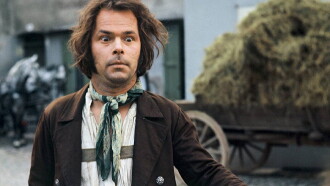
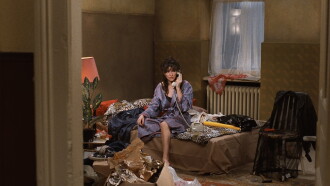
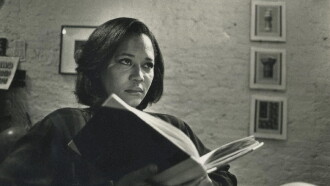
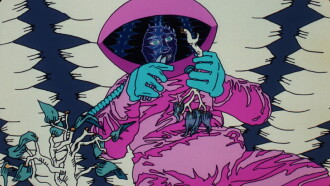
Werner Nekes - Life Between the Pictures TrailerThe Critical Mass TrailerThe Holy Bunch Trailer
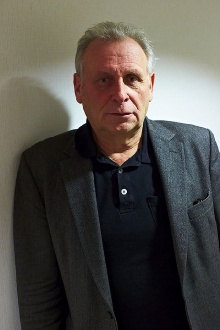
Klaus Wyborny (b.June 5, 1945 in Bittkau bei Magdeburg; lives and works in Hamburg) is a German filmmaker, producer, film director, actor, cameraman and screenwriter, known for his experimental films.
Klaus Wyborny studied from 1963 to 1970 Theoretical Physics at the University of Hamburg and the Yeshiva University in New York City.
Wyborny was co-founder in 1968, with Hellmuth Costard, Thomas Struck, Werner Nekes, Helmut Herbst, Werner Grassmann, and others, of the Hamburger Filmmacher Cooperative, which took the New American Cinema as an example and would develop an European version of American underground cinema. He worked for the literary journals BOA VISTA and Henry, and was co-founder of the 'Hamburger Filmgespräche'.
Klaus Wyborny participated with others in the Documenta 5 in Kassel in 1972 with Das abenteuerliche, aber glücklose Leben des William Parmagino, Dallas Texas - After the Goldrush, Chimney Piece and A Crowd in the Face, and Percy McPhee in the section Film review: New European Cinema on the Documenta 6 (1977). Wyborny participated in 1975, 1980-1982, 1986, 1992 and 1994 at the International Forum of New Cinema in Berlin. He was also several times (2002, 2005, 2010) represented at the Viennale Festival in Vienna. In 2003 he taught at the Academy of Fine Arts in Karlsruhe.

Most Popular Klaus Wyborny Trailers
Total trailers found: 75
03 October 1978
Four four-minute image sections and four four-minute sound sections are linked in all combinations of the sound sections with each of the image sections.
01 November 1974
The film follows Kaspar Hauser, who lived the first seventeen years of his life chained in a tiny cellar with only a toy horse to occupy his time, devoid of all human contact except for a man who wears a black overcoat and top hat who feeds him.
01 January 1985
Home movies shot on Super 8mm by W+B Hein over 10 years.
17 February 1991
After Roy's demise, five friends try to reconstruct his life by reading through the late editor's notebooks - only to face some very personal demons.
30 October 1988
Harry, a timpanist and pyromaniac, and Ginamove into the same apartment due to Hamburg's housing shortage.
02 February 1974
Diwan, a lyric anthology, an outdoor movie with people. With people living in the surrounding precious and very beautifully photographed nature, are neither more nor less than one part of it.
13 April 1988
Agatha is an international lawyer, Jo a filmmaker. The two women are lovers. While Jo is on the road showing her films, Agatha discovers and reads her diaries.
01 January 1976
An audio-visual film by Klaus Wyborny that focuses on various houses, their patterns and structures.
01 January 1981
Part 1 of "3 Miniatures after Melanie Klein" (for Laurence Rickels)
26 January 1990
The whole world in one film: Robert, a young Dane, is shanghaied in Marseille, and via Acapulco he is abducted into the South Pacific.
31 July 2009
Klaus Wyborny's Das letzte Jahr is a take on Ovid's "Fasti" in three parts. Yet, "a character as confused as our protagonist hardly would have been able to write the first three.
30 May 1973
The film depicts, in an anecdotal, quasi-anthropological style, the efforts of a group of men in a desert to achieve some kind of social organisation.
22 May 1974
Astronaut Mulligan sets out to find a mysterious planet.
09 May 1975
For 50 minutes or so Pictures presents a series of static, or gently swaying images which are sometimes bucolic landscapes but more often industrial ones (sludgy harbours, power lines, abandoned railway stations or deserted factories).
04 September 1971
30 minutes of images with music by Anthony Moore
01 January 1976
Adaptation of the novel "Bartleby the Scrinener: A story of Wall Street" (1853) by Hermann Melville.
19 August 1994
Film insert for the second part of the Comédie Artistique "United".
14 November 1980
Silent film of scenes taken in the industrial areas of the Rhine and Ruhr river regions.
01 June 2006
The year was 1972. A commune of Berlin stoners and intellectuals set adrift in space in a packing container clutched in a giant flying hand.
01 January 1974
"In the early 1970s I filmed compact versions of a series of films that came on television and interested me, which should lead to revealing at least essential parts of their structure.
21 July 2006
The film begins with a visualization of Beethoven's Piano Sonata No. 32 in C minor, Op. 111, and Wyborny nearly misses the first movement.
11 April 1985
The fifth of five parts of Klaus Wyborny's "Lieder der Erde" / "Song of the Earth" cycle of films, whose theme is "the emergence of modern European civilization.
23 August 1995
One of the most complete of the preserved image programs of the Middle Ages, at the same time abstract and full of touching details.
17 February 2016
Unpublished film premiered at the Filmmuseum München retrospective.
01 October 2010
Wyborny’s latest flicker film concentrates on factories, industrial wastelands, waterways, cityscapes, and the bits in between, and has an uncanny emotional resonance.
17 February 1970
Before a figure skating championship, a television announcement reminds young girls about the emancipation of women.
01 January 1994
The fourth of five parts of Klaus Wyborny's "Lieder der Erde" / "Song of the Earth" cycle of films, whose theme is "the emergence of modern European civilization.
01 January 1972
A silent film
22 August 2015
Klaus Wyborny’s STUDIEN ZUM UNTERGANG DES ABENDLANDS had its premiere at the Viennale in 2010, where it got rave reviews.
17 January 1977
A German TV movie
01 January 1992
Third part of a cycle of five films titled SONGS OF THE EARTH, whose theme is the emergence of European civilization.
20 February 1981
Combines three short films: Richard, The Blanket of Life, Elementary Editing Theory
01 January 1975
A silent film
01 January 2004
The second of five parts of Klaus Wyborny's "Lieder der Erde" / "Song of the Earth" cycle of films, whose theme is "the emergence of modern European civilization.
10 June 1981
Part 2 of "3 Miniatures after Melanie Klein"
15 May 1982
2084 – mankind is about to go for the stars. Humans with XY-chromosomes live in individual cells having no contact with each other.
01 January 1975
A silent film made by Klaus Wyborny, while he traveled on an aeroplane from San Fransisco to New York.
01 November 2012
A dozen narrative poems by Durs Grünbein, interpreted in sounds and images. Wyborny treats the texts as sounding boards for his own casual observations about the places Grünbein discusses, at times presenting what the writer saw and at others moving in a completely different direction.
11 July 1985
This is the first of five parts of Klaus Wyborny's "Lieder der Erde" / "Song of the Earth" cycle of films, whose theme is "the emergence of modern European civilization.
01 January 2005
Film footage from The Birth of a Nation, Die Abenteuer des Mister West im Lande der Bolschewiki, The Docks of New York, Tabu, Morocco, Citizen Kane, Kiss of Death, Johnny Guitar, Das Rote Frauen-Bataillon, Fireworks, Rabbitt's Moon, Eaux d'Artifice and Invocation of my Demon Brother.
15 July 1969
Using his original 8mm films, but blowing them up to 16mm, he created a collage of images that became his four-part film DÄMONISCHE LEINWAND (The Haunted Screen, 1969), quoting Lotte Eisner’s famous study of Weimar cinema in its title.
01 November 1966
A young man decides to leave the country after the 1965 West German parliamentary elections. He hitchhikes out of Hamburg, but makes it only as far as the Lüneburg Heath.
31 May 2005
Heinz Emigholz, the premiere purveyor of architectural oddities (Sullivan’s Bridges, Goff in the Desert), meticulously documents 15 rooms of the enormous Villa Cargnacco in Lombardy, Italy, designed by proto-fascist poet Gabriele D’Annunzio (1863–1938).
08 March 1969
A short film
09 November 2017
In conversations with his friends and colleagues, among them Bernd Upnmoor, Helmut Herbst, Alexander Kluge, Klaus Wyborny, Daniel Kothenschulte and Helge Schneider, Ulrike Pfeiffer takes us on a journey into the broad expanse of Nekes' cabinet of wonder and his cinematic works.
08 March 1969
An attempt to celebrate Christmas in New York.
01 January 1977
... Klaus Wyborny's "Six little Pieces on Film" is the type of work that one is more accustomed to see in Sohos's showcases.
23 November 2003
The story is set against the background of a bloody civil war in the Roman Empire. Sulla is in the countryside outside Rome and prepares to move into the city, that is in the hands of his enemies.
01 July 1999
A documentary about the 'critical mass', the Film Coop, a group of young filmmakers in Hamburg during the 1960s - a small group far from the Mainstream or the New German Cinema.
01 January 1976
Woman with American accent reads German phrases and words from a study book on manipulated and degraded film stock.
30 October 2014
There are about 140 landscapes painted by Claude Monet in Pourville during 4 long stays between 1882 and 1897.
24 May 1979
A silent film
29 October 2009
A meeting with Werner Schroeter. An sequence originally featured in Wyborny's Das letzte Jahr extended here to its own short film.
01 January 1969
A short film
29 April 1978
UNREACHABLE HOMELESS is particularly lost on the eye, at times changing color, focal length, or focus with every other frame.
05 June 1971
"Wyborny trained as a mathematician, worked as a cameraman on Werner Herzog's Kasper Hauser. He first attracted the attention of the New York and London avant-gardes … for his elliptical narratives, Dallas Texas - After The Gold Rush (1971) and The Birth of a Nation (1973).
06 June 1968
The story of a group that has a difficult time near Bialystok at dawn on July 19, 1944.
01 January 1974
I began to develop a high level of mistrust of the so-called logical structures, which is why I turned my back on mathematics and turned to film.
24 May 1977
Begun in 1971 in Essaouira, Morocco; continued during the filming of “The Birth of a Nation” in 1972 near Erfoud, Morocco; flickering parts based on a score called "PIXTURES - Basic Motion Picture Analysis - Part One - Camera Parameters," in which focal length, focus, aperture, exposure time, and filtering were permuted by a computer program, in 1975 in Brooklyn and Puerto Rico.