Krsto Papić Trailers
The Other Side of Welles TrailerPula Confidential TrailerAt the Station in Pula Trailer
Krsto Papić (7 December 1933 – 7 February 2013) was a Croatian screenwriter and film director whose career spanned several decades.
Papić was born in Vučji Do, near Nikšić in today's Montenegro. His early feature films and documentaries were part of Croatian and Yugoslav New Cinema, and often regarded as Croatian echo of the Black Wave artistic movement that mostly took place within Serbia. Additionally, Papić himself was connected to the Croatian Spring political movement during the early 1970s. He was the member of the Zagreb filmophile circle influenced by the French New Wave, so-called "Hitchcockians", along with film-makers and critics Ante Peterlić, Zoran Tadić, Branko Ivanda, Petar Krelja and centered around film critics Vladimir Vuković and Hrvoje Lisinski. Papić's two best-known early feature films, Lisice and Predstava Hamleta u Mrduši Donjoj, were often attacked from the government sources. Lisice did not get permission to represent Yugoslavia in the Cannes Film Festival, so it entered Quinzaine program in 1970.Izbavitelj was heavily criticised by Stipe Šuvar, who alluded that film's allegory about Fascism actually also refers to the Communism.
Papić's subsequent feature films were more classical in its narration, but again politically controversial in the last decade of Yugoslavia. Particularly My Uncle's Legacy, critical picture of Yugoslavia's political situation under titoism during Informbiro period, which won nomination for Golden Globe in 1989, has been surrounded by controversy and political attacks from traditional Party circles and especially Partisan Veterans' organisations, so the production was delayed for couple of years, but achieved due to support of intellectuals, newspapers and Party fractions in the time of disolvement and fight among Party fractions in last years of the Yugoslav federation.
Papić was awarded with Croatia's highest Vladimir Nazor Award for live achievement in cinema in 2006, and with Grand Prix Special des Amériques at the Montreal Film Festival in 2004.

Most Popular Krsto Papić Trailers
Total trailers found: 24
01 January 1986
Short by Papić.
11 July 1967
The story of an inter-generational conflict between two brothers of completely different political and secular views.
28 March 1983
A young couple have settled in a new flat. Soon somebody begins watching them and they receive great amounts of money from an unknown sender.
09 July 1965
Segment "Duga ulica" (A Long Street): A young man named Boris and a girl, Vera, live in the same neighborhood.
01 January 1975
Story of four women flying to Australia to meet their future husbands.
19 February 1980
Life and times of Nikola Tesla, famous scientist whose inventions were stolen, but whose greatest contribution to mankind remain a mystery to this day.
03 June 2005
Film The Other Side of Welles portrays the life, work and intellectual heritage of Orson Welles in Yugoslavian federal unit "Socialist Republic of Croatia".
11 April 2013
An obscure actor is hired by the police to get a confession out of a dying mafioso.
29 July 1998
Homesick and desperate to provide proper financial care for his wife, Croatian migrant worker Cinco, decides to fake his death, and asks his best friend Marinko to steal the hearse he'll be transported in and drive it from Germany to Croatia.
22 July 2003
In a fictional dystopian country where both the police and the politicians are controlled by a shadowy criminal organization, a famous writer, joined by the leader of an underground resistance movement, embarks on an investigation into the murder of his best friend, who was killed under suspicous circumstances.
01 January 2003
A documentary about the history of Yugoslavian Film Festival in Pula and ex-Yu cinema in general. Many legends of ex-Yu cinema were interviewed here.
01 January 2001
This documentary interviews the singer Djordje Balasevic, his fans and some ex-Yugoslav celebrities before his concert of in Pula Arena on June 6, 2001.
09 July 1975
Short documentary follows a group of provincial school pupils on their excursion to the capital, and their visit to the concert of Zagreb Philharmonic in Vatroslav Lisinski national music hall.
01 April 1968
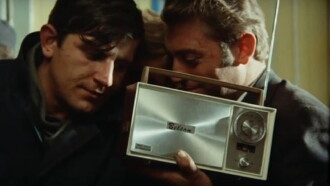
The rut of Dalmatian hinterland changes with the arrival of returning guest workers, and things they bring along: cars, radios and new way of life.
30 May 1988
In this politically charged drama, the turbulent times just following Marshal Tito's rejection of ties to Moscow comes to life.
26 October 1976
A poor writer discovers that a species of rats has banded together to impersonate humans and supplant them unnoticed, in a manner reminiscent of the transformations in Eugene Ionesco's Rhinoceros, or the covert conspiracy of pod-people in The Invasion of the Body Snatchers.
31 May 1974
A corrupt village commissar insists on mounting a production of Hamlet. The clever local teacher, however, casts the son of a man framed for theft as Hamlet, and the commissar as the usurping king, leading to a climax of truly Shakespearean proportions.
06 November 1970
Yugoslavia, 1948, the year of Inform Bureau's resolution and Tito's break-up with Stalin. The story takes place during a wedding in the Dalmatian inland in Croatia.
01 January 1968
Shot in various villages throughout Yugoslavia, this is a disturbing document of a time when people were stabbing each other with knives without any real reason.
01 January 1971
A showcase of performances in a Međimurje village Orahovica in which various local performers sing then-popular light melodies, dance folk dances, exchange jokes, and the ceremony is crowned by the selection of the local Miss 1971.
01 January 1991
Ivan, a young Croatian autonomist whose brother left the country due to political persecution, falls in love with Marina, the duaghter of a staunch communist police chief.
31 December 1969
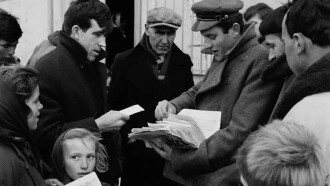
A documentary set in a modern Croatian railway station, contrasting its promise of progress with the visible presence of unemployment and social stagnation.
10 January 1972
A documentary following Yugoslav migrant workers on special trains to West Germany, documenting their journey and the bureaucratic realities of labor migration.
08 January 1971
A loving portrait of a pirate radio stations, which is run by the rural population with plenty of passion and talent in the face of opposition from the authorities.