Most Popular Leo Hurwitz Trailers
Total trailers found: 28
13 December 1989
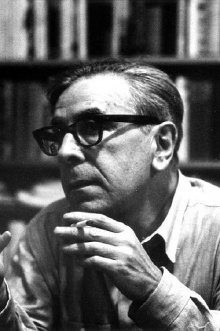
This documentary studies the life and artwork of photographer Paul Strand, using his own compelling photography as well as interviews with his friends, acquaintances and third wife.
10 May 1936
A documentary about what happened to the Great Plains of the United States and Canada when uncontrolled farming destroyed the soil and led to the Dust Bowl.
01 January 1955
An impressionistic study of the celebrated tap dancer.
01 January 1966
Documentary examining the work of sculptor Richard Lippold, particular his sculpture of the sun at the Metropolitan Museum of Art.
23 November 1980
A documentary about the film-maker's wife and co-worker, Peggy Lawson, who died in 1971.
01 January 1956
From the perspective of the Auschwitz-Birkenau State Museum, documentary material, amongst this the freeing of the camp and the Nuremberg Trials with clips from films which were produced shortly after the war, and pictures of museum visitors are assembled into an essay about memory.
01 January 1934
One of the key works in creating the American social documentary film, this 1934 newsreel compilation crams a lot of information into just 11 minutes.
01 January 1970
Following his use of art, painting and sculpture, in his work of the previous decades, Hurwitz took on a project for the American Foundation of the Arts aimed on deepening and enriching, for art students, the way in which we see.
02 January 1980
Documentary about American filmmaker Leo Hurwitz.
10 October 1961
Leo Hurwitz’s film, Here At The Water’s Edge, features the 1960 New York City’s waterfront. Made with photographer Charles Pratt, the film is a cinematic poem to the people who work on the water.
20 December 1953
Directed by Hurwitz for the CBS Omnibus program, The Young Fighter is a moving portrait of a young boxer who faces key life decisions as he tries to balance his responsibilities to his family and to his sport.
01 January 1952
Shot in Manhattan’s St. Vincent Hospital, creating what would be the antecedent of the direct cinema (or cinema verité) movement of the late 1950s and early 1960s.
02 January 1937
The first production from Frontier Films, the film production collective that was the successor to NYKino and the Workers Film and Photo League, Heart of Spain focuses on the Spanish Civil War, a conflict that became a touchstone of its era and was the most forceful opposition to the rising threat of fascism in Europe.
11 May 1942
By the start of World War II, Paul Robeson had given up his lucrative mainstream work to participate in more socially progressive film and stage productions.
25 September 1948
Strange Victory" is about racial bias in post World War II America. Following "Native Land" in Leo Hurwitz' filmography, it uses some of the same techniques: dramatized scenes interspersed with scenes of compilation news reel footage, and scenes of evocative imagery.
02 January 1966
Produced and directed by Hurwitz for National Educational Television (precursor of PBS), Hurwitz uses biographer and Columbia professor, John Unterecker, to help him look for the poet, Hart Crane, in his work and in the memories of many of his contemporaries.
01 January 1970
How the art in the Detroit Institute of Art connects to life's experiences and the neighborhood.
01 January 2016
Following his use of art, painting and sculpture, in his work of the previous decades, Hurwitz took on a project for the American Foundation of the Arts aimed at deepening and enriching, for art students, the way in which we see.
30 January 1967
First shown on January 30, 1967, FOR LIFE AGAINST THE WAR was an open-call, collective statement from American independent filmmakers disparate in style and sensibility but united by their opposition to the Vietnam War.
01 June 1989
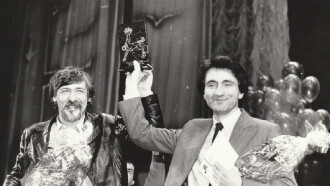
In January 1989 the first Message to Man International Film Festival took place in Leningrad. This film, made during the festival, is a record of its events, guests and participants, such as the American director Leo Hurwitz, the Latvian director Ivars Seleckis, and the ballerina Natalya Makarova, among others.
04 March 1951
Rodgers’ friends and colleagues pay tribute to him. Among the original Broadway cast members reprising the songs they introduced are Vivienne Segal (“Bewitched” from “Pal Joey”) and Alfred Drake (“People Will Say We’re in Love” from “Oklahoma!”).
01 December 1932
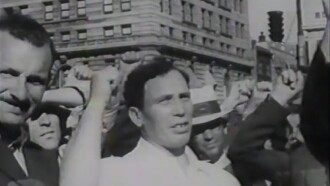
Bonus March shows unemployed WWI veterans marching on Washington, D.C., demanding their bonus money, and being forcefully evicted.
31 January 1932
The film shows the National Unemployment Council Hunger March of Nov. and Dec. 1931, which set out from disparate parts of the U.
02 January 1933
A document of the 1932 national hunger march on Washington produced by the Workers Film and Photo League.
01 January 1943
1943 Oscar nominated film in the category Best Documentary, Short Subject.
01 July 1932
The only known film record of the mass march and meeting held in Detroit on Feb. 4, 1932, against hunger and unemployment.
20 November 1964
In 1964, National Educational Television decided to make a program as a memorial to President Kennedy.