Mario Montez Trailers
Escape From Rented Island: The Lost Paradise of Jack Smith TrailerAndy Warhol, Fluorescent TrailerAmerica Is Not Ready for This Trailer
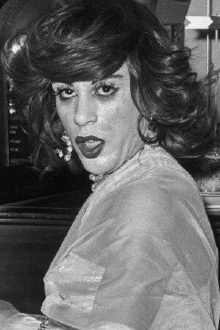
René Rivera, (July 20, 1935 – September 26, 2013), known professionally as Mario Montez, was one of the Warhol superstars, appearing in thirteen of Andy Warhol's underground films from 1964 to 1966. He took his name as a male homage to the actress Maria Montez, an important gay icon in the fifties and sixties. Before appearing in Warhol's films, he appeared in Jack Smith's important underground films Flaming Creatures and Normal Love. Montez also stars in the Ron Rice film, Chumlum, made in 1964. Mario Montez, was "a staple in the New York underground scene of the 1960s and ’70s."
Most Popular Mario Montez Trailers
Total trailers found: 33
28 November 1965
The films were made between 1964 and 1966 at Warhol's Factory studio in New York City. Subjects were captured in stark relief by a strong key light, and filmed by Warhol with his stationary 16mm Bolex camera on silent, black and white, 100-foot rolls of film at 24 frames per second.
01 January 1968
Features underground film makers and stars Jack Smith, Charles Ludlum, and Bill Vehr. A satirical film, comprising a collection of vignettes of the entertainment personalities who were famous during the "Roaring Twenties".
22 November 1965
Shot at Warhol's Silver Factory, Camp features a group of Superstars putting on a "summer camp" talent show complete with singing, dancing, jokes, poetry, and Gerard Malanga as master of ceremonies.
12 June 1965
Warhol and scenarist Ronald Tavel offer a brutal vision of the Hollywood casting couch with this record of ingenue Mario Montez performing a humiliating auditions for a dictatorial, unseen director.
11 April 2007
In this entrancing documentary on performance artist, photographer and underground filmmaker Jack Smith, photographs and rare clips of Smith's performances and films punctuate interviews with artists, critics, friends and foes to create an engaging portrait of the artist.
01 January 1987
The New York underground linked the paths of the actor and playwright Charles Ludlam, the superstar of avant-garde cinema Mario Montez and the Argentine artist Leandro Katz.
01 March 1968
Also known as Walden, Jonas Mekas’s first diary film is a six-reel chronicle of his life in 1960s New York, interweaving moments with family, friends, lovers, and artistic idols.
29 December 1963
Ron Rice's Chumlum is one of those films in which the conditions of its construction are integral to the experience of watching it.
07 December 1964
Black-and-white version of Mario Banana I, in which Mario enjoys another banana.
31 October 1965
A follow-up to now legendary film Flaming Creatures. This vivid, full-color homage to B-movies is a dizzying display of camp that clearly affirms Smith’s role as the driving force behind underground cinema and performance art of the post-war era.
31 December 2016
A documentary on the legendary creator and victim of pop art. Warhol, revolutionary and controversial, was never afraid to break the mold and reshape the reals of art, advertising, and directing.
03 March 1966
Egotistical faded star Hedy Lamarr visits a plastic surgeon to be transformed into the "14-year-old girl" she believes herself to be.
15 September 1966
Follows various residents of the Chelsea Hotel in 1966 New York City.
29 April 1963
Filmmaker and artist Jack Smith described his own film as a “comedy set in a haunted movie studio.” Flaming Creatures begins humorously enough with several men and women, mostly of indeterminate gender, vamping it up in front of the camera and participating in a mock advertisement for an indelible, heart-shaped brand of lipstick.
30 January 1967
The film — a mix of music, colors, abstract scenes and little dialogue — is based loosely on the life and death of Mexican-American actress Lupe Velez.
01 January 1969
Adventures of Lily Lonely, a wicked gypsy and a mischievous boy. In color.
07 December 1964
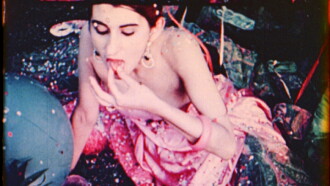
Mario Montez in drag eats a banana.
31 March 1966
Part of the Dirt Trilogy
01 January 1966
Lost Jack Smith film
11 January 1965
Jean Harlow-lookalike Harlot (Mario Montez), Gerard Malanga, Philip Fagan, and Carol Koshinskie (with a cat) sit in a room eating bananas as the off-screen voices of Billy Name, Ronald Tavel, and Harry Fainlight discuss various topics.
25 September 1965
Two nuns take a bath, then meet a sailor on the Staten Island Ferry.
01 January 1967
A tropical island fantasy.
17 June 1968
In 1967, New York City is host to the Miss All-American Camp Beauty Pageant. This documentary takes a look behind the scenes, transporting the viewer into rehearsals and dressing rooms as the drag queen subculture prepares for this big national beauty contest.
29 April 1970
In 1969, Leonardi traveled to the United States to write a book about the New American Cinema. Using a Super-8 camera, he made a film-diary of this experience between New York and San Francisco.
01 July 1964
Batman Dracula is a 1964 black and white American film produced and directed by Andy Warhol, without the permission of DC Comics.
02 February 1969
Smith's third feature film was originally titled "The Kidnapping of Wendell Willkie by the Love Bandit," in reaction to the 1968 Presidential Campaign.
20 August 1966
The story of two men (Ed Hood, Patrick Fleming ) in bed whose assignation gets interrupted by friends and neighbours.
26 January 2017
In his essay film, Jerry Tartaglia, longtime archivist and restorer of the film estate of queer New York underground, experimental film, and performance legend Jack Smith, deals less with Smith’s life than with his work, analyzing Smith’s aesthetic idiosyncrasies in 21 thematic chapters.
08 July 1966
Nico hires a babysitter drag queen (Mario Montez) to babysit her 3-year-old son Ari so Nico can go shopping.
08 February 1966
Warhol offers his own version of the notorious 1958 Johnny Stompanato murder case.
10 April 1969
The three faces (two women and one tranvestized man) in the series of close up, which are shot separately in their sexual process of the acting and the real, are intercut and edited making into a film.
01 June 1972
In Manhattan and Wall Street's majestic, neoclassical architecture, characters try their luck, ambiguously posted between the mundane and transcendence.
30 November 2012
The tradition of modernism and neo-avant-garde are faced in the project, in which Radziszewski is confronting both – Polish and Western – narratives of art history.