Oleksandr Dovzhenko Trailers
Dovzhenko. Full of Compromise TrailerOleksandr Dovzhenko. Odesa Dawn TrailerDovzhenko. Ukrainian Homer of Cinema Trailer
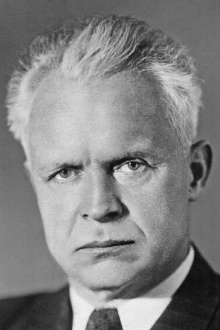
Oleksandr Petrovych Dovzhenko was a Ukrainian Soviet screenwriter, film producer and director. He is often cited as one of the most important early Soviet filmmakers, alongside Sergei Eisenstein, Dziga Vertov, and Vsevolod Pudovkin, as well as being a pioneer of Soviet montage theory.
Although Oleksandr Dovzhenko's parents were uneducated, his semi-literate grandfather encouraged him to study, leading him to become a teacher at the age of 19. Dovzhenko turned to film in 1926 when he landed in Odesa. His ambitious drive led to the production of his second-ever screenplay, Vasya the Reformer (which he also co-directed). He gained greater success with Zvenyhora in 1928 which established him as a major filmmaker of his era. His following "Ukraine Trilogy" (Zvenyhora, Arsenal, and Earth), although underappreciated by some contemporary Soviet critics (who found some of its realism counter-revolutionary), is his most well-known work in the West. For his film Shchors, Dovzhenko was awarded the Stalin Prize (1941); eight years later, in 1949, he was awarded another Stalin Prize for his film Michurin.
After spending several years writing, co-writing and producing films at Mosfilm Studios in Moscow, he turned to writing novels. Over a 20-year career, Dovzhenko personally directed only 7 films.
He was a mentor to the young Ukrainian Soviet filmmakers Larysa Shepitko and Sergei Parajanov. Dovzhenko died of a heart attack on November 25, 1956 in his dacha in Peredelkino. His wife, Yulia Solntseva, continued his legacy by producing films of her own and completing projects Dovzhenko was not able to create.
The Dovzhenko Film Studios in Kyiv were named after him in his honour following his death.

Most Popular Oleksandr Dovzhenko Trailers
Total trailers found: 33
01 October 1980
Elem Klimov's tribute to his late wife, director Larisa Shepitko, killed in a car accident a year earlier.
06 November 1935
A Russian outpost in Eastern Siberia comes under threat of attack by the Japanese. Aerograd is a new town with a strategically located airfield of vital interest to the government.
30 August 1967
About hardships of the first years of War, which fell to the lot of ordinary people in Ukraine, who got under the yoke of fascist occupation, and heroic struggle against the invaders.
07 December 1964
Based on the novel of the same name by Oleksandr Dovzhenko. About the childhood of the famous Ukrainian film director Oleksandr Dovzhenko, who was born on the ancient lands of Chernihiv, along the banks the Desna.
08 April 1930
During the agrarian collectivization process in the Soviet Union, Vasyl, a peasant member of the youth division of the Communist Party, gets a tractor with the help of a local party organization and plows private boundaries on kulak fields.
28 February 1927
The Soviet embassy in England sends two couriers with diplomatic mail to Leningrad. The inspector of security police, White, and a group of policemen attack the Soviet diplomatic couriers at night.
25 February 1929
A soldier returns to Kyiv after surviving a train crash and encounters clashes between nationalists and collectivists.
31 December 1965
Romm pulls out all the stops in its selection of documentary material to draw the viewer not only into absolute horror about fascism and nazism in the 1920s–1940s Europe, but also to a firm conviction that nothing of the sort should be allowed to happen again anywhere in the world.
06 November 1932
A young farmer Ivan and his lazy father Stepan try to help with the construction of the Dniprohes, but he learns that strength is not enough for a worker and joins the Communist party.
01 March 1988
While watching Dovzhenko's Earth a young man imagines himself a painter in a Ukrainian village in the 1930s.
01 April 1945
A wartime documentary directed by Alexander Dovzhenko and Yuliya Solntseva, depicting the final campaigns that drove Nazi forces from Ukraine in 1944–45.
01 January 1949
About the life of the Russian biologist Ivan Michurin. 1912 year. Having rejected American offers to work abroad, Michurin continues his research in the Russian Empire, despite the fact that his ideas are not perceived by the tsarist government, the church and idealistic science.
07 March 1928
An old man tells his grandson of a legendary treasure buried beneath the hills of Zvenigora, setting in motion a sweeping cinematic poem that intertwines Ukrainian folklore, history, and revolution.
23 February 1961
Once again, director Yulia Solnsteva directs a movie that her late husband Alexandre Dovchenko scripted but did not live long enough to shoot.
01 January 1992
An outstanding poet, student of Oleksandr Dovzhenko, Mykola Vinhranovsky reads excerpts from his teacher's diary, comments on it - thereby emphasizing the tragic fate of the great artist.
01 April 1943
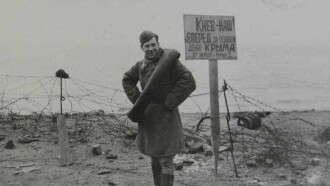
A 1943 Soviet war propaganda film by Ukrainian director Oleksandr Dovzhenko and Yuliya Solntseva. It is Dovzhenko's second World War II documentary, and dealt with the Battle of Kharkiv.
02 May 1939
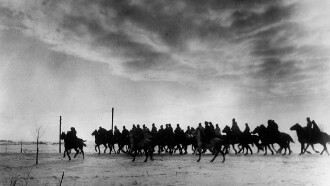
Cheered up by the revolutionary zeal, courage and energy of their leader, Nikolai Alexandrovitch Shchors, in 1919 the peasants and workers' groups gathered in the civil war- devastated Ukraine, to defeat the foreign conquerors and enemies of the revolution.
28 April 1926
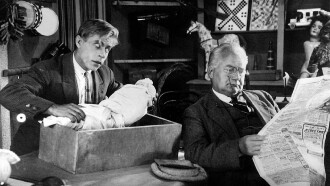
Jean, the hairdresser, is flabbergasted: what is that baby his girlfriend Lisa has put in his arms out of the blue? The fruit of love? Out of the question.
01 April 1940
Wartime documentary by Dovzhenko and Solntseva.
01 January 1951
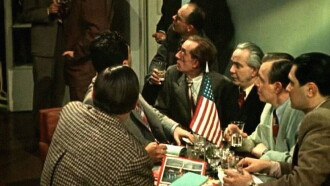
An unfinished film by Oleksandr Dovzhenko, the film is a political lampoon based on the book entitled The Truth about US Diplomats, written in 1949 by the American writer Annabel Bukar.
02 January 1926
Lost film directed by Oleksandr Dovzhenko (his first film) and Favst Lopatynskyi. It is a satire of the NEP period.
04 November 1958
A Soviet dam project means that many old Ukrainian villages will end up under water. There are conflicts between the dam engineers and villagers who don't want to move.
25 September 2025
This film, marking the 130th anniversary of Oleksandr Dovzhenko's birth, reveals the artist's controversial path—from his first attempts at cinema to the creation of masterpieces that became symbols of Ukrainian poetic cinema.
01 January 2004
The short film is dedicated to the outstanding Ukrainian film director. The video features archival footage in which writers Vasyl Chekhon, Viktor Shklovsky, and Armenian film director Levon Isakyan share their memories of Oleksandr Dovzhenko.
01 March 1971
The film-remembrance of the creative fate of the Ukrainian Soviet film director Alexander Dovzhenko, shot on his diaries.
01 January 1966
The film is about Ivan Honchar, an ardent collector of Ukrainian antiquities, who turned his Kyiv apartment into a unique museum.
01 January 2014
Oleksandr Dovzhenko shot his first films while living in Odesa. Contemporary renowned filmmakers comment on this period of Dovzhenko's creative work.
01 January 1994
Ukrainian Night of the 33rd is series of documentaries about the Holodomor, which includes the “Fear”, “Horror”, “Guillotine”, “Case of Hrushevsky.
01 January 2014
Based on O. Dovzhenko's short story "Mother" about the tragic and majestic fate of a Ukrainian mother.
01 January 1992
We hear readings from Dovzhenko's diary and hear how the great suffering of the Ukrainian people caused him to move away from beauty for it's own sake to the search for truth, expressed in his two harrowing wartime documentaries.
01 January 2007
How the film was made, how the events described in the film actually happened, about Nikolai Ostrovsky and much more.
01 January 2013
An inspiring portrait of Dovzhenko, one of the greatest film directors, known as Homer of Cinema. The film features Sergei Trimbach, Oleksandr Muratov, Vyacheslav Bihun, Raisa Prokopenko, and Peter Simms.