Peter Nestler Trailers
Farewell to the Parents TrailerDeath and the Devil TrailerDefense of the Time Trailer
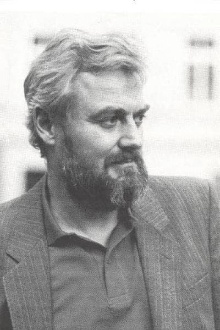
Peter Nestler was born on 1 June 1937 in Freiburg im Breisgau, Germany.

Farewell to the Parents TrailerDeath and the Devil TrailerDefense of the Time Trailer
Peter Nestler was born on 1 June 1937 in Freiburg im Breisgau, Germany.

Total trailers found: 71

04 February 1996
Peter Nestler illustrates a poem by Hans Sachs from 1540.
13 November 1965
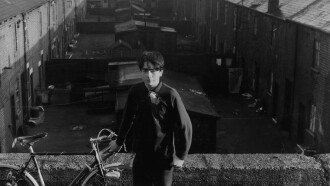
A documentary of the town of Sheffield's main pub and the people who went there.
30 September 1963
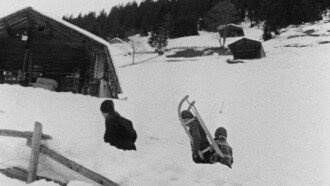
A cheerful take on the lives of school children in a Swiss rural environment. Young pupils recite short essays they have written on subjects such as the long walk to school, the distribution of milk during breaks, and a brawl in the courtyard.
17 August 1964
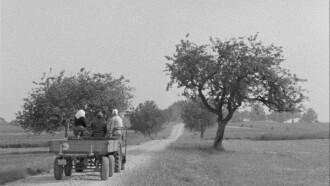
Portrait of a small south German village and its residents in the early sixties. Rural culture is undergoing a transformation caused by the intrusion of the industrial world.
30 October 2015
“Don’t be scared,” he’d whisper, “There’s nothing to be scared of. It’s just the hollow people.
12 February 1963
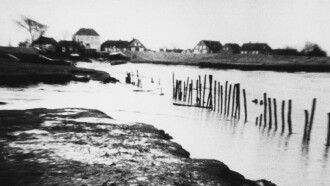
In his first film, Peter Nestler gives voice to an old floodgate. A nearby village, its inhabitants, wooden posts and twisted willow rods are presented from this unusual perspective.
03 March 1966
The burial of an old woman leads to several complications among family and friends.
14 March 1991
A documentary about the Sami people across Norway, Sweden, Finland, and Russia, and about the environmental devastation in that area throughout the 20th century.
16 February 1966
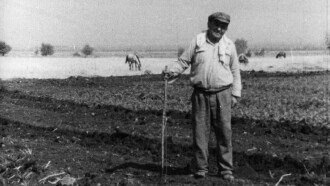
The first part of this film is devoted to the Greek resistance against fascism and the civil war for independence.
18 November 1988
Nestler traces the history of Frankfurt’s Jewish ghetto from the middle ages to the present day.
02 January 1964
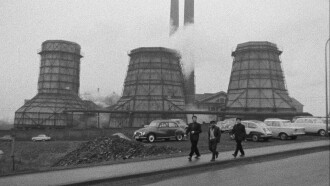
This dialogue-free short is edited to music and the rhythms of change in a small town in the Ruhr region, shot a few years after the first mining pits were closed in the area.
22 July 2021
In 1950, Picasso was offered a room that had once been used as a chapel in his hometown of Vallauris�
01 January 1973
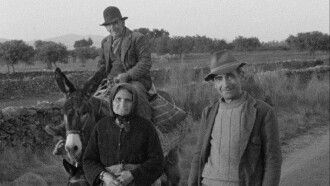
Filmed in Spain, Finland, Sweden, and West Germany, 'Spanien!' investigates ideas of internationalism and solidarity, using personal testimonies from former members of the International Brigades who joined the Republican side during the Spanish Civil War and from members of the Workers’ Commissions ('Comisiones Obreras').
25 September 1992
A film of Hungarian folk artists, sharing their handicrafts and paintings with the filmmakers.
07 August 1961
In this tale based on a Brothers Grimm story, Prince Alfred searches for an enchanted castle that holds a magic fountain whose waters can cure his seriously ill father, the king.
01 January 1968
A short pamphlet based on a text by Peter Weiss and on the contrapuntal use of the relation between image and sound.
01 January 1976
Nestler relates the histories of shipbuilding, armaments, and war in Europe to the exploitation of labor and the circulation of knowledge and capital between countries.
01 January 1974
Nestler highlights visits by several German entrepreneurs to oil facilities. In the 1970s, Peter and his wife, Zsóka Nestler, collaborated on a series of educational films for television that focused on craft-making.
01 January 1972
The first part of a history about the history of paper.
11 October 1974
The film develops 5 questions about documentary film against the background of the media-political situation of the early 1970s in West Germany.
01 January 1981
Peter Nestler's short focusses the works of four Chilean artists: two painters [Nicolas de la Cruz and Jorge Kuhn], a graphic designer [Rolando Pérez], and a guitar player [Adrián Miranda].
10 January 1961
A large German city at the beginning of the 1960s. This is where the well-to-do Berger family lives. Outwardly a bourgeois idyll, but behind the scenes the family is in turmoil.
17 March 1978
Documentary short made for Swedish public television (SVT) about the past and current situation for Native Americans in the US.
01 January 1978
Second documentary short by Peter Nestler about Iranian migration in Sweden.
01 January 1978
Documentary short about Iranian migration in Sweden.

21 June 1963
A strangler is loose on a British estate, and he not only strangles his victims but brands an "M" onto their foreheads before he decapitates them.

17 December 1958
1802: The adventurous life story of Hans Bückler, known as “Schinderhannes”, who fights against the French occupying forces and large landowners who exploit poor farmers in the Hunsrück region during the Napoleonic Wars.
19 July 2022
For more than eight decades, German Sinti and Roma experienced injustice. The film tells of the family of activist Romani Rose, their resistance and insistence on justice.
18 December 1970
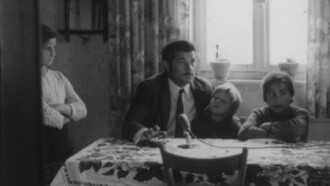
Roma and Sinti people talk about their experiences in the Third Reich and the Federal Republic of Germany, inspired by Otto Pankok’s paintings of Romani theme and subject in the 1930s, declared degenerate art by the Nazis.
05 June 1968
This film is arguably Nestler's angriest documentary. It is a bitter personal statement about life in the Ruhr region: the fight against fascism, the reality of communism and his own struggle for acceptance in his native Germany.
01 January 1985
A tribute to the victims of a mining disaster that happened in 1930 in Silesia before the reign of Nazi Germany.
20 October 1974
Stoff (1) is part of a series of films made for television and aimed at young audiences. The series was dedicated to the history and techniques behind the production of objects, materials (paper, letterpress, fabrics, etc.

12 April 1961
Tensions rise when a U.S. military base is built in a small village in post-war Germany.
01 January 1991
Documentary about the journey of a barge through East Germany.
01 January 1981
This work produced by Swedish television, where Swedish kids reads texts written by Japanese kids about their experiencing of and surviving the bombings.
01 January 1982
Rarely screened two part documentary on the Swedish-Chilean folk music group Victor Jaras barn [Victor Jara's Children], formed by folk musician and researcher Mariella Ferreira.
24 July 2022
The film presents artists from the Sinti and Roma minority who shape the trauma of persecution and very personal experiences in their works.
20 October 1970
How to Make Glass (Mechanically) is part of a series of educational films for television intended for young audiences.
01 January 1974
A reflection on the dictatorship of Augusto Pinochet captured in its economic and social causalities.
01 January 1994
The story begins on a hilltop, at an old castle that served as a German observation post in 1942. The traces of German fascism have also left their mark on this landscape.
15 September 2002
The revolt at Sobibór extermination camp in October 1943 is a central episode of resistance against national socialism.
29 March 1997
This film is about the indigenous cultures of Ecuador, of what is past and what is preserved, of destruction and resistance, of persisting in new ways, of music in the villages high up in the Andes, of music in the cities and in a tropical climate among descendants of African slaves.
29 March 1966
In a 13-minute navigation, Nestler takes us downstream the Rhine River. The opportunity of cheap water transport kept prices of raw material down and made the Rhine one of the most important arteries of industrial transport in the world.
01 January 1984
Humanity’s thirst for knowledge and its consequences, from the Bible to the A-bomb. Nestler uses sixteenth-century engravings and paintings by artists such as Dürer, Grünewald, Holbein the Younger, Hans Weiditz, Sebald Beham and Hans Baldung.
01 January 1999
Today, the Römerstrasse in Italy's Aosta valley, is a significant traffic artery in the center of modern Europe.
09 April 1973
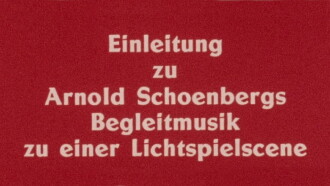
This is a small, intense film based on Schoenberg’s opus of the same name with the subtitle “danger, fear, catastrophe”.
01 January 1982
The film documents the activities of two human-rights organisations during the military dictatorship in Chile — PIDEE (Protección de la Infancia Dañada por el Estado de Emergencia) and FASIC (Fundación de Ayuda Social de las Iglesias Cristianas).
01 January 1972
An emotional condemnation of the U.S.’s role in the war in North Vietnam, composed of photographs by Thomas Billhardt, this film depicts the dire living conditions and the suffering of children in the populations of destroyed villages.
01 January 1970
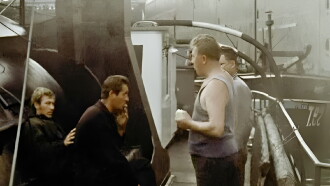
Filmed aboard a Hungarian ship, this is a journey upstream the Danube, recalling the vital role the majestic river played in the settlement and political evolution of central and south-eastern Europe.
20 August 2017
The film is based on the eponymous 1960 novel by author Peter Weiss. In this autobiographical text, the author describes the years of his childhood and youth in Germany in the 20s and 30s as well as the flight of his half-Jewish family from persecution by the Nazis.
22 May 2007
A hommage to Jean-Marie Straub's and Danièle Huillet's film Quei loro incontri (2005), and to their access to cinema itself.
01 January 1975
In the 1970's Peter and Zsóka Nestler made several educational documentaries on industrial production for Swedish public television.
01 January 1971
Documentary about the return of fascism in Western Germany.
01 January 1974
With the help of drawings, Nestler provides a historical overview of the types of work associated with industries that are crucial to Scandinavia, particularly those related to ore mining.
03 October 1989
Documentary that portrays Vincent van Gogh's live and work through his letters to his brother Theo.
03 March 1983
Still photography combined with moving imagery in this portrait of civic life in Chile. Made for Swedish public television almost a decade after the 1973 coup d'etat.
22 February 2009
Ethnologist and adventurer, Count Eric von Rosen was a man of contradictions: interested in the natives of Africa and colonial racism.
01 January 1970
Essay film about the origins of war in human history.
