Renée Carl Trailers
Pépé le Moko TrailerUn monsieur qui a mangé du taureau TrailerLes Larmes de Colette Trailer
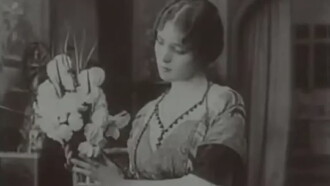
Renée Carl (10 June 1875 – 31 July 1954) was a French actress of the silent era. She was born in Fontenay-le-Comte, Vendée, France, and died in Paris, France.
Between 1907 and 1937, she appeared in 186 films. A favorite of film director Louis Feuillade, she appeared in, at least, 150 films directed by him including the short Bébé and Bout de Zan comedies. Of the many characters she played in Feuillade's films, perhaps her most famous portrayal was that of Lady Beltham, mistress of the notorious Fantômas in the serial of the same name. She makes an uncredited appearance, as "L'Andalouse," in The Vampires.
In 1922, she directed and starred in the film A Shout from the Abyss, also known as Un cri dans l'abîme. In a 1924 interview for Mon Ciné magazine, she stated that she was introduced to film-making through her friend Léonie Richard.
Selected filmography
Most Popular Renée Carl Trailers
Total trailers found: 93
28 January 1937
Pépé le Moko, one of France's most wanted criminals, hides out in the Casbah section of Algiers. He knows police will be waiting for him if he tries to leave the city.
12 September 1912
A manuscript delivered to a playhouse is eventually turned into a major hit with critics and audience alike.
24 December 1910
Bébé's father is attacked by the "apaches", a group of hooligans. Bébé and his sister decide to avenge him by gaining the group's trust and bringing them into a trap.
01 January 1909
A young shepherd and servant girl are separated when she is sold into slavery and taken to Alexandria.
30 August 1912
At the front, Bébé meets two Russian soldiers.
24 November 1925
In 19th century France, Jean Valjean, a man imprisoned for stealing bread, must flee a relentless policeman named Javert.
02 May 1913
Bout de Zan is a young boy by description and a petty thief by vocation. In this short, he does indeed steal an elephant from a circus, parading it around town and using it to beg for money.
14 October 1910
Having faked an automobile accident, an adventuress is taken into the home of a "ganadero" (a landowner of the Camargue), whom she seduces.
01 September 1923
Monique is an ingenue, a clueless girl who believes in true love. A marriage is the only thing a decent girl must long for.
15 July 1910
To secure victory against the Ammonites, the Israeli judge Jephthah vowed to sacrifice the first person who greeted him upon his return.
01 January 1913
A child is kidnapped and forced to sell flowers on the street.
13 December 1909
Forced to renounce the woman he loves because she is to marry another, a young sailor sets sail for a distant fishing voyage.
12 October 1908
During an ascent of Canigou, a traveler falls into a precipice, his body rolling to the bottom of the abyss on the glistening snow of the glacier.
09 May 1913
A French silent film serial which follows the exploits of the archvillain Fantômas, who commits crimes while eluding Inspector Juve's tireless persecution.
30 September 1910
A series of seven short films of varying length demonstrating each of the seven deadly sins.
15 May 1914
Pisa, 1494. Young Severo, who has sworn to stab the tyrant in his town, learns that it is his own father.
06 February 1910
The life of French poet André Chénier, precursor of the Romantic movement, who was guillotined during the Revolution aged only 31.
23 August 1912
The innkeeper's daughter is in love, but her mother has already decided that she is going to be married to another man.
22 May 1910
A short silent film about war
01 January 1910
This charming short film was shot in the Camargue, probably in the same place where Jean Durand filmed his cowboy movies.
28 June 1909
Framed in a wreath of roses we see a lithe Creek dancer, who sways and postures before an epicurean party of ancients, followed by a laurel wreath and encircling a scene showing school children of 1830 receiving their marks of diligence at a distribution of rewards: then the wreath of bay tendered by the Human Senators to Caesar on the culmination of his career; now a beggar receives a loaf called a "crown" from a charitable passerby: Christ is shown crowned with thorns by the rabble; following the divine drama we see the old comedian's wreath presented him at a performance.
01 January 1911
Part of the series La Vie telle qu'elle est that Feuillade did in which people were shown as they really are and not as they ought to have been.
13 December 1912
If an old man's niece does not claim her inheritance at the notary's office by the appointed time, his fortune will go to his housekeeper.
20 September 1909
Directed by either Louis Feuillade (atributed) or by Etienne Arnaud (atributed), according to the Gaumont archives.
01 January 1911
A beginning of a series of films directed by Louis Feuillade from 1911-1913
20 February 1910
A historical short film inspired by the Biblical story of Belshazzar's Feast.
07 October 1910
Monsieur's old nanny is determined to protect her adult protégé from a woman of questionable virtue.
26 April 1909
A rich man, living in a splendid palace, in the city of Jerusalem, with his daughter and many servants, surrounded by every possible luxury, but blind, is healed of his affliction by Christ.
01 January 1912
Part of the series La Vie telle qu'elle est.
03 May 1909
At a dinner party, a hostess serves her guests a dish made using meat from a bull. While most of them enjoy the meal, one man has a strange reaction: Taking a set of horns off the wall, he attaches them to his head and sets off on a rampage.
01 January 1911
Part of the series La Vie telle qu'elle est.
26 July 1909
Melodrama about a rich father who gains custody of his child while the mother goes off in tears. Of course, the child is miserable even though he has everything in the world but after a weekend trip at his poor mother's house, the child realizes that money isn't everything and he has to convince the father that his money is evil.
01 January 1911
Part of the series La Vie telle qu'elle est
01 January 1935
In 1907, the Gaumont Films company in France made a slapstick comedy (silent, of course) with a title that would translate from the French as 'A gentleman who ate some bull'.
01 January 1911
Part of the series La Vie telle qu'elle est
01 October 1912
A newly married couple moves into a house. But the bride disappears.
10 October 1908
A traveler is welcomed into a fully automated hotel, where no human intervention is required. But the machines malfunction, giving the guest a nightmarish experience.
01 January 1912
A short from Feuillade's Bébé series
01 January 1911
Part of the series La Vie telle qu'elle est
01 October 1913
One night, Bout-de-Zan finds a wanderer and shares his bed to him. The next morning there is a general panic among the servants.
01 January 1912
Part of the series La Vie telle qu'elle est
07 September 1908
A mythological scene with the most beautiful effect.
01 October 1911
LA TARE is about Anna, a woman who is rescued from a Parisian dance hall to work in a charitable hospital.
17 May 1909
Once Madame Ducordon discovers the joys of a new fashionable dance, she starts performing it wherever she happens to be.
01 January 1911
Part of the series La Vie telle qu'elle est.
16 October 1912
A mother (Renee Carl) goes to see a palm reader who informs her that a loved one is about to die. The woman doesn't know if it's her son or her husband (Rene Navarre) but history buffs will know who it is as it's April 10, 1912 and the husband is about to board the Titanic.