Shigeko Kubota Trailers
KIKAIDE MIRUKOTO = Eye Machine / To See by Chance –The Pioneers of Japanese Video Arts– TrailerWinter in Miami 2005 TrailerBirth of a Nation Trailer
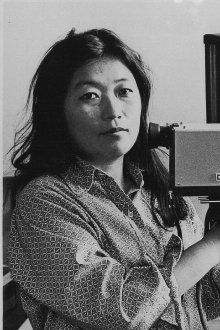
Shigeko Kubota was a Japanese video artist, sculptor and avant-garde performance artist, who mostly lived in New York City. She was one of the first artists to adopt the portable video camera Sony Portapak in 1967. Kubota is known for constructing sculptural installations with a strong DIY aesthetic, which include sculptures with embedded monitors playing her original videos. She was a key member and influence on Fluxus, the international group of avant-garde artists centered on George Maciunas, having been involved with the group since witnessing John Cage perform in Tokyo in 1962 and subsequently moving to New York in 1964. She was closely associated with George Brecht, Jackson Mac Low, John Cage, Joe Jones, Nam June Paik, and Ay-O, other members of Fluxus. Kubota was deemed "Vice Chairman" of the Fluxus Organization by Maciunas.

Most Popular Shigeko Kubota Trailers
Total trailers found: 22
28 December 1974
Suite 212 is Paik's "personal New York sketchbook," an electronic collage that presents multiple perspectives of New York's media landscape as a fragmented tour of the city.
06 August 1997
Jonas Mekas assembles 160 portraits, appearances, and fleeting sketches of underground and independent filmmakers captured between 1955 and 1996.
01 January 1986
A single-channel version of Kubota's installation of the same name, Rock Video: Cherry Blossom is a lyrical fusion of nature and technology.
01 January 1972
In elegiac work, Kubota explores the relationship between two of the most influential figures in 20th century art and music.
04 April 1994
In this rare portrait of Fluxus founder George Maciunas, Kubota pays homage to a mentor and fellow Fluxus artist.
01 January 1994
Over the past several decades, Shigeko Kubota has produced a significant body of video installation work.
01 January 1977
Black & White Video
31 December 1973
Kubota narrates this surrealistic video diary of her month-long sojourn with a Navajo family on a reservation in Chinle, Arizona.
01 December 1984
Single channel video (color; sound; 1984)
01 January 1975
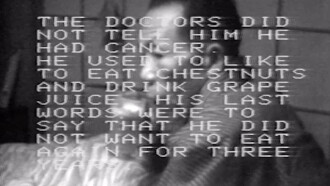
"Father, why did you die?" With this deeply intimate statement of grief, Kubota mourns the death of her father.
01 January 1982
The influence of Jewish fathers on their sons and the complexity of familial relationships are explored in a witty, poignant portrait of two artists.
01 January 1972
This early video document is Kubota's answer to the question, "What happens if you travel with a portapak instead of American Express through Europe?" Spontaneous, low-tech and infused with a spirit of uncensored adventure, Kubota's video travel diary is a personal and cultural time capsule of Europe and its subcultures in the 1970s.
24 January 1976
Meta-Marcel: Window (Flowers) adapts Marcel Duchamp’s ready-made Fresh Window (1920/1964) to the realm of film.
10 April 2013
Video began as a medium that inspired discovery. This art documentary traces the expressive roots of “media art” in Japan — works of video, performances, and installations created using video technology that allowed for free and creative visual expression.
01 January 1978
Nam June Paik and Shigeko Kubota remix interviews of Marcel Duchamp and Russell Connor.
01 January 2006
Kubota's tribute to her husband, artist Nam June Paik, who died at their home in Miami in January 2006.
01 January 1999
Kubota continues her ongoing video diary project. Here she reflects on her relationship with her husband Nam June Paik.
01 January 1998
An intimate and humorous portrait of her husband, artist Nam June Paik, as he undergoes physical therapy after an illness.
27 October 1971
Access to video technology had largely been limited to corporate-run TV studios until the Sony Portapak, a battery-powered video tape recorder that could be carried by one person, was popularized in the early 1970s.
01 January 1985
This chapter of Kubota's ongoing video journal chronicles the aftermath of a flood that destroyed Kubota and Nam June Paik's loft studio, after a roofer left work unfinished during a rainstorm.
13 October 1993
Sistine Chapel is an audio-visual collage of new footage and samples from Paik’s past videos, which featured many of his friends, collaborators, and public figures.
01 January 1974
Shigeko Kubota and Maxi Cohen discuss Anthology Film Archive’s Video Art programming.