Slatan Dudow Trailers
Christine TrailerLove's Confusion TrailerThe Captain from Cologne Trailer
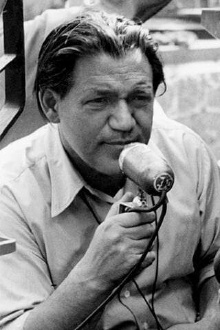
Slatan Dudow was a Bulgarian born film director, who worked in Weimar Germany and later East Germany. Influenced by revolutionary ideas, Dudow moved to Berlin in 1922. He gave up his plan to study architecture and studied theater from 1925 to 1926. He worked with Leopold Jessner and Juergen Fehling and was a chorus member under Erwin Piscator. But it was a trip to Moscow, where he met Majakowski and Eisenstein, that proved to be the most influential for his career. After his return from Moscow, Dudow directed Brecht's theater piece Die Massnahme, while beginning his film career. He was commissioned to produce the film Wie der Berliner Arbeiter wohnt (1929) as part of the documentary series Wie lebt der Berliner Arbeiter? To Whom Does the World Belong? (1932) was originally banned because it was perceived as an insult to the Weimar Republic's president, judiciary, and religion. Dudow was arrested several times by the Nazis after 1933; he was imprisoned in 1939, but soon escaped to France and then Switzerland. In 1946, he returned to Berlin and worked as a director at the DEFA studios.

Most Popular Slatan Dudow Trailers
Total trailers found: 14
10 January 1927
In a futuristic city sharply divided between the rich and the poor, the son of the city's mastermind meets a prophet who predicts the coming of a savior to mediate their differences.
13 October 1963
Christine is a young farm worker in a small village in post-war Germany. Her attempts to improve her situation through further education are hampered by frequent pregnancies arising from ill-fated relationships.
07 September 1950
The brothers Theo and Gustav Benthin pull profits through smuggling in divided Germany: Theo in the West and Gustav in the East.
24 September 1954
The story of a resistance fighter in the Nazi era: Communist Hans Löning was arrested in 1933, imprisoned in a concentration camp and tortured.
07 December 1956
Albert Hauptmann is an out of work waiter in Cologne who is often confused with a former Captain of the Nazi Army.
04 November 1949
A story about a family after the Second World War. The petty bourgeois cashier Karl Weber of Berlin observes from a distance how his son Ernst participates in the building of a new socialist society.
14 May 1932
Kuhle Wampe takes place in early-1930s Berlin. The film begins with a montage of newspaper headlines describing steadily-rising unemployment figures.
01 January 1930
Documentary about the "Kampfgemeinschaft für Rote Sporteinheit", a communist workers' sports association in the final phase of the Weimar Republic.
20 July 1950
Documentary (in colour) about the first youth meeting (Deutschlandtreffen der Jugend) in East Berlin in 1950.
12 June 1952
Berlin 1952, seven years after WWII. Four women are looking for a good man and happiness in the divided city.
13 November 1959
The film tells the love story of two young couples. According to their social ranks, construction worker Edy is dating employee Siegi, while medical student Dieter is dating art school student Sonja.
31 December 1930
This documentary shows how the Berliner workers lived in 1930. The director Slatan Dudow shows through images: a) the workers leaving the factory; b) the raise of the rents; c) the "unpleasant" guest, meaning the justice officer that brings the eviction notice; d) the fight of classes of the houses of capitalists and working classes; e) the parks of the working class; f) the houses of the working class, origin of the tuberculosis and the victims; g) the playground of the working class; h) the swimming pool for the working class, ironically called the "Baltic Sea" of the working class; i) the effects of humidity of basement where a family lives, with one member deaf; j) one working class family having dinner while the capitalist baths his dog; k) the eviction notice received from an unemployed family and their eviction.