Tomu Uchida Trailers
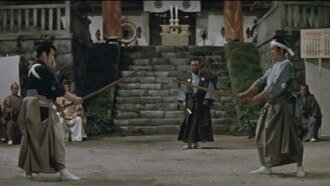
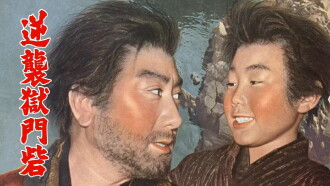
Miyamoto Musashi VI: Swords of Death TrailerHishakaku and Kiratsune: A Tale of Two Yakuza TrailerMiyamoto Musashi V: Musashi vs Kojiro Trailer
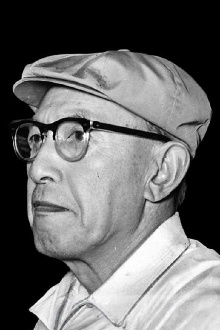
Uchida started out at the Taikatsu studio in the early 1920s, but came to prominence at Nikkatsu, adapting literary works with the screenwriter Yasutarō Yagi in a realist style. His 1929 film A Living Puppet (Ikeru ningyo) was selected as the fourth best film of the year by the film journal, Kinema Junpo. Many of his 1930s films featured the actor Isamu Kosugi. One such work, Policeman (Keisatsukan), has been called "a tremendously stylish gangster movie about the love-hate relationship between a cop and a criminal, once childhood friends" It is Uchida’s only surviving complete silent film. Uchida borrows from Hollywood gangster films and expressionist techniques in a story of a young policeman tracking down an old friend who is now a criminal. His work from the 1920 and 1930s possess a leftist social commentary and were often some of the most critically acclaimed films of the time. Kinema Junpo selected Jinsei Gekijo as the number two film of 1936, Karininaki Zenshin as the best film of 1937, and Tsuchi as the best film of 1939. The latter was praised for its realistic depiction of the lives of poor Meiji-period tenant farmers. Unfortunately, few of Uchida's prewar works survive in their entirety.
In 1941, Uchida quit the Nikkatsu studio, and after failing to start his own production company, in 1943 began to work with the Manchukuo Film Association, although he never completed a film there. In 1945 he was taken prisoner and held in Manchuria until 1954, when he returned to Japan.
Upon he return, he joined the Toei studio. His post-war movies reveal a strong genre stylist with no immediately discernible themes, much like many golden-age Hollywood directors. Uchida effortlessly directed chamber dramas, comedies, and samurai epics, often in color, and with a forward-looking dose of irony.

Most Popular Tomu Uchida Trailers
Total trailers found: 42
17 May 1934
Father, son Kentaro and daughter Ochiyo, who live on the banks of the Sumida River, regain their love for each other after family discord and separation.
30 November 1933
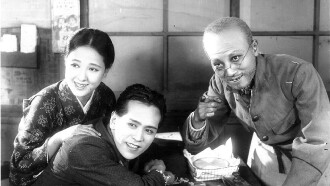
Itami, a young policeman, meets his high school friend, Tetsuo, a gangster, at a roadblock. As they rekindled their friendship, a complex relationship is established between them.
04 June 1936
Two brothers run a factory canning crabs. The elder brother Kotaro is righteous and insists on honesty.
15 May 1940
History film directed by Tomu Uchida.
05 June 1927
A pre-war sports movie by director Tomu Uchida. This story is set at the Waseda-Keio regatta. This was shot at the banks of the Sumida River, where the regatta is still held today.
13 September 1959
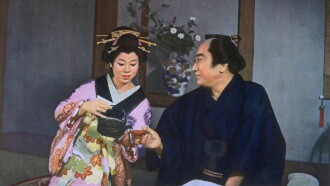
Chubei, the adopted son of an Osaka courier, falls desperately in love with the courtesan Umegawa. To prevent a wealthy client from purchasing her, he steals money from his employer to buy her freedom himself.
01 May 1962
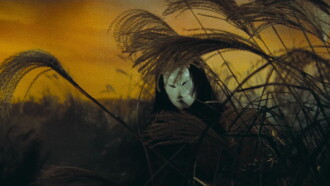
A court fortune-teller loses his mind after a conspiracy leads to the death of his lover. Hope appears to be on the horizon after he becomes romantically involved with his dead lover's twin sister, but more complications arise thanks to a chance encounter with a clan of shape-shifters.
18 December 1931
Lost film, directed by Tomu Uchida. This film is a very funny comedy that makes fun of the moral code of the samurai Bushido, which has become obsolete and turned into an empty form during the period of feudalism.
03 November 1937
One of Uchida’s early sound films, Unending Advance is based on a curious story by Yasujiro Ozu, in which an examination of the quotidian problems of a middle-aged salaryman and his family segues into an idyllic dream of an implausible future.
25 October 1968
With his penultimate film, Uchida revisited one of his popular prewar titles, 1936’s Theatre of Life, an adaptation of Shiro Ozaki’s eponymous novel.
24 November 1957
Based on a 1956 television feature on Japan’s national network, NHK, this is one of Uchida’s rarest films.
13 April 1939
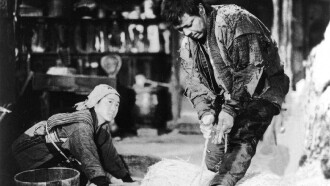
Kanji is a poor peasant widower who struggles to earn a living for his daughter and himself and to pay off his father-in-law's debts.
15 January 1965
Three robbers escape with loot from a heist before one of them kills the others. Their corpses wash up near the aftermath of a maritime calamity, provoking a policeman's interest.
25 February 1931
The second part of the melodrama based on the novel Les Misérables by Victor Hugo, the action of which is transferred to the era of the Meiji Revolution.
15 May 1960
Kurando is a retired samurai. Granted a last-second reprieve from the obligation to commit harakiri, he decides to settle down and marry one of the two kabuki actresses who helped him enjoy what he thought would be his final days.
27 May 1961
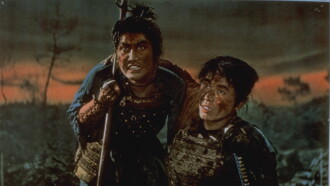
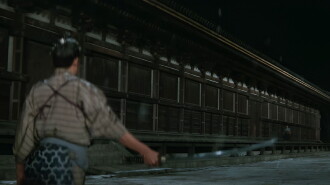
In this first episode, we are introduced to Takezo, what Musashi used to be before he became the man of legend.
08 January 1956
This adaptation of a Hideji Hojo novel, about the historical uprising of the Kuroda clan in 1633, is told through the eyes of retainer, Daizen.
04 September 1965
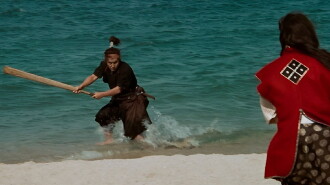
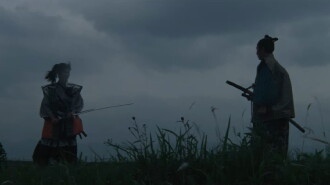
The fifth and final installment with the build up of the epic battle between Sasaki Kojiro and Miyamoto Musashi.
17 November 1962
The remake of Yoshikawa's novel continues with the second installment in which Takezo, soon to be Miyamoto Musashi, emerges from the Himeji Castle after three years of intense contemplation and philosophical study and starting on his epic quest to complete his skill in the Way.
01 January 1964
In the fourth installment, Musashi's potentially greatest opponent Kojiro jumps in and out of the story at the oddest and most coincidental moments.
14 August 1963
In the third installment of Yoshikawa's novel Musashi, things continue from the 2nd film at the end of battle, where Miyamoto continues on a mission of learning; with the introduction of his arch-rival Sasaki Kojiro; and lastly the large cast of characters rendezvouses for a fateful finale.
17 February 1931
The first part of a fascinating melodrama based on Victor Hugo's Les Misérables, the action of which is transferred to the era of the Meiji Revolution.
31 December 1929
Sweat (1929) is a slapstick riff on tendency-film themes, as a bored young millionaire has his clothes stolen by a tramp; dressed in the tramp’s clothes, he has to accept work as a labourer.
03 September 1960
A successful textile industrialist from the provinces, who is beloved by his employees for his kindness, cannot find a wife because of a disfiguring birthmark on his face.
20 February 1971
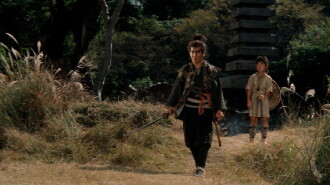
In the sixth and final episode Rentaro Mikuni steals the show as Baiken Shishido, Musashi's nemesis. Mikuni is the nominal villain of the film, but he is a devoted husband and father as well.
13 February 1936
During the 20s in Japan, a romantic student at Tokyo's Waseda University is filled with noble sentiments absorbed from literature but his naive illusions will be shattered by the ruthless realities of money and power.
28 April 1959
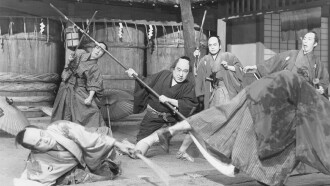
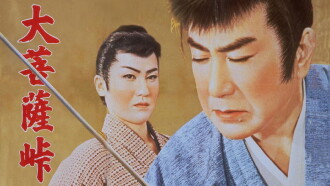
Master swordsman, Tsukue Ryunosuke is confronted by the families of his victims. Will justice be served for the lost innocent lives? The conclusion of the famed Jidaigeki series is an amazing film, with a completely different perspective on the story from the later versions.
27 February 1955
Tragicomic road movie set during the Edo period. It follows a samurai, his two servants – including spear-carrier Genpachi – and the various people they meet on their journey, including a policeman in pursuit of a thief, a young child and a woman who is to be sold into prostitution.
20 April 1958
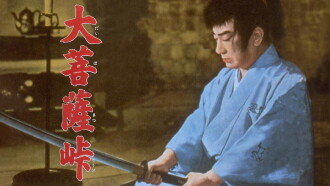
This is the second installment of the trilogy based on Japan’s greatest novel “The Great Bodhisattva Pass”, following the life and times of bloodthirsty samurai, Tsukue Ryunosuke.
28 September 1955
Nobuko is a widow who lives with her stepchild Tamiko and her brother Junjiro. The family's gatekeeper, Komatsu, is attracted to Tamiko, but she is encouraged to marry a doctor and he is afraid to tell her his feelings.
25 July 1930
Surviving fragments of a film by Tomu Uchida.
01 January 1925
A moral fable about discovering money that somebody has dropped
13 July 1957
First part of the famous Dai-bosatsu toge trilogy, based on Kaizan Nakazato’s unfinished long series of novels (41 books, written from 1913 to 1941).
02 January 1925
An early silhouette animated film by Hidehiko Okuda, Hakusan Kimura and Tomu Uchida. The original story is a Buddhist tale of a young lady who saved a crab (a spiritual being according to Japanese Buddhist faith) from being eaten, and was later saved from danger by the same crab.
19 February 1957
A humble page fathers a child by the daughter of a clan official and is banished. Years later, the child, now a stable boy, is reunited with his father, but feudal codes threaten their happiness.
19 April 1929
A man rises in society by cheating, but the institutions in turn take their revenge.
26 November 1958
A drama about relations between Japanese immigrants and the indigenous Ainu on Hokkaido, the most northerly island of Japan.
19 November 1956
A master hunter is driven to defiance after a tyrannical magistrate's cruelty pushes his community to its breaking point.
19 June 1955
Inside a bustling postwar Tokyo beer hall, a diverse group of patrons, performers, and workers spend a single evening navigating their personal frustrations and social anxieties.
13 May 1937
A 1937 Japanese language film directed by Tomu Uchida, starring Ryo Akaboshi, Mitsuru Date and Hisao Furutani.