Topo Leistelä Trailers
Sillankorvan emäntä TrailerTapahtui kaukana TrailerIsäpappa ja keltanokka Trailer

Sillankorvan emäntä TrailerTapahtui kaukana TrailerIsäpappa ja keltanokka Trailer

Total trailers found: 42
25 December 1942
Taavetti, the young master of Rantasuo, refuses to give up, even though frost destroys his harvest, a crooked logger steals his forest money, and a dishonest bailiff takes away his freedom.

29 April 1945
Elina, the daughter of a small farmer, would like to attend a folk high school, but her father Nestor opposes the idea.
28 February 1937
Set in Southern Finland between 1912 and 1936. Due to his father's drunkenness, high school student Jussi Raala has lost his inheritance, the manor house and the sawmill, to the gunman Lumia.
21 November 1943
Timo plays a jealous husband who shoots his wife's lover on stage. The theater director urges the shy young man to gain experience with women and guns before the premiere.
09 April 1939
In 1916, Finland is still a part of Russian Empire. Eugen Schauman murders the governor of Finland, and his fellow activists take on smaller tasks in the fight for freedom.
05 March 1948
The new idealistic welfare officer Helmi tries to improve conditions in "Sin Alley," but difficulties arise, particularly with the leader of the petty criminals, Jukka, whose son Reino also drifts into a life of crime.
20 January 1945
Lauri and Anna are released from prison. They run into trouble when they cannot find work because of their past.
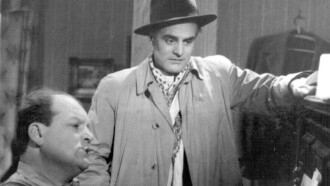
30 April 1948
Bank clerk Aarno Harjus is dismissed from his job due to false criminal allegations, and at the same time his wife leaves him.
24 November 1945
Helena Kara plays a dual role in this spectacularly portrayed adventure story where a real Countess and a false one cause misunderstandings.
13 February 1944
At the request of author Zacharias, Fredrik begins composing an opera, inspired by a summer walk in Backas, Espoo.
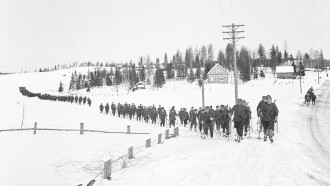
19 May 1940
The film deals with the Winter War of 1939-40 between Finland and the USSR. It begins with military exercises in the Autumn of 1939 and moves on to the Soviet invasion; the battle for Karelia; the bombing of Helsinki and other Finnish cities; as well as the activities of the foreign press corps in Finland and the heroic efforts of Finnish women and the Red Cross in their treatment of the wounded.
26 August 1945
Olli Suominen goes through the usual troubles of a teenager. After being in the war he is trying to find his place in the society.
13 April 1930
A historical drama depicting the Finnish struggle against Tsarist Russia. Opens at the Winter Palace in St.

17 October 1937
Poor but ambitious country girl Hulda arrives in the country's capital and gets a job as a maid for a bachelor Member of Parliament, Judge Soratie.

16 January 1938
Aarne marries Martta because his mother tells him it is his duty as the eldest son to marry a wealthy girl.
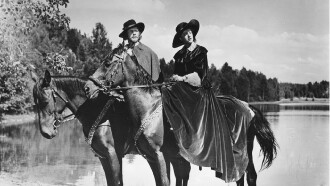
06 November 1938
In 17th century Finland young Arvid is forced to marry Brita but their ways soon part when their respective fathers move to different places.
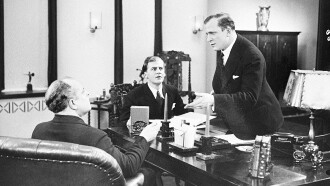
18 March 1934
The rambunctious Priscilla Paukkaja breaks into the home of Foreign Ministry official Raimo Vehar and his girlfriend Marja and appoints herself the couple's new housekeeper.

25 December 1944
Olli Suominen fancies his teacher and other shenanigans.
10 October 1946
The life story of Aleksis Kivi, author of the first Finnish novel in Finnish language and (posthumously) its most successful writer.

23 March 1950
A widower takes care of his three children who are trying to find him a new wife.
04 September 1953
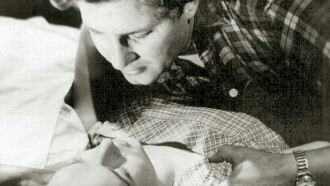
The proud widow of Sillankorva falls in love with her young neighbor, Jaakko Hallan, whom she offers to take in as her son.
14 January 1945
The old man at the Eirtola house warns the new maid Eriikka about the fate of Jenny, the summer girl.
12 September 1943
Set in turn of the century Helsinki, author Arvo Helavalla's novel makes an indelible impression on adolescent Auli Ranta.

24 November 1935
The romantic musical comedy Kaikki rakastavat is a key work in Finnish film history since it was the first feature film of Valentin Vaala as the house director of Suomi-Filmi and the film which launched the most beloved screen couple of Finland, Tauno Palo and Ansa Ikonen.
15 August 1943
Heavily indebted Commissioner Birger seeks to marry the wealthy Helena. The young lady rejects his advances and longs for her childhood friend Kuismaa.

14 July 1950
Young woman flies to Lapland together with her father and his new female friend whom the daughter dislikes.
29 November 1942
Olli, a schoolboy from the Suominen family, accidentally causes two accidents, which he does not dare to confess to his father Väinö.

02 February 1941
Blind since birth, Antreas Tuurio earns a meager living selling brushes at the Market Square. Despite his disability, he is a cheerful and optimistic person.

15 October 1939
After many years away a woman returns to her hometown in Lapland with her husband. There she falls in love with a handsome forester.
15 April 1940
Continuation War Review 10/41 Cannon operations. Pioneer repair work. Railway cannons. Hägglund's visit to Paalu.
15 February 1943
A film about forestry work using old and new methods. Forestry work and the use of wood before and during the war.
09 February 1938
Presentation of the Kallio fire station and its operations.
06 February 1937
Seurasaari buildings, children playing, tanhua, Student Theatre performance at Roinila House, nature park area.
05 February 1935
Performances by the Vyborg Music Institute's children's orchestra and choir on the sets of a film studio.
06 February 1937
The film presents SOK's bakeries and factory production in Turku, Vyborg, Jyväskylä and Kuopio.
06 February 1937
A short film filmed by Uno Pihlström and narrated by Topo Leistelä about the work and activities of the Finnish police force in 1937.
16 February 1947
A film about medical achievements commissioned by the Finnish Cancer Society.
15 February 1942
A film about the history of Finland since 1918.
30 November 1951
An industrial film about the Finnish war reparations to the Soviet Union
09 February 1938
Studying at the Ateneum Central School of Art and Design. A free-form short documentary, a cultural portrait of the "cradle" of Finnish art, the Ateneum Art Museum, which had been in operation for 50 years at the time the film was made.
10 February 1939
Pictures of the mining area, extraction, concentrator, workers' housing area and recreational opportunities.
09 February 1938
The second part of Suomi-Filmi's Mannerheim trilogy, which was shown in early 1938. While Bio Maxim filmed Mannerheim's 70th birthday celebrations with two cameras and in silent mode, Suomi-Filmi filmed its sound film with five cameras.
