Werner Nekes Trailers
Werner Nekes - Life Between the Pictures TrailerEXPRMNTL TrailerEva Hesse Trailer
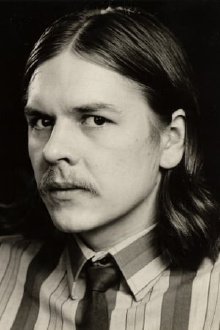
Werner Nekes was born in 1944 in Erfurt and studied linguistics and psychology in Freiburg. He then went to Bonn in 1964 where he was a head of the University Film Club and later chairman of the FIAG. He developed friendships with film directors, sculptors and painters. These included Dore 0., his companion and collaborator since 1967.
He began painting in 1965 with diverse materials and objects.
He started his practice of film with 8mm and went on with 16mm. He decided to free the film from narration and psychology and organized his films according to temporal units and structural systems.
In spring 1967, his films were rejected by the Kurzfilmtage of Oberhausen. Thus, Nekes organized a counter-event.
The same year in November, he comes to Hamburg with Dore 0., whom he marries the following month. He was a co-founder of the Hamburg cooperative of filmmakers and was a co-organizer of the « Hamburger Filmschau » in 1967. From 1973, he travelled all over the world to make seminaries about film theory and retrospectives. He moved to Mülheim an der Ruhr in summer 1978.
He co-founded the Filmbüro NW in 1980 and the ICNC (International Center for New Cinema) in Riga in 1988.
His work was shown at major international museums and festivals, including The Museum of Modern Art New York, or the Kassel Dokumenta.
He was also a professor: from 1969 to 1972 and 2004 to 2006 at the Academy of Fine Arts (Hochschule für Bildende Künste) in Hamburg, from 1981 to 1982 at Wuppertal University, from 1982 to 1984 at the Kunsthochschule Offenbach, and, from 1990-96 at the Academy of Media Arts in Cologne.
Furthermore, Nekes has compiled one of the most important private collections of artefacts documenting 500 years of pre-cinematographic experiments as well as developments in the early history of film, focusing on spatial and temporal principles of representation.

Most Popular Werner Nekes Trailers
Total trailers found: 78
01 January 1981
The German artist Joseph Beuys is reflecting on his theory of art, being filmed as a kinetic sculpture.
01 January 1985
Home movies shot on Super 8mm by W+B Hein over 10 years.
06 August 1997
Jonas Mekas assembles 160 portraits, appearances, and fleeting sketches of underground and independent filmmakers captured between 1955 and 1996.
29 December 1967
A montage experiment in which Dore O., her body painted in different colours, swings back and forth in front of a movie screen, on which is painted a phallus (slightly abstract and fairly large).
12 November 1968
Alaska is a wordless experimental film with a simple, droning soundtrack that sounds as if it is a piece for violin and refrigerator hum.
02 February 1974
Diwan, a lyric anthology, an outdoor movie with people. With people living in the surrounding precious and very beautifully photographed nature, are neither more nor less than one part of it.
07 October 1969
A strange succession of tableaux of four women and a man which gives the sense of a sort of dream family locked in an antiseptic world of endless afternoon teas, dinners and waiting.
08 December 1970
"...Nekes retreats behind his film. What is left is a double portrait, in which neither Dore 0. nor the grand landscape remain unchanged.
01 January 1996
The film traces the history of the camera obscura, the understanding of perspective and anamorphosis, peepshows and it shows the beauty of historical shadowtheaters and shadow toys.
01 January 1971
SPACECUT makes the frame a very strong culminating structure. Every frame is different, yet the almost half hour assembly of images results in a picture of one place being filmed.
02 February 1974
A part of Werner Nekes' lyrical anthology DIWAN.
01 January 1976
A film by Werner Nekes.
20 December 1978
Cinématon is a 156-hour long experimental film by French director Gérard Courant. It was the longest film ever released until 2011.
26 December 1967
This film is a poetic endeavor about Life and Death. A brown hen was selected to convey motion. The soundtrack is a collage of approximately 200 beginnings and endings of different musical pieces.
01 January 1976
A film by Werner Nekes.
29 December 1974
Makimono is an Asian roll painting depicting a landscape. The subject of the film is the language of film itself, its mutability and its influence on the viewer's vision and thinking.
01 January 1997
The painter gazes at his female model, or how voyeurism is transformed into culture. An erotic adventure film where the theme is the viewer himself.
01 January 1967
Changing landscape as the same day progresses.
18 June 1982
Director Werner Nekes has created this experimental film in the mode of James Joyce's Ulysses to the extent that human interactions are represented by poetic, symbolic images and language, with a certain amount of nudity added in.
08 October 2016
Knokke, Belgium. A small mundane coastal town, home to the beau-monde. To compete with Venice and Cannes, the posh casino hosts the second ‘World Festival of Film and the Arts’ in 1949, organised in part by the Royal Cinematheque of Belgium.
01 January 1976
A sequence of 4 films: knots, texture, web, plaited--four approaches of writing with light to reflect the possibilities of painting within film.
01 January 1996
The history of the magic lantern with demonstrations of moving slides, watertank or polarisation slides, followed by images on paper, which are brought to life with mechanical manipulations, with light shining through them or as panorama.
02 February 1974
A part of Werner Nekes' lyrical anthology DIWAN.
01 January 1996
Picture montage was a central aspect in the early history of visual media. As early as the 16th century, techniques such as the folding picture montage anticipated those used in film today.
01 January 2008
Directed by Werner Nekes
31 December 1982
Reel 27 of Gérard Courant’s on-going Cinematon series.
07 October 1976
Directed by Werner Nekes.
02 February 1974
A part of Werner Nekes' lyrical anthology DIWAN.
30 December 1967
The film is a reflection upon life and it reflects itself in a surprising time-construction... a composition of two triangular pictures, one over the other and touching at their tips.
01 January 1968
This film, conceived for an "oral culture" shows cows on a pasture in Northern Germany in one single shot.
01 January 1996
Other essential predecessors of film were those devices that created the illusion of motion by taking advantage of the persistence of vision and the stroboscopic effect, such as the thaumatrope, phenakistoscope or wheel of life, zoetrope or magic drum and praxinoscope and later on, the more sophisticated flip-books such as the kinora and mutoscope.
31 December 1979
A sleeping girl is plagued by strange dreams; manifold images fuse to create a bewildering puzzle, which finally dissolves and gives way to relief when the agitated girl, calmed by her mother, falls asleep again.
02 February 1974
A part of Werner Nekes' lyrical anthology DIWAN.
01 January 1968
A satire with cinematical comedy. No other medium would permit this specific form. The comic potential of pithy scraps of dialogue between safari companions, of Tarzan's war-cries and love-stammerings was amplified by illustrating these sounds with pictures of a friendly German wood and homely elephants in a zoo.
01 January 1975
An adventure film, a journey into light. This film is dedicated to Joseph Plateau, the discoverer of the cinematographic principle, who while exploring the inertia of perception stared into the sun until he was blinded.
01 January 2010
Directed by Werner Nekes.
31 December 1967
Based on principles of double projection. Here, two pictures are projected on top of each other: on the upper screen is K, the head of the actor, while ÖRPER can be seen on the lower picture.
01 January 1968
A grotesque review of actions performed in vain and those of frustration incarnate: it is about the vain attempt to button up a pair of briefs, the failure of a cavalier, a voyeur, a couple taking part in a dance contest; five fragmentary scenes running backwards and forward, standing upright and on their head, accelerated and recurring in cuts that vary in length.
30 December 1967
I. Demonstration of divergent movements of 26 people and two horses.
II. Periodic interruption by a second filmic plane.
07 October 1976
Directed by Werner Nekes.
15 December 1968
"KELEK belongs to the 'structural' or 'minimal' cinema movement in that its content is subordinated to the viewer's perception and has no intrinsic significance.
01 January 1996
The film looks at ways of creating spezial illusions through amiguous images, perspective theatres, folding peepshows and from the 19th century, the stereoscope, which look forward to today’s holography.
23 October 1986
Jurgen is an unknown electrician with a dream of pop stardom. His mother browbeats him into fame, while two managers compete for his contract.
02 February 1978
An expedition report (a winter sailing trip down the Elbe), and a document about filmmakers who leave a city because it's more hospitable elsewhere, reflections, reflexes.
10 October 1972
The film is divided into five parts differing in pictorial and musical structure. The plot, two women and their love for one another, is of secondary importance.