About the work of providing the growing city of Oslo with a network of tramways to the new suburbs: the Lambertseter Line, the Østensjø Line to Bøler, and the Grorud Line. ***** Oslofilm was a series of public information films about life in and around Oslo, produced between 1940 and 1980. Funded by the state, the films offer valuable insight into postwar Norwegian society. A wide range of Norwegian filmmakers contributed to the productions, resulting in a rich variety of styles and expressions. Several of the films also possess notable cinematic qualities, standing out as more than just informational material. The Oslofilms represent a unique and important chapter in Norwegian film history.
A subway enforcement officer working in the oppressively gray Budapest metro gets a chance at love — but first he needs to find out why passengers are jumping — or being pushed — to their deaths onto the tracks.
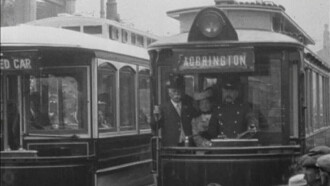
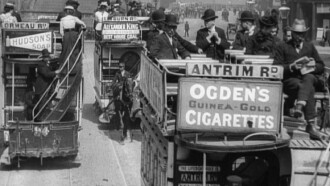
This fascinating record of Edwardian Nottingham was filmed from the driver's platform of a tram on a single journey through the city centre between its two main stations.
This short film tells about the past, present and future of the capital's subway. It shows the labor of subway builders, new stations still under construction.
Harold Meadows is a shy, stuttering bachelor working in a tailor shop, who is writing a guidebook, The Secret of Making Love, for other bashful young men.
Reconstructs the case of United States vs. Darby Lumber Company, which, in 1941, resolved long struggles over the question of whether Congress had the right to set minimum wages, limit child labor, and in other respects legislate employment standards.
A retired San Francisco detective suffering from acrophobia investigates the strange activities of an old friend's wife, all the while becoming dangerously obsessed with her.
In 1957, Peter Kubelka was hired to make a short commercial for Schwechater beer. The beer company undoubtedly thought they were commissioning a film that would help them sell their beers; Kubelka had other ideas.
The inhabitants of Cape Muroto in Kochi Prefecture depend on fishing for their living, but have no fishing port in their village and so use the port of Uraga in Kanagawa Prefecture as their main port.