Bus Money dons various disguises on public buses to protect the defenceless from the bullies and receives heroic praise. Money meets Tai Ngau, a righteous journalist, when they bear witness to the callous response of Manager Mo to the death of his servant Ah-kwai. Tai writes to redress grievances of the deceased. When visiting the family of orphans, he chances on his kindred spirit giving the eldest daughter Ah-yin a gift of gold. Money exploits the weakness of Mo and her connection with his son Sze-fu to swindle a fortune out of the lewd man for the benefits of the fatherless children. Her rage grows learning that Mo's friend Fong Hak-sang has pulled off a lucrative fraud on returned overseas Chinese and forces Ah-yin to pledge herself in paying off her father's debts. Money, who has all kinds of tricks up her sleeve, teams up with Tai and gives Mo and Fong their comeuppance before setting off on her next mission.
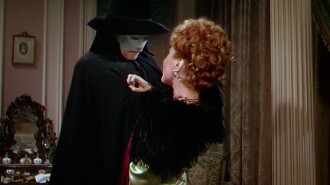
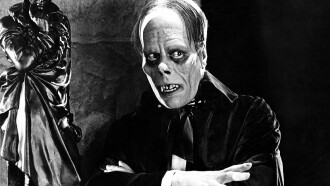
Following a tragic accident that leaves him disfigured, crazed composer Erique Claudin transformed into a masked phantom who schemes to make beautiful young soprano Christine Dubois the star of the opera and wreak revenge on those who stole his music.
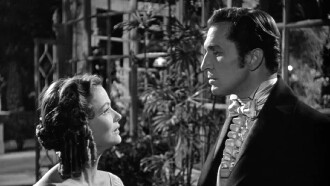
A simple Connecticut farm girl is recruited by a distant relative, an aristocratic patroon, to be governess to his young daughter in his Hudson Valley mansion.
Nikolai Gogol's The Inspector General is a satire play well-known around the world. In the period between the end of World War II and the 1960s, the play was adapted in Hong Kong cinema a total of six times.
"Family" (1953), which launched the Union Film legacy, "Spring" (1953) and "Autumn" (1954) are adaptations of Ba Jin's highly regarded novel "Torrent Trilogy".
Despite mixed emotions, Frederick Winterbourne tries to figure out the bright and bubbly Daisy Miller, only to be helped and hindered by false judgments from their fellow friends.
Popular movie trailers from 1965
These some of the most viewed trailers for movies released in 1965:
A criminal organization has obtained two nuclear bombs and are asking for a 100 million pound ransom in the form of diamonds in seven days or they will use the weapons.
Sei personaggi in cerca d'autore is an Italian staged filmmaking of the play of the same name, written by Luigi Pirandello about the relationship between authors, their characters and theater practitioners.
A story about two gunfighters, Duke and Steve. Steve is in love with Duke's daughter but Duke disapproves of the match, envisioning a life of hardship and danger for the girl if she marries Steve.
In this crime-thriller, Rome proves to be an unhappy destination for an American couple when the husband is kidnapped and his wife begins a desperate search for him.