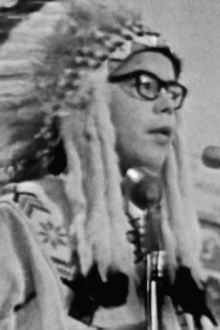
This powerful short documentary showing Indigenous youth resistance and emerging voices that will continue to define the landscape of Indigenous cultural and political activism for the next generation. Members of the National Youth Council, including Duke Redbird and Harold Cardinal, have a powerful exchange with a hostile white priest about the failures of the education system in relation to Indigenous people. The group tackles issues including segregated residential schools, the denial of citizenship rights, loss of language, and mass incarceration, many of which persist or continue to be stumbling blocks in the relationship between Indigenous people and the Government of Canada today.
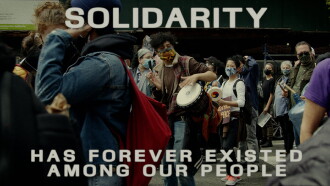
In the face of AAPI violence, an intergenerational coalition of Black, Indigenous, Latinx, Asian, People of Color organizers come together to organize a march across historic Washington Heights and Harlem, as a continuation of the historic and radical Black and Asian solidarity tradition.
In July 1990, a dispute over a proposed golf course to be built on Kanien’kéhaka (Mohawk) lands in Oka, Quebec, sets the stage for a historic confrontation that would grab international headlines and sear itself into the Canadian consciousness.
"A documentary film which looks at the issue of British Columbia Native land claims and how the aboriginals link their culture to the land, which has been stolen by the dominant white culture of North America.
The Australian Aborigines (in this film anyway) believe that this is the place where the green ants go to dream, and that if their dreams are disturbed, it will bring down disaster on us all.
In the early 1960s the Canadian government conducted an experiment in social engineering. Three young Inuit boys were separated from their families in the Arctic and were sent to Ottawa, the nation's capital, to live with white families and to be educated in white schools.
Mauri (life principle, life force, vital essence inherent in all living things) The film is an intimate, visually stunning testament to a land and a people who have survived removal, exploitation and colonization — and to the healing ways that are part of the Māori ancestral knowledge.
This film follows the aftermath of the Oka crisis, which brought Indigenous rights into sharp focus. After the barricades came down, the Royal Commission on Aboriginal Peoples was created, and travelled to more than 100 communities and heard from more than 1,000 representatives.
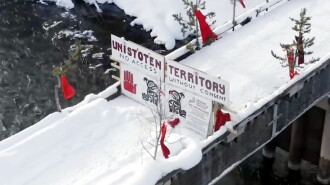
In this era of “reconciliation”, Indigenous land is still being taken at gunpoint. Unist’ot’en Camp, Gidimt’en checkpoint and the larger Wet’suwet’en Nation are standing up to the Canadian government and corporations who continue colonial violence against Indigenous people.
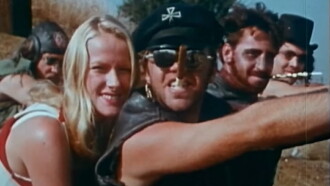
A wild, freewheeling spoof on motorcycle gangs in which tough-looking cyclists, who roam the highways on invisible bikes leaving visible tire tracks, pick up a girl hitchhiker encounter another gang.
... with real-life portraits of Jayne Mansfield, Frak O'Hara, Ruth Ford, Ned Rorem, Virgil Thomson, Claes Oldenburg, Roy Lichtenstein, William Burroughs, Andy Warhol, Rudy Gernreich, Jonas Mekas and others.
Property company chairman Hu Zian was attracted to his secretary Sun Yuxia's beauty and competence. One day after dinner when Hu was escorting Sun home, he received from a child on the street a box containing a mirror and two silver coins engraved with dragons.
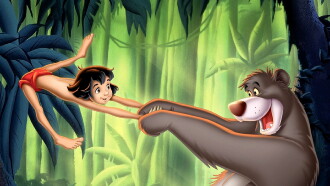
The boy Mowgli makes his way to the man-village with Bagheera, the wise panther. Along the way he meets jazzy King Louie, the hypnotic snake Kaa and the lovable, happy-go-lucky bear Baloo, who teaches Mowgli "The Bare Necessities" of life and the true meaning of friendship.
Comments
Have you watched Powwow at Duck Lake yet? What did you think about it?