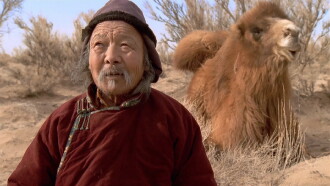
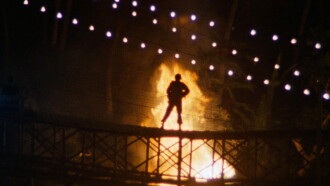
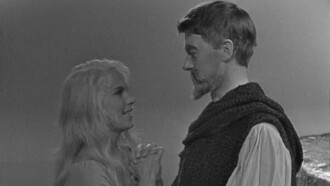
The Homeland of Electricity, Larisa Shepitko's adaptation of an Andrei Platonov story, was one of three short films collected in an omnibus work (Beginning of an Unknown Era) commissioned to honor the 50th Anniversary of the October Revolution. Censors eventually shelved the film and it would not see the light of day until well after Shepitko's death, during Mikhail Gorbachev's perestroika.
Of all the great ballerinas, Tanaquil Le Clercq may have been the most transcendent. With a body unlike any before hers, she mesmerized viewers and choreographers alike.
A photographer and a filmmaker challenge each other to shoot—one to photograph the other to film—two young actresses, one from Tokyo, the other from the countryside.
A chronicle of the production problems — including bad weather, actors' health, war near the filming locations, and more — which plagued the filming of Apocalypse Now, increasing costs and nearly destroying the life and career of Francis Ford Coppola.
E-Team is driven by the high-stakes investigative work of four intrepid human rights workers, offering a rare look at their lives at home and their dramatic work in the field.
Julia is a young transgender woman who left her home country of Lithuania. Now living in Germany, she walks the streets of Berlin, working as a prostitute to survive.
The Hostage is a 1967 Crown International low-budget motion picture starring Don O'Kelly, James Almanzar and Joanne Brown, with Leland Brown, John Carradine, and Harry Dean Stanton.
In the fall of 1967, intermedia artists Ture Sjölander and Lars Weck collaborated with Bengt Modin, video engineer of the Swedish Broadcasting Corporation in Stockholm, to produce an experimental program called Monument.
Comments
Have you watched The Homeland of Electricity yet? What did you think about it?