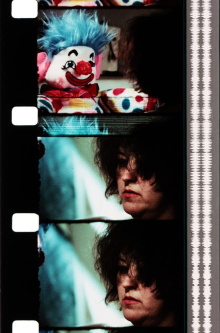
The rising moon is the main theme in this short movie of three people and an animal going about their nocturnal rituals. This movie is evidently part three of my trilogy that started with HOLD ME WHILE I'M NAKED and ECLIPSE OF THE SUN VIRGIN. It evidently is, since part three never really came out. This seems to look like it could be part three. — GK (anthologyfilmarchives.org)
A young woman proposes to the passengers of a full bus a change in seats. On the trip they will discover that, regardless of the result, it is always good to review the established order.
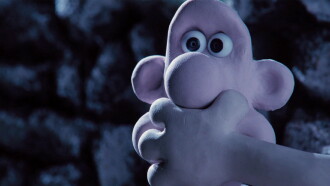
Wallace's whirlwind romance with the proprietor of the local wool shop puts his head in a spin, and Gromit is framed for sheep-rustling in a fiendish criminal plot.
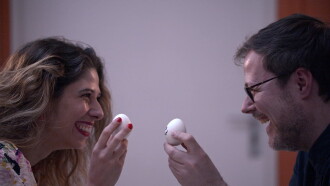
Maria, a competitive woman in her late 30's orders a clone from North Korea under the pretense of getting some help around the house so she can spend more time with her husband and two kids, but mostly to compete with her flawless friend Ari.
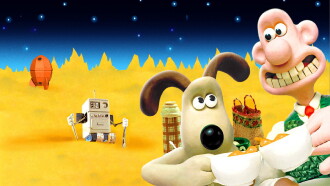
Wallace and Gromit have run out of cheese, and this provides an excellent excuse for the duo to take their holiday to the moon, where, as everyone knows, there is ample cheese.
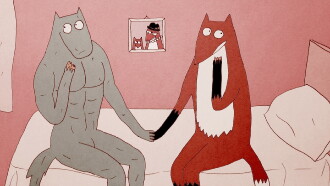
Manivald is a fox in his early 30s. He is still living at home with his mother. One day a young hot wolf called Toomas comes to fix the washing machine.
"In my film I suggest that there is no greater mystery than that of the protagonists. War and Love are simply equated for what they are; the aftermath is inevitable, and a normal human condition, for which like the ancients one can only have pity and understanding.
Documentary by Juan Francisco de Lasa about a pioneer of Spanish cinema. Gelabert attended one of the first sessions of the Lumière's cinématographe in Barcelona.
The Three Kingdoms period begins as the walled fortress of Hsin Yang falls to invaders. Centered around this historical event, The Last Days of Hsin Yang follows the escape of the prince of Hsin Yang as he hides with a small family and escapes from the sacked and burning city.
Centring on the legend of the four ancient Chinese heroines, the film was a novelty for audiences at the time, as the singing performance was in Cantonese and used huangmei operatic rhythms—a popular trend in the 1960s, yet it retained traditional flavours by using operatic luogu percussion in the battle scenes.