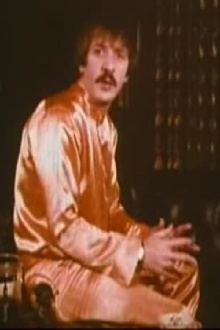
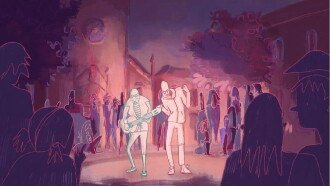
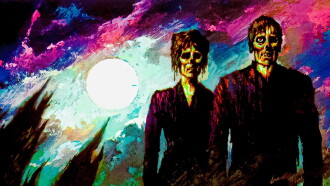
Sonny Bono appears onscreen to tell kids that marijuana is a "bummer" that turns you into a "weedhead" and will make you "trip out" (the fact that, based upon his performance, Sonny appears to have ingested unknown substances before the cameras started rolling tends to limit the film's crediblity somewhat).
MORENA tells the uplifting story of the Philippine National Surf Athlete Ikit Agudo, who overcame the pressure to blend into a society obsessed with skin whitening.
As a teenager in the '90s, Soleil Moon Frye carried a video camera everywhere she went. She documented hundreds of hours of footage and then locked it away for over 20 years.
By land, by air, and by sea, viewers can now experience the struggle that millions of creatures endure in the name of migration as wildlife photographers show just how deeply survival instincts have become ingrained into to the animals of planet Earth.
Pereda returns with a small, mysterious and moving tribute to Chantal Akerman, conceived as a series of joyful impossible letters addressed to the great disappeared from the cinema, to answer her fictional question about renting her bright apartment in Coyoacán.
The idea for this film comes from the encounter with two African boys who live in Rome, and is based on their music.
Alternative movies trailers for Marijuana
More movie trailers, teasers, and clips from Marijuana:
Home Movie About Smoking Marijuana - 1968
To support my efforts to create more clips please donate to me at The music is mine. The movie is an amateur film made as part of a ...
Marijuana (1968)
Marijuana (1968) is a short film that is hosted by Sonny Bono who does a lot of preaching and signify about how marijuana is illegal and you kids shouldn't try it.
1960s American 'Educational' Marijuana Video
A BIZARRE US educational video from the 1960s outlining the 'dangers' of marijuana for teenagers has resurfaced this week giving a glimpse into the public ...
Centring on the legend of the four ancient Chinese heroines, the film was a novelty for audiences at the time, as the singing performance was in Cantonese and used huangmei operatic rhythms—a popular trend in the 1960s, yet it retained traditional flavours by using operatic luogu percussion in the battle scenes.
Three identical prints of a single 100 foot fixed-camera take are shown from beginning to end-roll light-flare, with a few feet of blackness preceding/bridging/following the rolls.
There's nothing like a good, opulent, gaudy musical to lift the spirits, but when it's a 1960's Hong Kong musical orchestrated by a Japanese director and composer, it breaks through the ranks as a classic of campy kitsch.