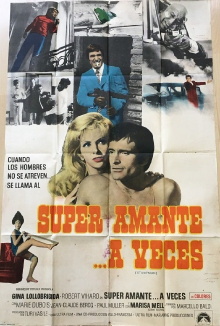
Stuntman Johnny gets tired of putting his life constantly at risk and instead joins up with a bunch of international thieves who are looking to steal a priceless statue, but that's where the trouble starts....
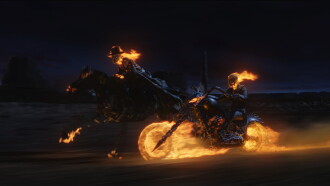
In order to save his dying father, young stunt cyclist Johnny Blaze sells his soul to Mephistopheles and sadly parts from the pure-hearted Roxanne Simpson, the love of his life.
Gang leader Tony pulls off a major diamond heist with his crew, but cop-turned-criminal Ling knows who has the loot and responds by kidnapping Tony's daughter and holding her for ransom.
As the daring thief Arsène Lupin ransacks the homes of wealthy Parisians, the police, with a secret weapon in their arsenal, attempt to ferret him out.
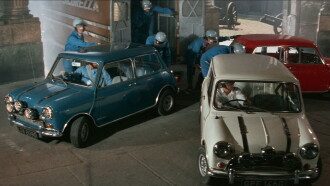
Charlie's got a 'job' to do. Having just left prison he finds one of his friends has attempted a high-risk job in Torino, Italy, right under the nose of the mafia.
For Rod Kimble, performing stunts is a way of life, even though he is rather accident-prone. Poor Rod cannot even get any respect from his stepfather, Frank, who beats him up in weekly sparring matches.
Captain Etienne Navarre is a man on whose shoulders lies a cruel curse. Punished for loving each other, Navarre must become a wolf by night whilst his lover, Lady Isabeau, takes the form of a hawk by day.
Craig and his cousin Day-Day have finally moved out of their parents' houses and into their own crib, working nights at a local mall as security guards.
Centring on the legend of the four ancient Chinese heroines, the film was a novelty for audiences at the time, as the singing performance was in Cantonese and used huangmei operatic rhythms—a popular trend in the 1960s, yet it retained traditional flavours by using operatic luogu percussion in the battle scenes.
There's nothing like a good, opulent, gaudy musical to lift the spirits, but when it's a 1960's Hong Kong musical orchestrated by a Japanese director and composer, it breaks through the ranks as a classic of campy kitsch.
Documentary by Juan Francisco de Lasa about a pioneer of Spanish cinema. Gelabert attended one of the first sessions of the Lumière's cinématographe in Barcelona.
Comments
Have you watched Stuntman yet? What did you think about it?