The Eve of Ivan Kupalo Trailer (1968)
25 December 1968
Fantasy , Drama , Mystery 71 mins
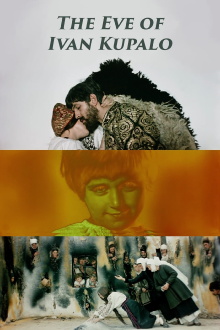
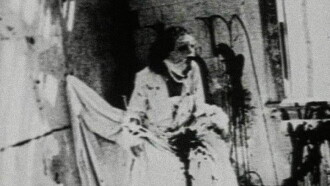
Petro is a modest farmhand living in an impoverished village in some unspecified long-ago era. He wants to marry the lovely Pidorka, but her stern father won't hear of it. The mischievous demon Basavriuk, offers a deal, enticing Petro into crime for the sake of fortune.
Watch the official The Eve of Ivan Kupalo 1968 trailer in HD below or find more The Eve of Ivan Kupalo videos on Vidimovie .
Watch Full Movies Online
Watch Movies Now
VIDEO
Crew
Val
Production Design
International Titles
Der Abend vor dem Fest Iwan Kupala Trailer
Juhannusaatto Trailer
La nuit de la veille de la Saint-Jean Trailer
Noc Kupaly Trailer
Vecher nakanunie Ivana Kupala Trailer
Feast of St. John the Baptist Trailer
Night of the Ivan Kupala Trailer
Vechir na Ivana Kupala Trailer
Similar Trailers
If you liked the The Eve of Ivan Kupalo trailer, you may like these ones:
19 May 1979
At the height of the Vietnam war, Captain Benjamin Willard is sent on a dangerous mission that, officially, "does not exist, nor will it ever exist.
06 June 2001
Blonde Betty Elms has only just arrived in Hollywood to become a movie star when she meets an enigmatic brunette with amnesia.
19 January 2001
After narrowly escaping a bizarre accident, a troubled teenager is plagued by visions of a large bunny rabbit that manipulates him to commit a series of crimes.
19 December 2002
On the eve of a seven-year prison sentence, a New York drug dealer spends his final day of freedom confronting his past, his relationships, and the choices that led to his downfall in a city still reeling from 9/11.
21 April 2006
Rose, a desperate mother, takes her adopted daughter, Sharon, to the town of Silent Hill in an attempt to cure her of her ailment.
11 February 2005
Tim Avery, an aspiring cartoonist, finds himself in a predicament when his dog stumbles upon the mask of Loki.
31 January 2017
Set between the two World Wars and based on true historical events, Bitter Harvest conveys the untold story of the Holodomor, the genocidal famine engineered by the tyrant Joseph Stalin.
16 April 1999
In Los Angeles, a wealthy man, known as Mr. Fuller, discovers a shocking secret about the world he lives in.
20 March 1972
A psychologist is sent to a space station orbiting a planet called Solaris to investigate the death of a doctor and the mental problems of cosmonauts on the station.
29 August 2002
A biography of artist Frida Kahlo, who channeled the pain of a crippling injury and her tempestuous marriage into her work.
05 June 1991
Begotten is the creation myth brought to life, the story of no less than the violent death of God and the (re)birth of nature on a barren earth.
Alternative movies trailers for The Eve of Ivan Kupalo
More movie trailers, teasers, and clips from The Eve of Ivan Kupalo:
The Eve of Ivan Kupalo (Yuri Ilyenko)
A sample from the movie "The Eve of Ivan Kupula" from 1968 by Yuri Ilyenko. Read a review at ...
Popular movie trailers from 1968
These some of the most viewed trailers for movies released in 1968:
07 February 1968
Astronaut Taylor crash lands on a distant planet ruled by apes who use a primitive race of humans for experimentation and sport.
26 September 1968
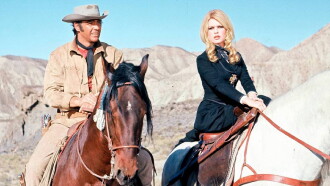
While guiding a hunting party of clueless European aristocrats, cowboy Bosky Fulton leads them into hostile Apache territory.
03 December 1968
Inside a café, on Christmas Eve. Chim Kei meets an enigmatic woman named Mimi Wong who introduces herself as the daughter of an upper-crust family.
01 January 1968
Puthisaligal is directed by T.P. Arjun. Puthisaligal stars Jaishankar in the title role along with Ramachandran T.
22 April 1968
Captain Talat and Necip work in charge of the security chief Mansur Pasa. Talat fancies Necip's cousin Cemile.
15 August 1968
Vellaiya is falsely accused of murder. On the other hand, Rani, a rich girl, struggles after the sudden demise of her father.
24 November 1968
The historical background to the story is the transfer of 269 executed women to the Berlin Anatomy Department in the years 1939-1945.
01 March 1968
Documentary film produced by American Documentary Films and the Black Panther Party from 1968, honoring Huey P.
20 August 1968
A picture of the development of the city of Glasgow, Scotland, as seen through the photography of Scots-Italian photographer Oscar Marzaroli.
Comments
Have you watched The Eve of Ivan Kupalo yet? What did you think about it?
Artwork, screen shots, trailers and other imagery is © 1968 Dovzhenko Film Studios.