In 1965, on the Eastern Shore of the Chesapeake Bay, there was the last operating fleet of sailing work boats in the United States. Forty-odd "Skipjacks" were still used by Maryland watermen to dredge up oysters from the Bay. At that time, the fleet had survived because of a Maryland conservation law which prohibits the use of motor power for oyster dredging. The watermen traditionally marked the opening of each oystering season with a skipjack race which the Maryland State Tourist Board incorporated into its annual "Chesapeake Bay Appreciation Day."
The first of the modern fishing films, shot in the wild panorama of 1970s Key West. Colorful scenes of Key West from another era - with treasure hunters, smugglers, hippies and eccentrics - are background to stunning cinematography and tarpon fishing at its finest.
In Paul Brandt’s filming debut, he joins friend Paul Norris and legendary fly-fishing guide, Naoto Aoki, on a journey that is both a look into his consuming passion for fly fishing and an ode to his hometown of Calgary, which he dubs as the World’s Largest Fly Fishing Lodge.
One million Dutchmen (out of 16 million) play soccer. Almost two million fish at least once a year. Fishing might be the most remarkable sport in the world.
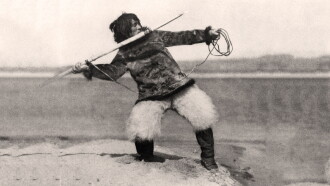
Danish documentary following different locations and situations in Greenland anno 1914. It comes around settlements, hunters, steamboats, umiaks, a kayak race, and a football match.
Popular movie trailers from 1968
These some of the most viewed trailers for movies released in 1968:
Anthony Steffen, as a young gunman who works as a circus performer, witnesses the killing of some outlaws, carried out by their leader and is credited with the deed.
"In my film I suggest that there is no greater mystery than that of the protagonists. War and Love are simply equated for what they are; the aftermath is inevitable, and a normal human condition, for which like the ancients one can only have pity and understanding.
Documentary by Juan Francisco de Lasa about a pioneer of Spanish cinema. Gelabert attended one of the first sessions of the Lumière's cinématographe in Barcelona.
Three identical prints of a single 100 foot fixed-camera take are shown from beginning to end-roll light-flare, with a few feet of blackness preceding/bridging/following the rolls.
Comments
Have you watched Watermen yet? What did you think about it?