Canada struggles to preserve her borders after the Treaty of Washington in this feature documentary. The country's survival as a nation independent of the United States rests in the balance, as the film shows in its exploration of historical context, underlying factors, and possible alternatives. Part 9 of the series Struggle for a Border: Canada's Relations with the United States.
For over 130 years till 1996, more than 100,000 of Canada's First Nations children were legally required to attend government-funded schools run by various Christian faiths.
Phil Comeau shines a spotlight on the Ordre de Jacques-Cartier, a powerful secret society that operated from 1926 to 1965, infiltrating every sector of Canadian society and forging the fate of French-language communities.
What does it actually mean to be Canadian? This humorous documentary, featuring interviews with a who's-who of famous Canadians, hopes to find the answer.
Filmed on location in Saskatchewan from the Qu'Appelle Valley to Hudson Bay, the documentary traces the filmmaker's quest for her Native foremothers in spite of the reluctance to speak about Native roots on the part of her relatives.
Canada: A People's History - Episode 14: 1940 to 1946 CE. Canada comes of age in the anguish of World War II, with soldiers on the beaches at Dieppe and women in the industrial work force back home.
This film explores how Canada wavers between rejection and acceptance of closer ties with the United States, tracing the historical precedents of current issues between the two nations.
The Indian Act, passed in Canada in 1876, made members of Aboriginal peoples second-class citizens, separated from the white population: nomadic for centuries, they were moved to reservations to control their behavior and resources; and thousands of their youngest members were separated from their families to be Christianized: a cultural genocide that still resonates in Canadian society today.
Renowned as the richest gold strike in North American mining history, the Klondike Gold Rush (1896-1899) set off a stampede of over 100,000 people on a colossal journey from Alaska to the gold fields of Canada's Yukon Territory.
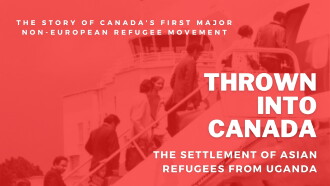
This documentary explores the history of Canada’s first major migration of non-European and non-white refugees who arrived in 1972 when Ugandan President Idi Amin expelled all South Asians from the country.
On a misty morning in the fall of 1985, a small group of Haida people blockaded a muddy dirt road on Lyell Island, demanding the government work with Indigenous people to find a way to protect the land and the future.
Popular movie trailers from 1969
These some of the most viewed trailers for movies released in 1969:
Dr. Roth, a respected veterinarian and head of a state-owned stud farm, had accepted papers from a man for safekeeping when he was 16 years old, toward the end of the war.
The drama revolves around the novelist Sami Al-Bagouri (Fuad Al-Mohandes), whose wife Mahasen (Zahra Al-Ola) is jealous of him so much that she is jealous of his deceased wife (Fekriya).
The landscape surveyed here might be the estranged interior of your typical East-European émigré animator’s skull; with its deranged narrative values, artfully disturbed graphic style, and aggressive "musique concrète" sonorities, Kamler's are among the most astounding works you'll ever see.
Neena lives a poor lifestyle along with her parents. Her marriage is arranged with a wealthy male, but the marriage could not take place as her parents are unable to provide enough dowry.
A farmer receives land from the king and discovers a buried golden mortar. He decides to give it to the king out of gratitude, but his clever daughter warns him that the king will surely want him to bring a corresponding pestle as well.