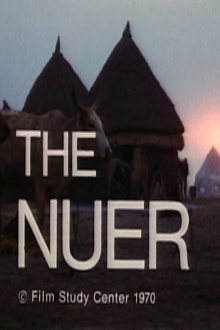
Portrays the Nuer, Nilotic herdsmen of the Nile basin. Shows how their daily lives revolve about their cattle, and depicts the psychological bonds between them. Includes extensive use of Nuer music and poetry.
A seven-day initiation ceremony is documented in which two women undergo ritual healing following a diagnosis of spirit possession, presented without narration, intertitles, or explanatory commentary.
In the South Seas, Samoan village life is portrayed with a painterly eye. Blending ethnographic detail with a romanticized 'Gauguin idyll', the film celebrates daily rituals, communal traditions, and the passage into adulthood, suffused pride of beauty and pride of strength.
This intimate ethnographic study of Voudoun dances and rituals was shot by Maya Deren during her years in Haiti (1947-1951); she never edited the footage, so this “finished” version was made by Teiji Ito and Cherel Ito after Deren’s death.
In Sangha, through the window of her house, Germaine greets Djamgouno, her main informant. He then translates for her a conversation she has with a half-blind old man.
AMIN portrays Qashqai musician Amin Aghaie, a young modern nomad and his family who despite facing steep financial, cultural and political obstacles are dedicated to their art and culture.
A synaesthetic portrait made between French Polynesia and Brittany, Color-blind follows the restless ghost of Gauguin in excavating the colonial legacy of a post-postcolonial present.
In front of Jean Rouch's camera, Germaine Dieterlen recalls her ethnographic itinerary, at the Musée de l'Homme, in Mali and in the Paris of the 1930s.
In Isère, in the mountainous region of Trièves, is the Tournesol farm, an experiential farm totally autonomous in energy, a veritable laboratory for renewable energies.
The story of a poor girl who leaves her starving family and sheep for a more prosperous village. Her grandfather finds her and tries to convince her to return to her home.
Alternative movies trailers for The Nuer
More movie trailers, teasers, and clips from The Nuer:
The Nuer - PREVIEW
Purchase: The Nuer call themselves Naath. Only their immediate neighbors the Dinka Shilluk and Arabs call them Nuer.
Popular movie trailers from 1970
These some of the most viewed trailers for movies released in 1970:
Rosana is an attractive teacher who is losing his youth with such discipline in the study. When suddenly bursts into his life a perfect cheeky who lives of game and odd jobs as photographer, but wants to acquire a little culture for personal reasons.
Two sisters, Hanifah and Latifah/Ipah have different attitudes toward life in Jakarta. While Hanifah is content working as a teacher, Ipah, who works as a shopkeeper, is obsessed with living a high life.
At least forty films have been made about the Living Theatre; it remained to the American underground filmmaker Sheldon Rochlin (previously responsible for the marvellous Vali) to make the 'definitive' film about one of the most famous of their works, Paradise Now, shot in Brussels and at the Berlin Sportpalast.
Fred Midway may be a bit short on brains, but he's got plenty of ambition. However, before he can gain promotion as a salesman, he must make his family more socially acceptable.
Yudi has just got out of jail but Bono and the gang force him to commit another crime. Unlike the others in the gang who spend their money for fun right away, Yudi saves his money in the bank.
Comments
Have you watched The Nuer yet? What did you think about it?