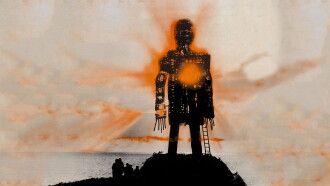
Self-shot: a film shot without a camera operator. Sole witness: the movie camera. Fixed, directed at a single expanse, obedient to the orders of wires that I manipulate: characters splitting in two through the asymmetrical filtration of the comings and goings of self-irony. Composed of various extracts of historical films, such as the Eisensteinian battleship, intercut with stairways of various sorts; the unceasing use of negatives persecuted by positives and vice versa; a cinematic-theatrical dialogue between philosophical doubling and filmic doubling.
An erotic comedy depicting the sex adventures of young wives living in an apartment complex, that are not satisfied with just having sex with their husbands.
Sam and Buddy, two highway robbers, join with Colonel Quint, a big crook, who sold his services to Morgan, the banker, in order to free Baby, the banker's daughter, abducted by Espartero and his killers gang.
A film demonstrating steps to take in the event of a nuclear attack. Animated drawings show the effects of atomic explosions in the air and at ground level.
It is 1905. The police director gets Jindrich Legenda (Eduard Cupák) shadowed as, yet Legenda had served his sentence for a burglary, the jewels have not been found.
Two rival street gangs from Kowloon go to war over turf and bar girls so as to dominate the area and maximize their takings; however things go from bad to worse as the girls start to get involved in the bloody feud.
Shanta Dhamle lives a wealthy lifestyle in Bombay along with her dad, Shamrao, and mom, Ansuya. She incurs their displeasure when she falls in love and gets married to a poor and overly sensitive writer, Gopal, who moves in with them, and continues to suffer verbal abuse at Shamrao's hands.
Abel Hradscheck, the owner of an inn in the Oderbruch country, faces financial ruin. For this state of affairs, Ursula, his wife and former actress, is by no means free of blame.
The Sienese Pia Tolomei is imprisoned in a castle by a jealous husband. Based on the novel by Marguerite Yourcenar, inspired by a story from the Italian Middle Ages.