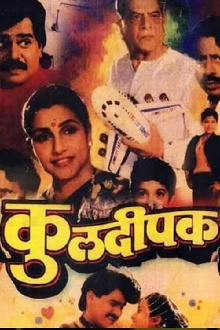
Shyam returns from London and Rao Saheb hands him all the business. Janradhan and employee of Raosaheb who eyes his chair creates a rift between the the two as Shyam considers his employee at the top. He loves Kiran whose daughter of Bhau Kasbe, an old rival of Raosaheb, Janardhan tells him that she is the reason behind Shyam's change. Kiran and Shyam get married with blessings of her cousin Raja but Raosaheb disowns them and they start living separately and Janardhan takes advantage of the rift and kills Shyam. But Kiran soon delivers a baby boy named Deepak years later Raosaheb comes across him and wants to take his custody.
Andreas, who is ten, has been brought up by his grandmother. When she dies, he removes a putto from the crucifix placed upon her, puts it in his mouth and does not speak again.
This half-hour BBC documentary offers a revealing look at Svankmajer at work on "Death of Stalinism in Bohemia," and uses excerpts from his earlier films to trace the development of his unique sensibility.
In the midst of trying to legitimize his business dealings in 1979 New York and Italy, aging mafia don, Michael Corleone seeks forgiveness for his sins while taking a young protege under his wing.
Lakshya finds a bottle, which has Gangaram trapped in it who is his lookalike. He promises to make everything possible with the sand in the bottle, but once the sand is over he will be free to go.
As he gradually turns mad, the dancer Nijinsky evokes the important episodes of his life. In costumes and sets of lush beauty, the divine puppet performs in a final show where the secondary characters are named: Diaghilev, Isadora Duncan, Stravinsky, Auguste Rodin, Léon Bakst.
The boisterous good humor of Jurmala, the nickel-mine owner, is, if anything, only barely dented by the raging battles in Finland before, during and after World War Two.