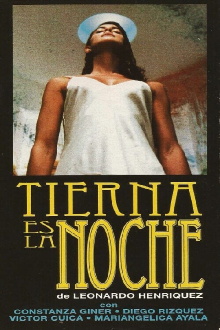
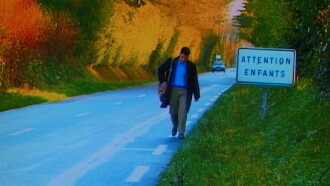
Tierna es la Noche is a film without bullets nor sea, without mosquitoes, without peasants nor flowers. It only contains a barman, a man and a beautiful woman who lives in a bathroom. For commercial reasons, we have included two policemen, a drop of blood and a multilingual nymphomaniac. For aesthetic reasons, a tear and a black man. For both reasons, the film takes place anachronically, during the fifties and nineties in a make-believe city called Caracas. It's a story of histerics, like all stories, unfinished.
Attempts to showcase how the creation of art directly correlates to the perception we have of ourselves and the life around us as shown through the eyes of a struggling family.
A therapist looks into the mind of a woman diagnosed as schizophrenic and finds, not madness, but tortured sexual guilt created by the taboos of society.
Playtime’s cosmopolitan spectacle, presented in a kaleidoscopic montage across seven large screens, interconnects the lives of its archetypical characters—hedge fund managers and art world players in London; a photographer in Reykjavik; and a Filipina houseworker in Dubai—each of whom is based on a real-life individual directly affected by the market collapse.
Someone we hear talking - but whom we do not see - speaks of a project which describes the four key moments of love: meeting, physical passion, arguments/separation and making up.
Number Two’ is an audio visual work which materializes the definite possibilities of sight and the existence of light in space with the drama in between image and sound as a reaction .
A high school student attempting to complete his musical opus keeps getting distracted by the intense fights of his mentally imbalanced father and overly doting mother.
Vivian is a carefree, streetwise diamond in the rough when she meets sophisticated billionaire Edward in a chance encounter that turns into a week-long business arrangement.
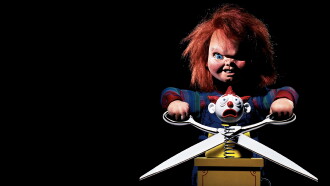
Chucky is reconstructed by a toy factory to dispel the negative publicity surrounding the doll, and tracks young Andy Barclay to a foster home where the chase begins again.
A heartfelt story about the borderlands of childhood, about a boy who is still a child, but who is touched by an inexplicable, barely discernible feeling of love.
When a beautiful country girl leaves her farm and baby behind to pursue a singing career in Nashville, her naïve dreams of stardom descend into a perverse nightmare.