Corinne Cantrill Trailers
Une journée avec les Cantrill TrailerThe Second Journey (To Uluru) Trailer

Une journée avec les Cantrill TrailerThe Second Journey (To Uluru) Trailer

Total trailers found: 64

01 January 1963
Part of a series of four studies the Cantrills made of the native flora of the Stradford Island, this one focusing on the Banksia Integrifolia.
26 May 1980
A documentary involving the work done by Arthur and Corinne Cantrill since 1975 in 3-colour separation.
02 September 1970
An experimental film to see how much information the eye can take in from continuous single frame images and from single frames of widely different type.
03 December 1971
"Island Fuse consists entirely of the monochromatic reprocessing of black and white footage that we filmed in the 1960s on the Isle of Stradbroke.
01 January 1998
Does colour exist where there is no light? The garden is a setting for colour research: random objects are laid out in changing combinations for repeated shooting and printing with varying exposure densities and colour balances.
17 April 1984
It's a three-colour separation study of MacKenzie Falls in the Grampians, Victoria.
26 May 1980
Three-color separation imagery expands the experimental documentation of landscape. Alternating nuances of color conjure up; a formal beauty, which are echoed in birdsong and the buzzing of insects.
01 January 1968
"On several occasions we were impressed by the apparent vitality of some spools with arbitrary discards, compared to the laboriously assembled sequences of what is waste.
01 January 1979
A three colour separation study filmed at Pearl Beach, which examines the same scene of Amethyst Avenue during the progression of a winter, then a summer day.
01 January 1963
Part of a series of four studies the Cantrills made of the native flora of the Stradford Island, this one focusing on the Banksia Serrata.
02 September 1970
The beauty of the Australian bush is depicted in a carefully composed camera choreography of different aspects of flora and fauna.
01 June 1984
At Black Range (1984) was shot near the Grampians in Western Victoria, and features monumental monochrome rocks with rainbow shadows and “fringing” in the moving eucalypts, which create coloured vibrations like the filmic analogue of Impressionism.
01 December 1977
Located 18 miles west, Katatjuta (The Olgas) is a recurring presence in the background of Uluru. Believed by Aboriginal people to have been inhabited by mythological ancestors, it is a place to be approached with caution.
01 April 1977
A study of the desert plain that is not left out of foliage or geological structures, inviting us to compare it with the plain of the sea and the horizon of the previous film.

10 October 1999
Arthur and Corinne Cantrill are two of Australia's most prominent experimental filmmakers. The Cantrills are well known for their 'colour separation' films.
01 January 1968
This is a film about the work of the young French Vorticist sculptor who died in World War I and his ties to London and to Jacob Epstein, Wyndham Lewis and Ezra Pound.
01 June 2000
Filmed on l6mm Kodachrome which heightens the textures and depth of this harsh landscape -- a study in browns, yellows, greys and blue sky.

01 August 1977
Ayers Rock is examined in the light of its ancient human and animal associations. It is seen under various light effects which create different colour and texture impressions.
01 August 1989
Brightly coloured animated drawings rotoscoped from high contrast black and white negative film of Ivor Cantrill aged 14, are integrated with the original negative and positive images on an optical printer to create patterns of black, white and colour.
14 June 1981
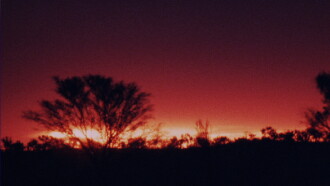
As the camera moves gently from afar into the very heart of the monolith, the magic of the holiest site of the Aborigines unfolds in shimmering nuances of light.
08 June 1995
Evening performances of traditional Balinese dance-drama in Ubud, shot single frame with open shutter exposures.
01 June 1969
Timeless elements in a roll of film: stillness, movement, woman, girl, road, wind, sun, leaves. A triptych of a girl who reminds us of the face and figures in old icons.
01 January 2006
'The Room of Chromatic Mystery' is (...) another three-colour separation film, shot in the living room of the Cantrills’ old house in Brunswick.
01 June 1984
Hand-drawn directly onto 16mm film, this animation is a 'diary' of daily drawing-on-film practice by Ivor Cantrill over a period of 18 months.
10 January 1966
A short animation of Charles Lloyd’s dry points. Sound composition by Arthur Cantrill.
03 December 1971
A videographic film exploiting the phosphor textures on the cathode screen. Video images are filmed, filter-coloured and supered in the camera.
02 September 1970
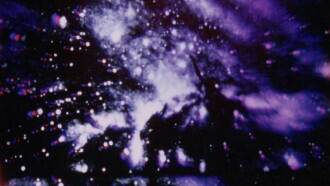
The film Harry Hooton is conceived as a huge energy field combining the energy of light and colour, movement, editing and sound — a dense, vibrating, pulsating work, unrelenting in its thrust; a celebration of Hooton’s definition of art as the communication of emotion to matter.
19 August 1973
Masses, crowds in the streets, traffic, large gatherings of people for political, religious, cultural events; TV newscasts – the tide of humanity being the matrix from which the alternative movement arose.
01 January 1960
In the Brisbane Creative Leisure Centre, conducted by the Cantrills, children are shown reproductions of stained glass windows and then make large transparent pictures with black paper, coloured cellophane, and other materials such as discarded x-ray pictures and textured fabric, with a minimum of instruction.
16 May 1984
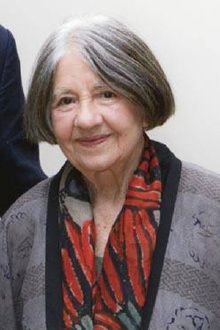
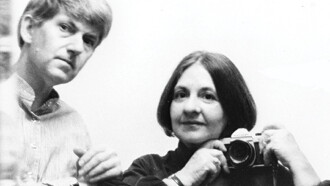
Filmmaker Corinne Cantrill traces her fascinating life story through hundreds of photographs. Formally rigorous and emotionally profound, Corinne's insightful narration explores how photographs both reveal and hide our identity.
01 January 1969
Will Spoor is a Dutch performer, working in the abstract side of movement and mime. He has considerable knowledge of the potential of film and his intention was to extend his work into realms that were impossible for live theatre.
01 January 1966
Charles Lloyd is an Australian artist whom we met in Sydney. He began working with printmaking when he moved to London around 1960.
10 December 1963
“In Robert Klippel – Junk Sculpture No. 3, 1963 (1965), a spiky Klippel creation resonates almost visibly with the high, piercing tones of Larry Sitsky’s music.
01 December 1963
Experimental film using fireworks, often superimposed and in soft focus, printed in negative form with a black image on a white background.
01 May 1969
A film of repeated movements toward the camera, away from the camera, and across the camera's field, punctuated by a 360-degree rotational movement of the camera itself.
01 November 1963
Synopsis Part of a series of four studies the Cantrills made of the native flora of the Stradford Island, this one focusing on the Pandanus Pedunculatus.
01 November 1963
Part of a series of four studies the Cantrills made of the native flora of the Stradford Island, this one focusing on the Casuarina Equisetifolia.
01 February 1966
A film about recreation and learning, made during the Cantrills’ four-year residence in London, similarly tinctured by Herbert Read’s notions about children’s education as self-directed, creative, and free.
01 June 1965
In the Brisbane Creative Leisure Centre, conducted by the Cantrills, children, with a minimum of instruction, build up pictures from a large variety of hardware materials such as chain, wire, nails, screws, case fasteners, steel wool, copper sheet, etc.
01 January 1981
Sequences from the filmmakers' 16mm, Super 8 and Stand 8 mm work, dating from 1960 onwards, are contact-printed onto 35mm film, then reduced to 16mm for projection.
22 May 1978
The 360 degree camera movements in opposing directions on each screen are filmed from the centre of the crater.
01 April 1969
It was made quickly, in a student-style way, to be shown at a student drama festival. In the main sequence, we continue to explore the nature of perception in relation to cinema: six- or nine-frame shots of the 270 festival participants appearing like flashes on the screen as they announce their names.
01 June 1993
Single frame glimpses of life in Ubud, Bali, to Kecak Music. (Arthur Cantrill & Corinne Cantrill)
01 March 1969
Made from image fragments from Will Spoor's footage, it was our first direct foray into the relationship between cinema and visual perception.
01 June 1997
Coastal scenes filmed with an energetic pattern of two frames image/two frames black, intercut with Ivor Cantrill’s painting of the scene.
01 June 1998
A three-colour separation of Ivor painting the Arf Arf group and performing with them on the soundtrack.
01 March 1971
The footage for this film was shot in London during our research into the Vorticist movement. It is a montage of images from the Vorticist magazine Blast, including Vorticist drawings and texts from the manifestos.
01 February 1969
It was filmed from photographs of a rehearsal by Will Spoor of a Tardieu work at the Arts Laboratory, Drury Lane.
01 June 1986
War-damaged facades, the frozen lakes of the Tiergarten, the Golden Angel of Victory, The Wall. (Art)
23 May 1978
Each screen shows exposure variations in a room with a seated figure, the sunlit bush seen through large windows, its tonality altering with the exposure changes.
01 September 2001
Super8 bi-packed onto 16mm with recurring patterns and combinations of superimpositions. (Arthur Can)
04 March 1983
An experimental work about the Australian forests by Arthur and Corinne Cantrill.
01 July 1976
TWO WOMEN records our passage through the tribal lands of the Central Australian region – a personal charting of this mythical landscape.
06 January 1974
Corinne Cantrill’s film At Eltham from 1974 explores her fascination with Australian landscapes and introduces her interest in playing the 16mm camera functions as a musical instrument.
24 February 1970
A camera calligraphy of the coastal bush -- celebrating growth, summer light, rock and plant textures.
01 June 1996
short experimental film by Arthur and Corinne Cantrill
01 January 1975
"These three films are derived from "Negative / Positive on Three Images" by Baldwin Spencer, which was copied in high-contrast material to make Study No.
