David MacDougall Trailers
Link-Up Diary Trailer
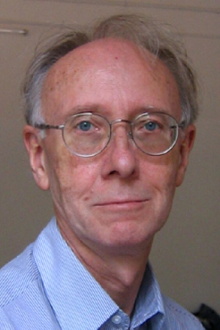
David MacDougall (born November 12, 1939) is an American-Australian visual anthropologist, academic, and documentary filmmaker, who is known for his ethnographic film work in Africa, Australia, Europe and India. For much of his career he co-produced and co-directed films with his wife, fellow filmmaker Judith MacDougall. In 1972, his first film, To Live with Herds was awarded the Grand Prix "Venezia Genti" at the Venice Film Festival. He has lived in Australia since 1975, and is currently a professor in the Research School of Humanities & the Arts at Australian National University.
Most Popular David MacDougall Trailers
Total trailers found: 31
01 January 1974
Harambee is a traditional Swahili chant meaning heave-ho or pull together the slogan for a united Kenya.
01 January 1987
The story of an Aboriginal stockman, Sunny Bancroft, and his family at Collum Collum and their growing enthusiasm for "picnic races" on bush tracks in New South Wales.
01 June 1987
An extraordinary personal journey into the experience of being black in a powerful white society. "Link-up Diary" is a film about the consequences of New South Wales long term practice of taking Aboriginal children away from their parents and raising them in "white" environments.
01 January 1991
Renowned ethnographic filmmakers David and Judith MacDougall explore the many meanings of photography in this profound and penetrating documentary.
18 November 2009
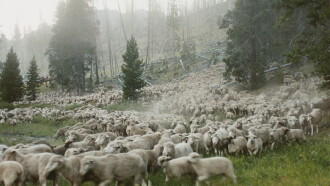
An unsentimental elegy to the American West, Sweetgrass follows the last modern-day cowboys to lead their flocks of sheep up into Montana's breathtaking and often dangerous Absaroka-Beartooth mountains for summer pasture, revealing a world in which nature and culture, animals and humans, vulnerability and violence are all intimately meshed.
02 January 2001
This third film in the Doon School quintet follows the main protagonist of 'With Morning Hearts' into the next phase of his life in Jaipur House, one of the five main houses of the school.
01 January 1980
About Aborigines and Australian politics. On 13 March 1978 the Queensland Government announced its intention to take over management of the Aurukun Aboriginal Reserve from the Uniting Church.
26 November 2008
A shelter for children on the outskirts of Delhi provides food and accommodation for 350 boys. Some are orphans, others have been abandoned, still others have run away from home.
04 April 1994
This documentary focuses on the vanishing lifestyle of a family of rural residents of the island of Sardinia.
01 July 1973
At Jie cattle camps in Uganda men often gather under a special tree to make leather and wooden goods and talk, relax, and sleep.
02 January 1970
This classic ethnographic documentary, by the renowned filmmaking team of David and Judith MacDougall, explores the nomadic life of the Jie of Uganda.
01 January 2007
Since completing the Doon School Quintet, his series of films about an elite boys’ boarding school in North India, MacDougall has turned his attention to other institutions for children in India.
01 January 2001
This film continues MacDougall's long-term study of an elite boys' boarding school in northern India.
01 January 1974
This film demonstrates the time-honored solutions to the problems associated with the Boran's dependence on cattle for living.
01 January 2004
In this fifth and final film in the Doon School quintet, MacDougall focuses on the life of one student whom he discovers at the school.
31 December 2014
Follow Arnav, a six year old Southern Indian boy, as he explores his environment.
01 January 1974
Traditionally confined to the roles of life-givers, nurturers and homemakers, Boran women of Kenya are slowly realizing the importance of education and the difference it can make in their lives.
01 January 1974
In the midst of a traditional herding territory, a growing town and a new road encroach upon a once-isolated desert people.
01 January 1981
David and Judith MacDougall are exploring the marriage rituals and roles of Turkana women in this ethnographic documentary.
07 July 1967
Filmed during the production of the Columbia Pictures western "Mackenna’s Gold," this short work presents a non-narrative visual study of the Arizona desert.
01 August 1982
Three Horsemen: 1978/1982 An old Aboriginal stockman, his nephew, and his 13-year-old grandnephew on Cape York peninsula, northern Queensland, try to get an old cattle station going again in their traditional clan country.
01 January 1977
An ethnographic study of a Turkana family filmed in north western Kenya in the early 1970's.
01 November 1981
Gordon Smith, head of the Collum Collum Aboriginal Co-operative which operates a cattle station in northern New South Wales, and Sunny Bancroft, the station manager, are negotiating with the Aboriginal Development Corporation in Canberra for a loan.
01 January 1980
Set among the Turkana pastoralists of northwestern Kenya, the film chronicles the marriage negotiations between Lorang’s daughter Akai and Kongu, a friend and age-mate of her father.
01 January 1986
This observational documentary follows an episode in the routine life on Collum Collum cattle-station in northern New South Wales.
01 January 2000
An extraordinarily insightful and intimate exploration of the social and cultural landscape of India's most elite boys' boarding school.
21 August 1972
A documentary portrait of the Jie of northeastern Uganda, examining pastoral life during a dry season as government policies and economic pressures challenge traditional patterns of herding, movement, and subsistence.
15 June 2025
The Queen of the Hills is a reconstruction of a film shot and edited in 1988-89 but never completed. It was made as a companion piece to the MacDougalls’ film Photo Wallahs (1991), a study of photography and photographers in the north Indian hill station of Mussoorie.
01 January 2003
The social dynamics of the group is the focus of this study of life in Foot House, one of Doon School’s dormitories for new boys.
01 January 1977
At the request of a dying Tiwi man and his family on Melville Island, this film was made of the pukumani (bereavement) ceremony to follow his death.