Ed Emshwiller Trailers
Birth of a Nation TrailerHome Movies 1971-81 TrailerLost, Lost, Lost Trailer
Born in 1925, Ed Emshwiller studied graphic design at the University of Michigan and L'Ecole des Beaux Arts in Paris. By the late '60s Emshwiller was working as a science fiction illustrator, and had established his place in the American avant-garde cinema with such works as Relativity (1966) and Image, Flesh and Voice (1969). His early films featured collaborations with dancers and choreographers—a theme he carried over into his videoworks.
As both an artist and a teacher, Emshwiller’s pioneering efforts to develop an alternative technological language in video were enormously influential. His early experiments with synthesizers and computers included the electronic rendering of three-dimensional space, the interplay of illusion and reality, and manipulations of time, movement, and scale that explore the relationship between "external reality and subjective feelings." Emshwiller was among the first artists-in-residence at the TV Lab at WNET, where he produced the groundbreaking Scape-mates (1972). Sunstone (1979) was made over a period of eight months at the New York Institute of Technology. Emshwiller passed away in 1990 and an extensive collection of his work is housed by Anthology Film Archives.

Most Popular Ed Emshwiller Trailers
Total trailers found: 65
28 December 1974
Suite 212 is Paik's "personal New York sketchbook," an electronic collage that presents multiple perspectives of New York's media landscape as a fragmented tour of the city.
01 January 1963
A delightful short film shot in reverse in which the main protagonist enjoys a day on the town.
01 January 1985
Home movies shot on Super 8mm by W+B Hein over 10 years.
17 May 1967
In this wildly entertaining vision of one of the twentieth century’s greatest artists, Bob Dylan is surrounded by teen fans, gets into heated philosophical jousts with journalists, and kicks back with fellow musicians Joan Baez, Donovan, and Alan Price.
06 August 1997
Jonas Mekas assembles 160 portraits, appearances, and fleeting sketches of underground and independent filmmakers captured between 1955 and 1996.
01 March 1968
Also known as Walden, Jonas Mekas’s first diary film is a six-reel chronicle of his life in 1960s New York, interweaving moments with family, friends, lovers, and artistic idols.
14 September 1976
Drawn from footage shot between 1949 and 1963, Jonas Mekas’s autobiographical diary film chronicles his early years in exile, capturing the struggle to build a new life in New York and his gradual discovery of a vibrant artistic community.
01 January 1969
The ten-year-old filmmaker (and star) pays homage to the Star Trek series.
28 September 1971
Emile de Antonio's film decimates Richard Nixon and exposes him as a paranoid, power mad lunatic... de Antonio compiles (via video and film) what amounts to the "best of" one of the worst political figures of the 20th century.
13 August 1960
A combination of animated line drawings with live photography of a nude model. A play on the title (living lines, life model, procreation and hand life line).
12 April 1962
A comedy short which pokes merry anarchistic fun at such quintessential American institutions as mom, baseball, and apple pie.
11 March 1971
In this spin-off from his original plan for Relativity (1966), Emshwiller continued with his desire to penetrate “space in a kind of flying camera, a dream of flying, a kind of sensual, sexual imagery where you were constantly going into an unknown space.
01 December 1958
The Second film by Ed Emshwiller
08 August 1968
A film by Ed Emshwiller that surveys, without narration, the vast human and material resources committed to the U.
31 December 1979
Experimental computer animation from pioneering artist Ed Emshwiller.
05 May 1984
Emshwiller writes that the visually complex and densely textured Skin Matrix is a "video tapestry... a layering of different manifestations of energy: electronic (light, video, computer), inorganic (dunes, rocks, mud), organic (wood, plants), human (skin, hair), individual (faces, eyes), imagination (sculpture, robot).
01 January 1972
"A film version of a videotape. In it my drawings are animated and colorized by using computers. Walter Wright and Richard Froeman were on the computers.
03 September 1966
In March and April of 1966, Markopoulos created this filmic portrait of writers and artists from his New York circle, including Parker Tyler, W.
25 May 1963
Power saws and a heartbeat score this experimental light-and-color shot by Ed Emshwiller.
05 May 1977
Emshwiller writes that Sur Faces is a "stylized collaborative videotape in which actors working with (the artist) explore sexual politics as expressed in styles of drama from Shakespeare to 19th-century social theater, early 20th-century Freudian work, and contemporary fictional autobiographical improvisation.
05 May 1965
An impressionistic portrait of America's diversity
05 May 1975
A video work by Ed Emshwiller
25 September 1987
Emshwiller introduces this work as a "tapestry of images and sounds suggestive of the hungers that human beings all share for food, love, sex, power, security and so forth.
09 September 1972
A video film by Ed Emshwiller
05 May 1973
A film made by Ed Emshwiller and Wantagh, New York high school students.
06 November 1970
Featuring Bill Weidner and Connie Brady, BRANCHES was made in a filmmaking workshop at Cornell University during the summer of 1970.
10 December 1958
The third film by Ed Emshwiller
09 September 1973
A collaboration between Ed Emshwiller and Anthony Bannon funded by a New York State Council on the Arts grant.
02 November 1956
A film by Ed Emshwiller made with writers from the Original Milford Science Fiction Writers Conference.
01 January 1971
A subjective film song of awareness; woman alone, woman with child, woman as scientist, woman as artist, woman with woman, woman with man.
05 May 1976
Emshwiller terms Family Focus a "family self-portrait, a stylized autobiography," which takes the form of an intimate collage of home movies, black-and-white videotape and photographs that have been colorized, synthesized or otherwise visually transformed in an electronic mediation by the artist.
09 September 1984
Skin Matrix S is a short version of the piece Skin Matrix.
06 June 1976
Choreographic dance video created in 1976 by Ed Emshwiller.
17 April 1964
This biker documentary was selected for screening at the 1964 Flaherty Film Seminar. Emshwiller described it as "a roaring picture of motorcyclists in action.
01 January 1966
A look at painting, sculpture and the dance in the United States today, as represented by works of many of its best-known artists - Andrew Wyeth, Andy Warhol, Jasper Johns, Roy Lichtenstein, Robert Rauschenberg, Robert Motherwell, Jackson Pollock, Ben Shahn, Jack Levine, Robert Indiana, Larry Poons, Alexander Calder, Marisol, Edward Keinholz, Larry Rivers, Claes Oldenburg, the Martha Graham Dancers, Merce Cunningham and Dance Company, the Alwin Nikolais Dance Company, the Once Group (a happening), etc.
02 February 1972
The long version of the film titled in the short version "THERMOGENESIS"
01 January 1959
The pointillist score accompanies changing line, form, and color to create an animated film painting, achieved through the exploration of spontaneous abstractions.
05 May 1970
Shot during the 1968/69 school year at University of California Berkeley, Report was created as part of Norman Jacobson’s experimental political science course “Toward an Expression of the Idea of Freedom.
06 June 1978
Dubs is a somewhat abstract, experimental video without a clearly defined plot. It focusses mostly on the relationships between men and women and the lies they tell each other.
06 June 1966
A film based on play by Wilford Leach
06 June 1976
A collaboration between Ed Emshwiller and William Irwin Thompson
02 July 1965
"In Spring, 1963 Show Magazine called me and asked that I make a film on arts in New York. I told them, why did they want me to make it - didn't they know I was a bit unusual? .
05 September 1962
THE STREETS OF GREENWOOD (1962), looks at voter registration efforts by the Student Non-Violent Coordinating Committee (SNCC)and a concert in a cotton field in the Mississippi Delta.
03 March 1970
A video piece by Ed Emshwiller
10 October 1963
A short documentary by Ed Emshwiller of the March on Washington.
17 June 1970
Ed Emshwiller’s tender portrait of his wife, avant-garde science fiction writer Carol Emshwiller.
09 January 1980
George Orr, a man whose dreams can change waking reality, tries to suppress this unpredictable gift with drugs.
20 June 1979
Made for Roger Reynolds's Voicescapes performance, containing elements from Emshwiller's previous film "Sunstone.
05 March 1962
In New York four years after the bombing of Hiroshima, a bible-carrying drifter who witnesses the rape and murder of a black woman is framed and pursued by locals while left as the sole protector of the woman’s young son.
26 December 1974
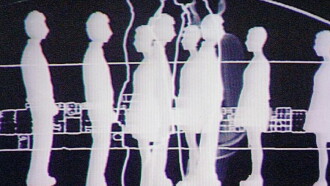
A lone man walking across the video screen is the starting point for this dynamic formal exercise. This image and its accompanying sound are subjected to increasingly complex and proliferating configurations to arrive at what Emshwiller calls a "visual fugue" in time and space, structured like musical or mathematical sequences.
19 March 1973
Painters Painting: The New York Art Scene 1940-1970 is a 1972 documentary directed by Emile de Antonio.
01 January 1966
Oysters Are in Season feautures the improvised humor of Swede Sorenson, Dean Preece and Molly Parkin as they play out sharply satiric situations.
05 May 1973
Pilobolus and Joan is a dance/narrative journey of transformation, a theatrical search for self and love based on Carol Emshwiller's story Metamorphosed.
01 January 1967
A kaleidoscopic collage of colours and dehumanised modern dancers, making subtle use of double exposure and electronic music.
16 December 1963
Jack and Leo vie for the affections of Vera – who appears a little differently to each man – over the course of a series of energetic sketches, flashbacks and homages.
17 August 1966
Emshwiller made this film on a Ford Foundation grant, and in his original proposal to the Ford Foundation, he outlined the film as "something that deals with subjective reality, the emotional sense of what one's perception of the total environment is -- sexual, physical, social, time, space, life, death.
13 December 1973
Made in collaboration with Alvin Nikolais, featuring the Nikolais dance company. CHRYSALIS is the result of structuring a series of cinematic and dance ideas Nikolais and I had.
01 January 1959
Integrating film and painting, "Dance Chromatic" reveals that the contradiction between the desire to convey the organic growth of form and painting's lack of temporal extension led Emshwiller into filmmaking.
18 April 1969
This independent underground feature films two dancers (Carolyn Carlson and Emery Hermans) in silhouettes and shadows.
04 January 1975
Super 8 film. Observations of the Institute on Film, Video & Photography, Amherst, MA, summer 1975. Among the cast of characters, in order of appearance, are Robert Breer, John Terry, Steve Ascher, Richard Leacock, Jon Rubin, Frank Daniel, Ed Emshwiller, Ann McIntosh, Terry Lockhart, Standish Lawder, Jerome Liebling.