Oskar Fischinger Trailers
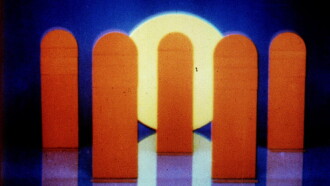
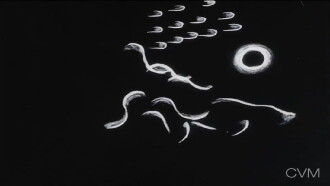
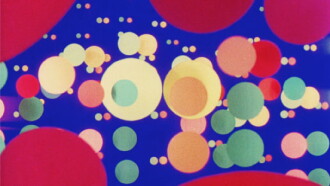
Space Light Art TrailerThe Contemplative Films of Oskar Fischinger TrailerCalifornia Images Trailer
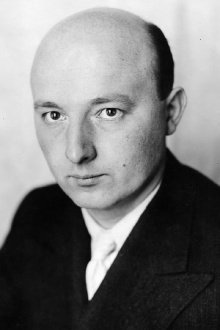
Oskar Wilhelm Fischinger (22 June 1900 – 31 January 1967) was a German-American abstract animator, filmmaker, and painter, notable for creating abstract musical animation many decades before the appearance of computer graphics and music videos. He created special effects for Fritz Lang's 1929 Woman In The Moon, one of the first sci-fi rocket movies. He made over 50 short films, and painted around 800 canvases, many of which are in museums, galleries and collections worldwide. Among his film works is Motion Painting No. 1 (1947), which is now listed on the National Film Registry of the U.S. Library of Congress.
Most Popular Oskar Fischinger Trailers
Total trailers found: 51
23 February 1940
When the gentle woodcarver Geppetto builds a marionette to be his substitute son, a benevolent fairy brings the toy to life.
28 June 1935
An abstract film in which every motion of coloured shapes is in strict synchronization with music. Preserved by the Academy Film Archive in 2000.
03 February 1934
A continuous movement. Preserved by the Academy Film Archive in 2000.
15 October 1929
A scientist discovers that there's gold on the moon. He builds a rocket to fly there, but there's too much rivalry among the crew to have a successful expedition.
01 January 1936
In the 1936 short Allegretto, diamond and oval shapes in primary colors perform a sensual, upbeat ballet to the music of composer Ralph Rainger.
01 October 1930
The first Studies were synchronized with records (Fischinger made a total of 13 Studies all without sound).
01 September 1932
An abstract to music from "Eine Kleine Nachtmusik" by Mozart.
14 November 1942
An experiment into what the director termed 'colour rhythm'.
01 January 1985
Hi-fi for the eyes
29 April 1927
One of Oskar Fischinger's earliest films, Seelische Konstruktionen (as it is known in German), clearly points the way to the masterpieces of musically-blended experimental animation he would conceive in the decades to come.
28 April 1927
For the production of this film, Oskar Fischinger tinted various layers of hot wax. After cooling, the resulting lump of wax resembled a marble cake.
01 December 1932
Music by Rubinstein, “Dance of Torches.”
31 December 1947
Motion Painting No. 1 is a 1947 experimental short animated film in which film artist Oskar Fischinger put images in motion to the music of Johann Sebastian Bach’s Brandenburg Concerto no.
01 January 1945
An mutoscope motion picture installation commissioned for the 86th anniversary of the Guggenheim museum.
01 June 1931
In Fischinger's study No. 7, the shapes of Study No. 6 move to the 5th Hungarian dance by Johannes Brahms.
01 August 1930
An abstract ballet set to "I've Never Seen a Smile Like Yours".
01 December 2004
Compilation of abstract animated films by Oskar Fischinger; includes his short films Spirals, Spiritual Constructions, Study 6, Liebesspiel, Radio Dynamics, and Motion Painting No.
01 June 1930
Experimental short film by Oskar Fischinger
01 January 1927
Parallel bars moving up and down in rhythmic patterns.
14 October 1927
Never-released early experiments, animation drawings and tests from Oskar Fishcinger.
01 June 1932
An abstract to music from "Aida" by Verdi.
05 April 1930
A work of abstract animation
01 December 1933
Experimental short film by Oskar Fischinger
01 December 1931
An experimental short from Oskar Fischinger
01 March 1931
An experimental abstract animation.
08 July 1932
Curious and intrigued by technological advances, Fischinger here also experiments with "synthetic sound" (he would not be the only one: later Norman McLaren played a lot with it).
01 January 1933
Experimental short film by Oskar Fischinger. Preserved by the Academy Film Archive in 2000.
01 January 1947
A short experimental film.
08 January 1941
a short animation from Oskar Fischinger, drawings with periodic colour coding and some cells completely painted.
01 January 1946
Short animation experiment drawn by Oskar Fischinger
01 January 1942
An experiment in color and rhythm with no music. An unfinished film that was later edited into Radio Dynamics.
01 September 1931
An experimental short from Oskar Fischinger
22 December 1934
The black and white, live-action Swiss Trip, scored with Bach's 3rd Brandenburg Concerto (like Motion Painting No.
01 January 1929
Short film preserved by the Academy Film Archive in 2000.
01 January 1941
Stars and stripes forever and ever and ever. Preserved by the Academy Film Archive in 2000.
01 March 1932
Fischinger's abstract designs accompanied by Gitta Alpar singing. Preserved by the Academy Film Archive in 2000.
01 January 1924
What remains, unedited, of the first episode of a serial by several hands, subject to a form of supervision-control by Fischinger.
05 March 1938
A dance of shapes. A title card tells us this is an experiment in conveying the mental images of music in a visual form.
28 April 1927
In 1927, motivated by a longing for freedom, Fischinger set off on a walking trip from Munich to Berlin.
01 May 1933
Experimental animated film using the newly developed Gasparcolor process. It used a subtractive 3-color process on a single film strip which could produce incredibly vibrant images.
01 June 2012
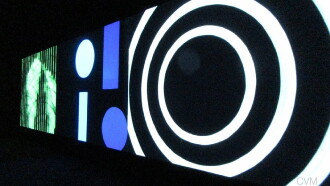
Raumlichtkunst (1926/2012) was the name of a series of live multiple projector concerts given by Oskar Fischinger in the 1920s in Germany.
02 January 1927
Directed by Oskar Fischinger.
23 May 1926
In 'Spirals' Oskar Fischinger designed visual patterns of extreme complexity which often develop in overlapping cycles, yet he interrupts these patterns with radical editing of single frames of contrasting imagery.
04 February 1930
Dancing Lines, also called Study No. 2, is a piece of abstract animation. White lines dance upon a black background.
20 March 1952
Fifties advertisement from Fischinger.
01 December 1935
Fischinger ad for Muratti cigarettes.
13 August 1955
One of Fischinger's commercial jobs from the 1950s.
01 June 1934
Muratti was a German brand of cigarettes. Fischinger transforms bunches of standing cigarettes into things that resemble human beings.
01 January 1934
An animated experimental film showing coloured circles moving to classical music, which only got past the 1934 censors billed as a commercial.