Peter Gidal Trailers
Birth of a Nation TrailerHome Movies 1971-81 Trailer
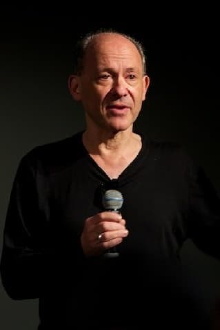
Born in 1946. Gidal studied theatre, psychology and literature at Brandeis University, Massachussets, 1964-68, and the University of Munich from 1966-7. He studied at the Royal College of Art from 1968-71 where he went on to teach Advanced Film Studies until 1984. He was an active member of the London Film-makers' Co-operative since 1969, and Cinema Programmer there from 1971-4. Co-founder of the Independent Film-makers' Association, 1975, he served as a member of the British Film Institute Production Board, 1978-81.
His films have been screened nationally and internationally, including the Tate Gallery, the Hayward Gallery, and yearly since 1969 at the Edinburgh Film Festival and the National Film Theatre. Gidal has had retrospectives of his films at the Institute of Contemporary Arts in 1983, Centre George Pompidou, Beaubourg, Paris, 1996, amongst others. International screenings include several each at the Museum of Modern Art, New York, the Royal Belgium Film Archive and Cinematheque, Documenta, Arte Inglesi Oggi, X-Screen, etc. He is the recipient of the Prix de la Recherche, Toulon 1974.
Gidal is renowned as a writer and theorist, in particular for his highly influential publication 'Structural Film Anthology' (BFI 1976), other books include 'Andy Warhol: Films and Paintings' (Studio Vista, 1971, Da Capo NY reprint. 1991) and 'Materialist Film' (Routledge, 1988). Gidal's writings have been published extensively in journals including Studio International, Screen, October and Undercut. He is also known for his research and writings on Samuel Beckett, including 'Understanding Beckett: Monologue and Gesture' (Macmillan, 1986).

Most Popular Peter Gidal Trailers
Total trailers found: 35
19 December 1969
Includes 'portraits' of Marianne Faithfull, Thelonious Monk and 28 others, some known, some less so.
01 January 1985
Home movies shot on Super 8mm by W+B Hein over 10 years.
06 August 1997
Jonas Mekas assembles 160 portraits, appearances, and fleeting sketches of underground and independent filmmakers captured between 1955 and 1996.
16 August 1968
A slow zoom out and defocus of 'An enclosed and progressive disembowelment of durational progression'
01 January 1978
A film by Peter Gidal
01 January 1988
Objects in the world given luminousness, light, are here less apprehensible to knowledge than that which has less light.
01 January 1968
Demystified reaction by the viewer to a demystified situation; a cut in space and an interruption of duration, through (obvious) jumpcut editing within a strictly defined space.
31 December 1974
The glass window being installed - labour - being the subject ostensibly of the film...glaziers and glass having a history within representation from the german novella through Beckett's molloy through Duchamp though at the time none of that was conscious, it was for me about the endless superimpositions of a transparent signifier.
31 October 1973
"This film is a consequent continuation and contraction of my film work, research which began with Room (1967).
01 January 1968
Loop ended up being a film that also 'ended' Upside Down Feature (1967-72) and was a negative upside down portrait as well.
17 August 2009
“Theatre theory for film, or not: Brecht (an interrogation/performance: a ghost trio for two).” (Gidal).
20 January 2002
Volcano, half hour, silent, shot on 16mm on a volcano in Hawaii, the film attempts to deal with those questions of representation that persist as problematic, for me, for the basic questions of aesthetics, what it is to view, how to view the unknown as to view the known is not possibly a viewing.
01 January 1978
The film attempts to construct a space (as all films do), to construct a time (as all films do), to construct a process (as all films do) of and for viewing, of and for the viewer to constantly re-process, re-memorate, re-produce it (him/her) self in attempted (but impossible) arrestation.
01 January 1985
Hopefully learning the lessons of Close Up, the attempt was to construct the discrete form the (seemingly) continuous.
01 January 1971
The most inclusive so far of my film preoccupations; zooming panning focussing to constantly redefine reality and the process of seeing/filming.
22 October 1975
The practice of Structural/Materialist Film is defined in...process, construction, displaced reflexively.
01 January 1977
In effect, it turns the spectator loose in a problematic textual system which includes both narrative and non-narrative clues; the puzzle cannot be resolved because its terms are systematically ambiguous.
01 January 1980
In Gidal's films, the first level of resistance, that of the filmmaker to the lure of the object, is chiefly inscribed through the action of the camera in it's 'looking at' the space - variously through; motion, distance, focal length's effect on perspective, zoom or focus.
01 January 1983
Close Up is a provocative and potentially dangerous pulling together of two opposing aspects of film form - namely, a 'documentartist' soundtrack comprising interview material with Nicaraguan revolutionaries on the subject of art, propaganda and imperialism, and an image track of much beauty, veering toward the abstract as the camera moves ceaselessly over the objects in the a room, or those represented in the 17 blown up photographs.
01 January 1992
Sound: unrecognition unidentified, in time, you hear? Image: recognition identified, out of time in time; not not knowing the unknown but not knowing the known, no trace of 'no trace of any thing'.
20 November 1971
Structuralist film collage consisting of 8mm film "notes" printed directly on 16mm stock. The images include people and landscapes and the technical difference between the two film formats are emphasised by the presence of perforations, Kodak company marking, spacing, and leader.
01 January 1967
A hand-held camera zooms in and out as it films the objects in a room. The same sequence is presented twice.
06 March 1974
The film deals with levels of reproduction. The repetitious camera movements over successive photographs are intended to function as distancing devices relatable to mechanical repetitions such as film loops.
01 January 1977
Kopenhagen/1930 presents a different attitude to the seductions of content, to the signifying processes that are repressed in the rigorous procedures of the structural/materialist film.
19 December 1969
Clouds 1969 by the British filmmaker Peter Gidal is a film comprised of ten minutes of looped footage of the sky, shot with a handheld camera using a zoom to achieve close-up images.
09 October 2013
Peter Gidal’s starting point for his 16mm film was a soundtrack that consists of three lines from a 1,000 word story written by Gidal in 1971, read by William Burroughs.
02 January 1971
Early short by Peter Gidal.
01 January 1997
What darkness the film will have in No Night No Daywill not be connected to nature's night, equally light will be unconnected to 'day' as a lived concept and reality.
13 May 1972
Peter Gidal's 'Upside Down Feature' is one of the most important films to have been made in this country.
01 January 2013
"first film in 5 years, tempted to say different yet the same, but not." peter gidal/london/2014
01 January 1967
Directed by Peter Gidal (1967)
01 January 1997
Assumption is a virtuosic personal tribute, a glimpse at history and a celebration of independent film culture.
01 January 1978
Made from the same footage as Epilogue but in a different order: 1. pan, 2. dissolve-crossfade, 3.freeze.
01 January 2013
Peter Gidal’s starting point for his 16mm film was a soundtrack that consists of three lines from a 1,000 word story written by Gidal in 1971, read by William Burroughs.
01 January 2013
Gidal describes the film’s ‘so-called imagery’ as ‘a complex of barely visible cuts in space�