Stephen Dwoskin Trailers
Telescopic Intimacy TrailerMy Conversations on Film TrailerCinexpérimentaux #9: Stephen Dwoskin Trailer
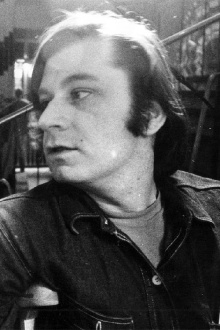
Stephen Dwoskin was born in New York in 1939 and began making independent shorts there in 1961. In 1964 he followed his research work to London where he settled and participated in the founding of the London Filmmaker’s Co-op. His experimental films, for which he himself does the camera work, play with ideas of desire, sexual and mental solitude and the passage of time. In his films he also explores representation in cinema, performances, personal impressions and his own physical handicap which has been a source of inspiration for him throughout his career.
Dwoskin died on 28th June 2012 in London. His sensitive and emancipating works have been the subject of various international presentations.
Most Popular Stephen Dwoskin Trailers
Total trailers found: 64
27 December 1967
Featuring Joan Adler (who also appears in Chinese Checkers), Soliloquy is one of the four early Stephen Dwoskin films that were awarded the Solvey prize at the EXPRMNTL festival in Knokke, Belgium in 1967.
12 December 1977
Avant-garde appeal on behalf of and made by the adventurous leftist London cinema, The Other Cinema, using the facilities provided by the BBC community programme unit.
02 April 1984
A exploration of the origin, theory, philosophy and themes of Stephen Dwoskin's films from 1963 to 1984.
01 January 1970
Two women in a living room: smoking, playing cards, listening to the radio. As often in Dwoskin’s films, the use of masks, make-up and costumes allows the characters to playfully transform themselves.
19 December 1969
Includes 'portraits' of Marianne Faithfull, Thelonious Monk and 28 others, some known, some less so.
13 October 2013
This distinctly personal journey into the artistic possibilities of independent film is not to be missed.
08 November 1981
Reel 13 of Gérard Courant's on-going Cinematon series.
31 December 1964
Filmed in New York in 1964, completed in London 1967.
06 August 1997
Jonas Mekas assembles 160 portraits, appearances, and fleeting sketches of underground and independent filmmakers captured between 1955 and 1996.
01 August 1979
An aged art connoisseur (Beaumont) and his young female neighbour (Coles), who has a job posing naked in a club, meet and exist in fantasy and reality.
01 January 1969
Trixi is Dwoskin’s most convulsive version of his recurrent theme: the confrontation of a solitary girl with the camera.
20 December 1978
Cinématon is a 156-hour long experimental film by French director Gérard Courant. It was the longest film ever released until 2011.
01 January 1961
Stephen Dwoskin's first film, made in New York. A woman's feet during a whole night of sleep contracted into four minutes.
18 December 1971
DIRTY is the reincarnation of two girls, a bottle and one bed. Their bodies, hands and face expressions reach out in a refilm look.
01 January 1964
Images of a woman lying on a bed appearing to have a sexual fantasy for lack of anything else to do.
14 November 1974
A portrait of a relationship between a physically disabled man and an able-bodied woman.
01 January 1986
Stephen Dwoskin brings together members of the Ballet Negres dance company, founded in London in 1946.
14 September 1973
Evolves around the rooms of a house as one of the main characters, Lisiska, is waiting and is studied in depth as she prepares herself for a meeting.
11 August 2001
Intoxicated by My Illness (in which images photographed by several people are extensively superimposed) loosely and dreamily tracks a phase in Dwoskin's recent life that took him from medical examination to intensive care.
11 August 2003
“My grandfather was a charming artist, and he would have acted if he had had an audience. In this film, taken from family images, it is a simple pear that is the object of his panache.
11 December 1972
A man walks towards the camera down the end of a street to the sound of 'Jesus’ Blood Never Failed Me Yet', a composition by Gavin Bryars based on a loop of an anonymous homeless man singing the song.
11 August 1990
"Either in its natural state or with its embellishments of makeup, jewels, and hairdos, nothing can restrain the imagination from the most forms of speculation.
11 August 2003
“Suddenly and sadly my dear friend Frances died. At that moment of loss I needed to hold on to her.
18 May 2022
In their lyrical and philosophical video essay, “Telescopic Intimacy”, Cristina Álvarez López and Adrian Martin explore the works of avant-garde filmmaker Stephen Dwoskin.
11 August 2003
Lost dreams is made out of those little remnants of images, from a single glance to a detailed moment, of those women from youth’s love and young dreams.
01 January 2002
A short and lyrical film about looking, and how that look shapes the relationship between those people whom we call friends; some gone, some found, but all apart.
01 July 1991
"Hi Steve" and "Dear Robert" exchanged between two filmmakers: Robert Kramer and Stephen Dwoskin. "The Videoletters strip away the formalities that had littered our work and thinking.
15 August 2012
Stephen Dwoskin’s final film is a meditation on the subjective experience and cultural concepts of ageing.
11 August 2003
An ode to Stephen Dwoskin's father. The film blends found family footage of the young and the ageing father.
01 January 1968
A static camera records, in one single continuous shot, a woman's face before, during and after orgasm.
07 February 1965
His Oriental predator is at first clothed in black, her 'victim' in white; slowly the costumes change, the victim acquiring a veil of mourning, until finally - as if to underline the ambiguity and interchangeability of their respective roles - the colours are reversed altogether.
22 September 2007
Short strip by Stephen Dwoskin.
01 January 2005
Shot in Brixton, London, in 2004, the film is originally a letter addressed to Dwoskin by its authors.
11 August 1977
'The Silent Cry is a fictionalised narrative film, based on documentary facts and extracts of one English girl's memories and thoughts, all surrounded, and directed towards her particular dilemma.
01 January 1976
The film questions the possible viewing positions with the girl; in other words, who and what is looking at whom? and is the girl alone or with another – or is the camera position that of voyeur or protagonist? The only way to figure it out is to spend some time with her! – S.
02 September 1976
A group of strangers explore their fantasies over a period of five days.
15 October 2008
A tribute to author’s mother shortly after her death, at the age of 96. The film remembers her through excerpts from earlier footage and attempts to hold and capture the mysteriously elusive feelings and warm gestures she left behind, which still linger in memory today.
01 January 1970
To Tea, made in Holland (at the house of the Dutch avant-garde filmmaker Franz Zwartjes), is a slowed ‘Alice in Roomland’.
27 June 1972
'Dyn Amo' is a 'drama' exploring the distinction between a person's self and his projection of that self to others; and it's a 'horror movie' tragically suggesting how a projection can become more substantial than the self behind it.
12 November 2004
Tranquil video reveries by veteran Dwoskin surrounding visits to his house.
15 September 1970
An unfulfilled man renders himself to the unrealized sensuality of four women. In his drifting search, he fails and fades in the same loneliness as the women.
11 August 1983
Born in 1904, Brandt was a shy and enigmatic man who dominated British photography for decades. His early studies of class-divided Britain were followed by the postwar series of "distorted nudes", shot on beaches and inside rooms.
09 September 1988
An old man remembers the troubled relationship he had with his mother, the erotic games, and the phantasms in which she managed to attract him.
11 August 2008
'The Sun and the Moon, a film fairy tale, is about two women’s terrifying encounter with ‘Otherness’ in the form of a man, abject and monstrous, and for them to either to witness, accept or partake in his annihilation.
01 January 2002
A film about a man, an invisible man, perhaps immobile or displaced, trapped in solitude filling the intervals of reflection and desire.
01 January 2006
Seeking in the archives of Robert Kramer, a detective, Keja Ho is looking for her deceased father. His ghostly presence haunts her search and motivates the singular dialogue between her family memories and friends.
26 November 1969
The beginning of the prevalent theme – or question – what keeps us apart, even when together? Th�
01 January 1991
A richly conceived essay about the evolving image of disability. Dwoskin begins with the declaration that the historically distorted images of people with disabilities constitute a “negation of selfhood”.
25 March 1997
The film is just this kind wandering through the personal ways and whys of different kinds of pain in different kinds of people.
24 October 2015
"Two independent filmmakers, who willingly practise self-fiction, are filming each other in order to communicate better.
11 August 1994
In this unique approach to the autobiographical film format, director Stephen Dwoskin pieces together home movies shot by his parents in New York City, a video letter recorded during the 1990 Gulf War by filmmaker Robert Kramer, and raw footage filmed by Dwoskin himself.
15 June 2007
More like sketches Phone Portrait and Phone Strip explore the moving image through the uniqueness of the most modern of technologies – the cellphone – that, though being modern, produces a near primitive and raw image reminiscent of the very first moving images.
11 August 1975
This amusing short features a real life Labour party canvasser who comes looking for Dwoskin (never realizing that he's the camera man), and instead is treated to the provocations and manipulations of the housemates.
15 November 2007
The first three of a series of intriguingly personal and erotic engagements seen in the privacy of darkness and transformed by the iridescence of the night light.
01 June 1975
Stephen Dwoskin's personal impression of West Berlin before the Berlin Wall went down.
24 August 2012
Stephen Dwoskin was born in New York in 1939 and began making independent shorts there in 1961. In 1964 he followed his research work to London where he settled and participated in the founding of the London Filmmaker’s Co-op.
01 January 1975
A naked girl is filmed passing through a gallery of paintings, reminding us of the difference between the plasticity of painting and a body moving in an open space.
15 July 1969
Short experimental film focusing on body paint and the female form.