Tamae Kiyokawa Trailers
I Sell My Husband TrailerRogue TrailerAge of Japanese Guerrillas Trailer
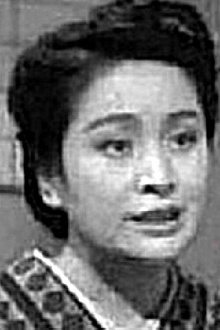
Tamae Kiyokawa (清川玉枝, Kiyokawa Tamae, May 24, 1903 – January 21, 1969) was a Japanese actress born in Shiba, Tokyo, Japan. She is known for her roles in films such as "Haha no omokage" (1959), "Love Letter" (1953), and "Kengô tai gôketsu: Homare no kessen" (1956). She died on January 21, 1969 in Japan.
Most Popular Tamae Kiyokawa Trailers
Total trailers found: 154
17 December 1957
Ushinosuke returns to his hometown to become a farmer.
Part three (of four) of the film adaptation of Bunroku Shishi’s novel, Oban.
23 September 1961
Japanese comedy film.
15 October 1965
Japanese prison exploitation movie. Part 1 of the 'Onna bangaichi' series
19 February 1957
A young man and woman are determined to marry despite opposition from her parents.
28 August 1952
Japanese comedy film.
05 February 1956
Based on a comic strip by Kaoru Akiyoshi. First in a four part film series.
09 March 1962
Famed movie director Paul Robaix breaks with tradition by not casting his actress-comedienne wife, Lucy Dell, in his latest film production, a version of Madame Butterfly.
02 October 1952
1952 Japanese film directed by Kunio Watanabe.
12 July 1968
An old man dies of heartbreak when a cruel landlord is about to repossess his land. The old man haunts the landlord from the grave.
24 April 1940
9th directorial work by Yamamoto Satsuo.
22 June 1939
Kichigoro, a firefighter from the Maeda family of the Kaga Principality, rescues Oshimo, the younger sister of Jirokichi, a city firefighter from the Ha-gumi group, from a samurai who is trying to kidnap her.
30 August 1968
Kinta (Nabe Osami) is Japanese by birth, but raised by a Chinese man. He stowsaway to Japan to see his girlfriend Yukiko but gets picked up for vagrancy in Shinjuku and thrown in jail.
01 June 1935
Adaptation of Fumiko Hayashi's novel.
12 August 1958
When Shinsuke returns to Kyushu from the Russo-Japanese War he finds his Judo school hall neglected and in decay.
15 January 1961
Second "Pfc. Story" sequel and the ninth and final sequel to "Story of Second Class Private", the only one in both series not directed by Seiichi Fukuda.
13 January 1951
Japanese "kayo" film based on the song "Ieraishan" by Yoshiko Yamaguchi.
19 August 1958
At a coastal hot spring inn, a group of women navigate work, personal struggles, and unexpected scandals.
26 December 1962
1962 Japanese movie
20 March 1940
Twenty-year-old Yoshiko (Setsuko Hara) and her younger sister Asako (Yōko Yaguchi) struggle to accept changes in their home during the preparations of their widowed father's wedding to his chosen bride, Maki Tsuneko (Sadako Sawamura), who's anxious about her conduct as the bride.
10 February 1959
A college football star gets caught in a scandal involving a geisha teacher, endangering his team’s season and his family’s honor—until a last-minute comeback restores both.
30 May 1952
1950s Japanese comedy.
13 December 1949
1949 Japanese film
11 February 1943
A self-absorbed young actor humiliates an elderly Noh performer, who then commits suicide. His act of cruelty compels his father to disown him, leading the once promising actor to a life on the streets.
20 May 1950
1950 drama film
20 December 1949
Japanese noir.
14 August 1941
Adaptation of a novel by Nobuko Yoshiya that was serialized in "Shufu no tomo" between 1939 and 1940.
02 January 1940
Wartime propaganda filmed by the Japanese in occupied China, Shirley Yamaguchi portrays an orphan rescued from the streets by a kindly Japanese merchant marine officer.
23 August 1949
Tanuma Kandayuu is a high class samurai of the house of Nabeshima. He finds a lavish board of Go (a Chinese Board game) at Kinbei's store.
20 October 1939
A forceful indictment of the devastating effects of war and nationalistic fanaticism on the average man, who, in the face of the absurdity of violence, is reduced to apathy or victimhood.
24 March 1951
A picture-story-show operator, accompanies her son, Akira, who lives apart from her, to a hot-spring medical treatment and spend a moment of brief happiness together, but eventually the time comes to say goodbye.
01 July 1939
The Old Man of the Propeller can be seen as a comedic amalgam of “King Lear” and “Christmas Carol”.
14 April 1951
A few days in the life of a quiet geisha, single mother of a smart young boy, in the lively Tokyo quarter of Ginza.
25 June 1965
On the eve of the Russo-Japanese war at the beginning of the 20th century, small-town girl Okane has married an old wealthy man to escape a life of poverty.
24 August 1951
Japanese drama film.
12 October 1968
Coal miner Isamu Oba is forced to quit his village and leave his mother and siblings behind. Mining buddy Ichiro accompanies him to Tokyo, and the pair enjoy several "fish-out-of-water" sequences before finding employment at a boxing gym with trainer Sawada and his spunky sister Tomoko.
08 October 1957
Yuko is sent to the coastal regions to be raised away from the rest of her sophisticated family where she finds out from her ill grandmother that she is not who she thought she was.
27 July 1954
Postwar Tokyo. Pin and Toku live in the squatter area of Kappanuma. Pin and Toku are avid gamblers. They take in Tsuru, a slightly demented woman who has run away from a geisha house.
06 January 1963
A story about four best friends and their lives inside and outside college. Then suddenly one of them receives a surprising offer to be a movie star.
06 March 1940
This is a rokyoku film of Tenjuken Ungetsu II (Hideko Itami), a popular rokyoku performer who was famous for her seven different voices for men and women of all ages.
22 November 1957
Ichiro’s family used to be a large landowner, but now he is living in poverty with his mother. His mother works hard to get her son through school.
29 November 1958
The story follows Oshino, a geisha who is trying to start a new life with a lover who is a painter. However, her past filled with debts and pimps catches up to her.
09 January 1954
Japanese musical.
08 July 1953
A motley cast of characters, including a human billboard and a shoeshine girl, help a 5 year old girl after she is separated from her mother on the crowded streets of Ginza.
08 July 1950
Adaptation of a novel by Yojiro Ishizaka, originally released in two parts.
20 November 1960
Set in the postwar turmoil, Akasaka no shimai paints a vivit portrait of the life of three sisters who struggle to live in Tokyo.
03 August 1951
In a small town, according to the homecoming of Professor Ishinaka, the youth culture group was overwhelmed to make a presentation for the summer festival, but because of lack of funds, she works part-time at the spectacle of a tour, a haunted house Especially.
02 February 1960
Story of young love in the hills.
14 January 1961
The three Matsunami sisters navigate adulthood and the complex social pressures of finding a husband while living under their traditional father’s roof.
29 July 1967
A middle-aged factory engineer trains, marries, and ultimately loses a teenage bride after she enslaves him to her whims.
05 June 1957
Fusako, a girl raised in a geisha house, tries to escape her dark past and faces repeated heartbreaks.
27 January 1944
A small community in wartime Japan learn how to make do with less.
05 February 1956
The TV drama of Ima Harube was adapted by Yagi Ryuichiro ("Komuso Henge"), directed by Mori Issei ("I Am Fujikichirou"), and cinematographed by Honda Shozo ("The Return of the Ghost").
04 November 1950
On a Sunday morning, young dentist Toshio Ezaki wakes up with a hangover, on a bench in his office. He finds a poisoned woman in a green-striped Western-style outfit lying in his exam room.